


NSE Valued at ₹4.45 Trillion, Twice Combined Market Cap of BSE, MCX, and IEX




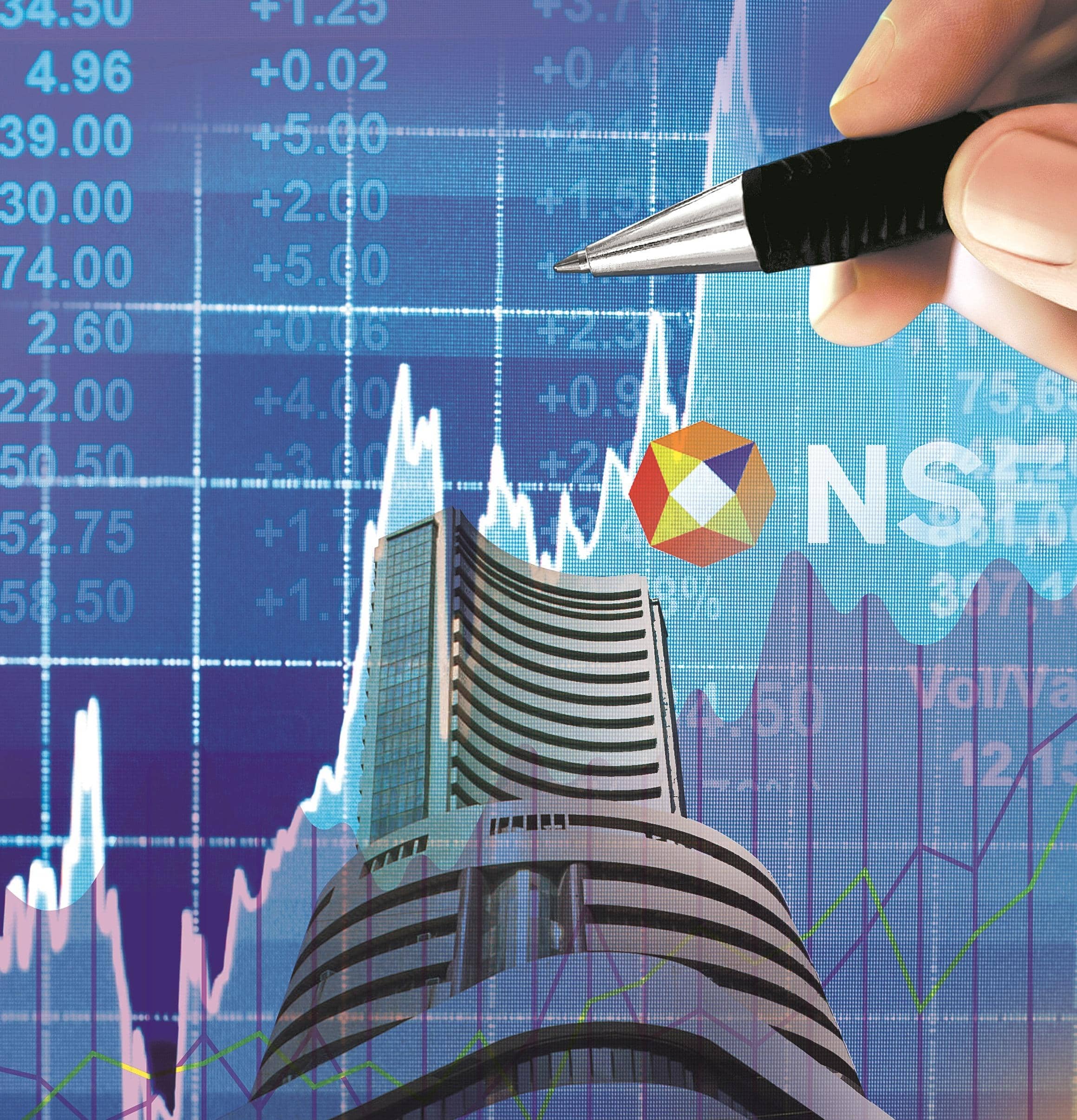
The National Stock Exchange of India (NSE) has entered the stock market with a valuation of ₹4.45 trillion, making it the largest listed exchange in the country by market capitalization. This figure nearly doubles the combined market cap of three other major listed Indian exchanges: Bombay Stock Exchange (BSE), Multi Commodity Exchange (MCX), and India Energy Exchange (IEX).




On the day of its listing, NSE's shares opened at ₹1800 each, marking a slight increase of 0.84 percent from its initial public offering (IPO) price of ₹1,785. By 10 AM, the market capitalization of BSE was recorded at ₹1.31 trillion, MCX at ₹86,875 crore, and IEX at ₹9,973 crore, together summing up to ₹2.28 trillion—less than half of NSE’s valuation.
Industry analysts attribute NSE’s strong valuation to its expansive market presence and diversified business model. Vinit Bolinjkar, head of research at Ventura, pointed out that NSE’s operations span across multiple asset classes including equities, derivatives, currencies, and debt. The exchange also offers clearing services, index creation, data distribution, and technological solutions, which contribute to its competitive advantage over peers such as BSE, MCX, and IEX.
According to Bolinjkar, this wide-ranging ecosystem enhances NSE’s profitability and reinforces its dominant position in the Indian financial markets.
Liquidity and participation on the first day of trading are key indicators to watch, noted Harshal Dasani, business head at INVasset. He highlighted two critical aspects: whether the retail portion of the shares, which was modestly subscribed, will hold steady, and if institutional investors who did not receive their full allotment during the IPO will purchase shares in the secondary market.
In terms of market share, NSE is the undisputed leader in India’s stock exchange sector. For the fiscal year 2026, it commands a 92.99 percent share of cash market turnover, dominates equity futures with 99.79 percent, and holds 74.71 percent of the equity options premium turnover.
Exchanges function as fee-based platforms earning revenue primarily from transaction volumes and regulatory fees. Dasani described exchanges as akin to toll roads, where income depends heavily on market activity cycles. He advised investors to evaluate exchange stocks through three key perspectives.
First, regulatory risk is a significant factor. Adjustments in derivatives lot sizes or changes in trading fees can cause more volatility in exchange stocks than typical quarterly earnings results. The case of IEX illustrates this well, where regulatory moves toward market coupling have affected its valuation, reducing its price-to-earnings ratio to around 21 from nearly 50 times compared to other exchanges.
Second, investors should favor exchanges that gain market share rather than incumbents maintaining the status quo. As an example, BSE’s profits rose by 62 percent in the June quarter, while NSE’s profits for fiscal year 2026 declined by 15 percent, demonstrating that growth can come from challengers in this sector.
Third, valuations for exchange companies are bets on sustained or growing trading volumes. BSE and MCX, with price-to-earnings ratios in the range of 48 to 53, require persistent volume growth to justify their high valuations. NSE’s debut valuation at approximately 43 times FY26 earnings may serve as a benchmark for the entire exchange sector going forward.
Dasani emphasized that this investment approach suits patient shareholders who view regulatory changes as more impactful than quarterly earnings, encouraging a long-term perspective aligned with market cycles.
This listing marks a significant milestone for NSE as it solidifies its role at the center of India’s financial market infrastructure. As the country’s largest exchange, NSE’s performance and regulatory environment will continue to shape the broader trading ecosystem and influence investor confidence in the years to come.
Disclaimer: The opinions expressed in this article are those of the respective analysts and brokerage firms and do not represent endorsements by any news outlet. Readers are advised to exercise discretion.
What's Your Reaction?
 Like
0
 Dislike
0
 Love
0
 Funny
0
 Wow
0
 Sad
0
 Angry
0















Comments (0)