


SBI Aligns Growth Strategy with India's Economic Goals: Chairman CS Setty




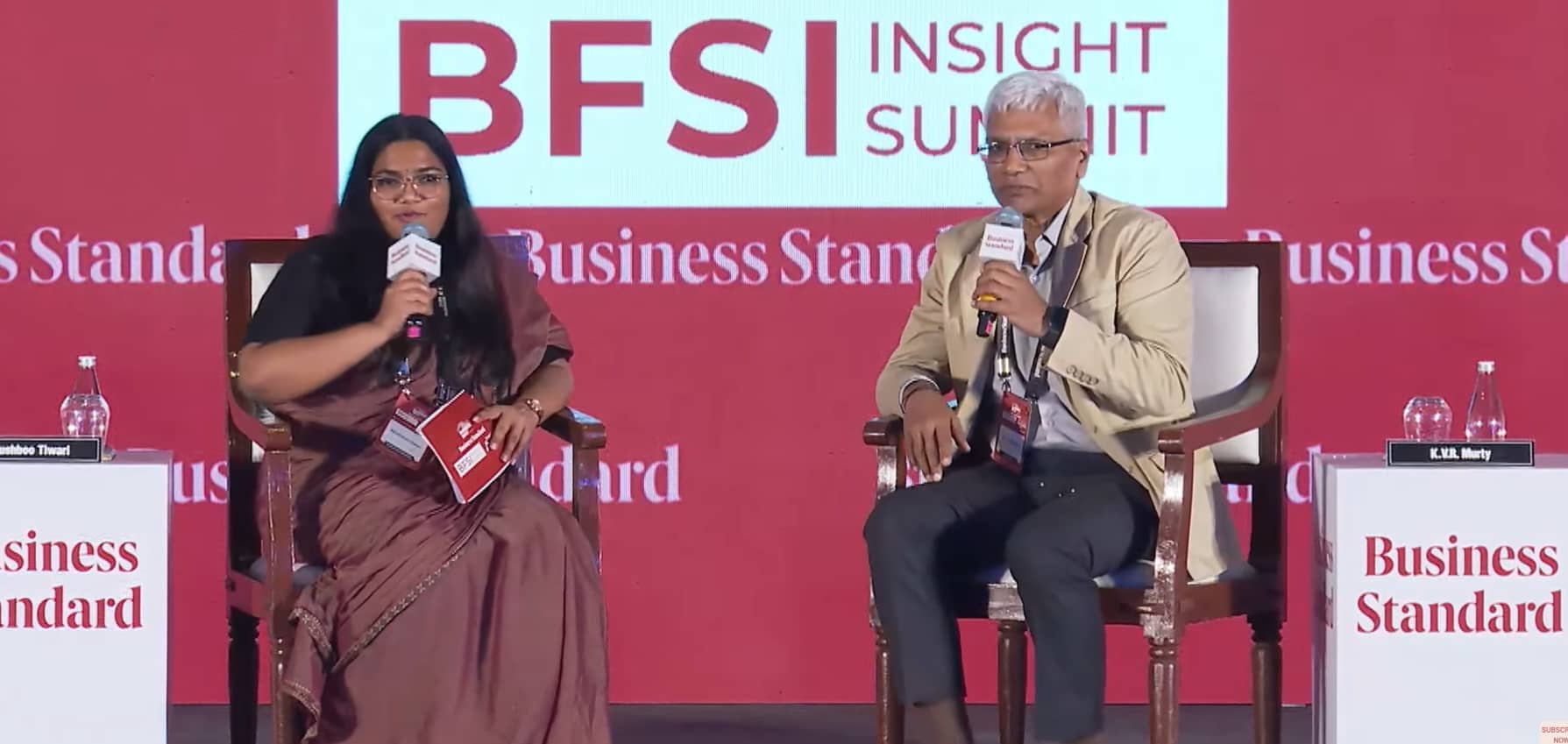
State Bank of India (SBI) aims to synchronize its expansion plans with the wider economic goals of India, focusing on key sectors such as housing loans, corporate credit, and financial assistance to micro, small, and medium enterprises (MSMEs). Chairman CS Setty shared these insights during a conversation at the Business Standard BFSI Insight Summit 2026.




Setty emphasized that SBI’s institutional objectives closely mirror India’s macroeconomic ambitions. "I strongly believe what SBI plans to do as an institution is no different from what India wants to do on the macro side," he stated, highlighting the bank’s significant role in mobilizing household savings, which account for roughly 25 percent of the total savings in India.
He explained that SBI seeks to create substantial economic value by channeling credit into three pivotal areas: housing finance, corporate lending, and support for MSME development. These sectors are critical drivers of economic growth, employment generation, and overall financial inclusion.
Regarding the influence of interest rates on credit demand, Setty observed that rising rates tend to affect the mix and volume of borrowing, though the effects may not be immediate. Rate-sensitive sectors, especially those linked to discretionary consumption, might moderate their borrowing in response to higher costs.
"We are entering a rate hike cycle in a robust growth rate," Setty remarked, adding that demand for loans aimed at productive uses is expected to remain resilient despite the rate increases.
In response to questions about deposit mobilization during a period marked by rate hikes and subdued stock market performance, Setty pointed to a structural shift in how households allocate their savings. He noted that many individuals, even without fully understanding asset allocation strategies, continue to prioritize bank deposits as part of their financial planning.
This shift is not only visible in funds moving into bank deposits but also within banks themselves, as customers increasingly transfer money between savings accounts and fixed deposits, altering the deposit composition on banks’ balance sheets. "Ease of doing business is also moving the structural composition," Setty added.
Looking ahead to the current interest rate cycle, Setty suggested the possibility of a 50 basis points hike in December 2026. He expressed confidence that the banking system can absorb increased liquidity over the next two to three quarters without concerns about excessive lending.
Addressing concerns about retail loan asset quality amid rising interest rates, particularly for home loans linked to external benchmark rates, Setty indicated that system-wide risks remain low. However, he acknowledged that highly leveraged households could experience financial pressure due to increased equated monthly installments (EMIs).
"From a system-level perspective, I don't think we should be really worried about the asset quality on the retail fund," he said, but cautioned about individual vulnerabilities in segments with elevated leverage.
Setty also weighed in on the ongoing debate about the merchant discount rate (MDR) applied to certain Unified Payments Interface (UPI) transactions. He underscored the significant investments required to sustain the payments ecosystem amid growing transaction volumes. The industry, he said, must improve service-level agreements with merchants and enhance grievance redressal mechanisms to prevent merchants from unfairly passing MDR costs onto consumers. He also called for systems enabling granular monitoring of transactions.
On digital banking, SBI continues its push to reduce customer servicing costs and expand access through its YONO platform. Setty shared that a physical branch visit costs the bank approximately ₹40 to ₹50, while servicing a customer digitally costs less than ₹1. YONO has already surpassed 110 million registered users, with the bank targeting 200 million in the near future.
The bank is also exploring a variant called YONO Bharat, aimed at enhancing financial inclusion by reaching underserved populations. "If we can bring YONO Bharat, we can bring 300 million customers by 2030," Setty said. This initiative reflects SBI’s commitment to making digital banking more than just a transactional platform, focusing on inclusivity and affordability.
Regarding artificial intelligence, SBI plans to adopt a measured approach to integrating generative and agentic AI technologies. The focus will be on enhancing employee productivity and streamlining customer experiences. AI’s potential in fraud risk management and transaction monitoring is particularly promising, as it can help the bank detect and mitigate risks more effectively.
Setty’s remarks provide a comprehensive view of SBI's strategy to align with India's economic trajectory while embracing innovation and maintaining financial stability. With its broad customer base and significant role in the country’s financial system, SBI’s plans will likely influence the banking sector and contribute to India’s overall growth story in the coming years.
What's Your Reaction?
 Like
0
 Dislike
0
 Love
0
 Funny
0
 Wow
0
 Sad
0
 Angry
0
















Comments (0)