
Motilal Oswal Highlights Auto Sector Growth, Picks TVS Motor and Bajaj Auto

Motilal Oswal Wealth Management Research Desk has expressed a positive outlook on the Indian automotive sector, while anticipating that volume growth will ease from the high levels recorded in the first half of fiscal year 2027 (1HFY27). The research team highlighted key trends in the auto industry and identified TVS Motor and Bajaj Auto among their preferred stocks.
The Indian automotive market experienced robust volume increases during the second quarter of FY27 (2QFY27), driven by several factors including pre-festive inventory buildup by dealers, a favorable year-ago base, and stronger demand across various vehicle segments. Passenger vehicles (PVs) posted a year-on-year growth of 31.2 percent, commercial vehicles (CVs) grew about 29 percent, and internal combustion engine (ICE) two-wheelers (2Ws) rose by 10.4 percent.
This high growth rate was partly influenced by a low base effect, as original equipment manufacturers (OEMs) had delayed dispatches in September 2025 ahead of Goods and Services Tax (GST) rate reductions. With the base effect fading, industry growth is expected to moderate in upcoming quarters.
Within the two-wheeler segment, scooters showed stronger performance compared to motorcycles, reflecting shifting consumer preferences and a move toward premium options. ICE scooters grew 15.4 percent year-on-year in 2QFY27, while motorcycles increased by 7.4 percent, impacted by weaker demand in the economy segment and challenges faced by Bajaj Auto. Premium motorcycles, particularly in the 150–250cc category, were notable growth drivers, expanding 21.2 percent year-on-year.
Among manufacturers, TVS Motor, Eicher Motors, and Hero MotoCorp outperformed their peers during the first half of FY27. Their success is attributed to strong product positioning and solid demand in select segments. Looking ahead, new product launches and upgrades are expected to sustain volume growth, although the normalization of the base will likely soften reported growth rates.
Passenger vehicle demand remained robust, led by utility vehicles (UVs), which grew 34.1 percent year-on-year in 2QFY27, outpacing passenger car growth of about 25 percent. UVs accounted for 67.6 percent of PV volumes in 1HFY27, rising approximately 160 basis points year-on-year. This trend reflects consumers’ ongoing preference for larger vehicles.
Maruti Suzuki, Tata Motors Passenger Vehicles, and Kia recorded strong volume growth in the first half, while Mahindra & Mahindra and Hyundai faced some pressure due to supply chain constraints and production issues. As supply disruptions ease and a healthy pipeline of new launches emerges, volumes should remain supported, though growth rates are expected to moderate as the favorable base effect diminishes.
The commercial vehicle segment also delivered strong results, with domestic volumes rising 28.7 percent year-on-year in 2QFY27. This was driven by robust freight activity, increased government infrastructure spending, mining operations, and a pickup in construction demand. Heavy commercial vehicles (HCVs) transporting goods were the main growth contributors, while light commercial vehicles (LCVs) benefitted from sustained demand in e-commerce, fast-moving consumer goods (FMCG), and last-mile delivery services.
Tata Motors Commercial Vehicles and Ashok Leyland remain key players in this segment, supported by strong demand in both goods and passenger transport applications. Despite ongoing macroeconomic uncertainties and elevated fuel and commodity costs, resilient freight activity and infrastructure investments are expected to sustain the segment’s momentum.
Regarding profitability, commodity price pressures continue to pose challenges. However, price increases implemented by OEMs should help mitigate these effects and support a gradual recovery in margins beyond 2QFY27. A strong lineup of new products, a shift toward premium vehicles, and improved operating leverage are likely to benefit manufacturers with well-established brands and diverse portfolios.
Risks to the sector include the normalization of the previously low base, potential adverse effects from a possible El Niño event on rural demand, and renewed geopolitical tensions in West Asia. OEMs with robust product cycles and execution capabilities are expected to be better positioned to maintain growth under these conditions.
Motilal Oswal remains optimistic about the sector overall but expects volume growth to slow from the elevated levels seen in 1HFY27. Their preferred original equipment manufacturer (OEM) picks include Mahindra & Mahindra, Maruti Suzuki, and TVS Motor, based on their product strengths and growth prospects.
In the auto ancillary space, the firm favors companies such as Motherson Wiring, Samvardhana Motherson International, Steel Strips Wheels, and Tenneco India. These companies benefit from underlying automotive demand and have specific growth drivers supporting their outlook.
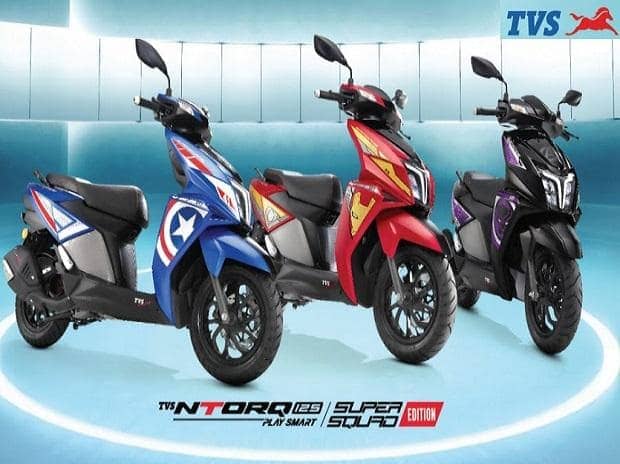
TVS Motor (target price ₹4,817) continues to build market share in domestic and export markets. Its growth is supported by premiumization, a strong product portfolio, and a promising launch pipeline. In 2QFY27, TVS Motor posted a 27 percent year-on-year volume increase, with motorcycles up 24 percent, scooters 23 percent, and three-wheelers 47 percent. Exports grew 35 percent year-on-year.
The company’s rising export contribution and favorable mix of electric vehicles (EVs) are expected to support an approximately 8 percent year-on-year increase in average selling prices. Despite raw material inflation and a higher share of EVs, price hikes, operating leverage, and a richer product mix should cushion margins and boost earnings growth. With expansion in premium motorcycles and electric two-wheelers, alongside capacity increases, TVS Motor is positioned for strong growth. Revenue, EBITDA, and net profit are projected to grow at compound annual growth rates (CAGR) of 20 percent, 23 percent, and 24 percent respectively over FY26–28.
Bajaj Auto (target price ₹12,162) is well placed for medium-term growth due to strong export momentum, gradual domestic market share recovery, and a robust product launch pipeline focusing on premium motorcycles and electric two- and three-wheelers. Total volume grew 20 percent year-on-year in 2QFY27, propelled by a 41 percent increase in exports. The export mix rose from 43 percent to 50 percent, which supports better realizations and product mix.
Domestic motorcycle volumes remain under pressure due to weak demand in the economy segment and changing consumer preferences. Recent market share losses point to the need for successful product refreshes. Bajaj Auto plans to expand capacity for electric two- and three-wheelers by about 25 percent, from 7 million to 9 million units, creating room for growth.
Strong operating leverage, a favorable export and three-wheeler mix, and improving realizations are expected to offset commodity inflation and a higher EV mix, helping maintain margins. Revenue, EBITDA, and net profit are forecast to grow at CAGRs of 20 percent, 22 percent, and 22 percent respectively over FY26–28. Given its solid returns, free cash flow generation, and valuations at 23 times and 19.6 times FY27 and FY28 earnings per share, Motilal Oswal holds a constructive stance on Bajaj Auto.
The Indian automotive sector remains a critical component of the country’s industrial landscape, influencing employment, manufacturing, and exports. As the market transitions with increasing interest in electric vehicles and premiumization trends, monitoring supply chains, commodity costs, and macroeconomic factors will be essential for stakeholders.
What's Your Reaction?
 Like
0
 Dislike
0
 Love
0
 Funny
0
 Wow
0
 Sad
0
 Angry
0





Comments (0)