
Experts Highlight Global Rate Risks and Capital Outflows Impacting Indian Markets

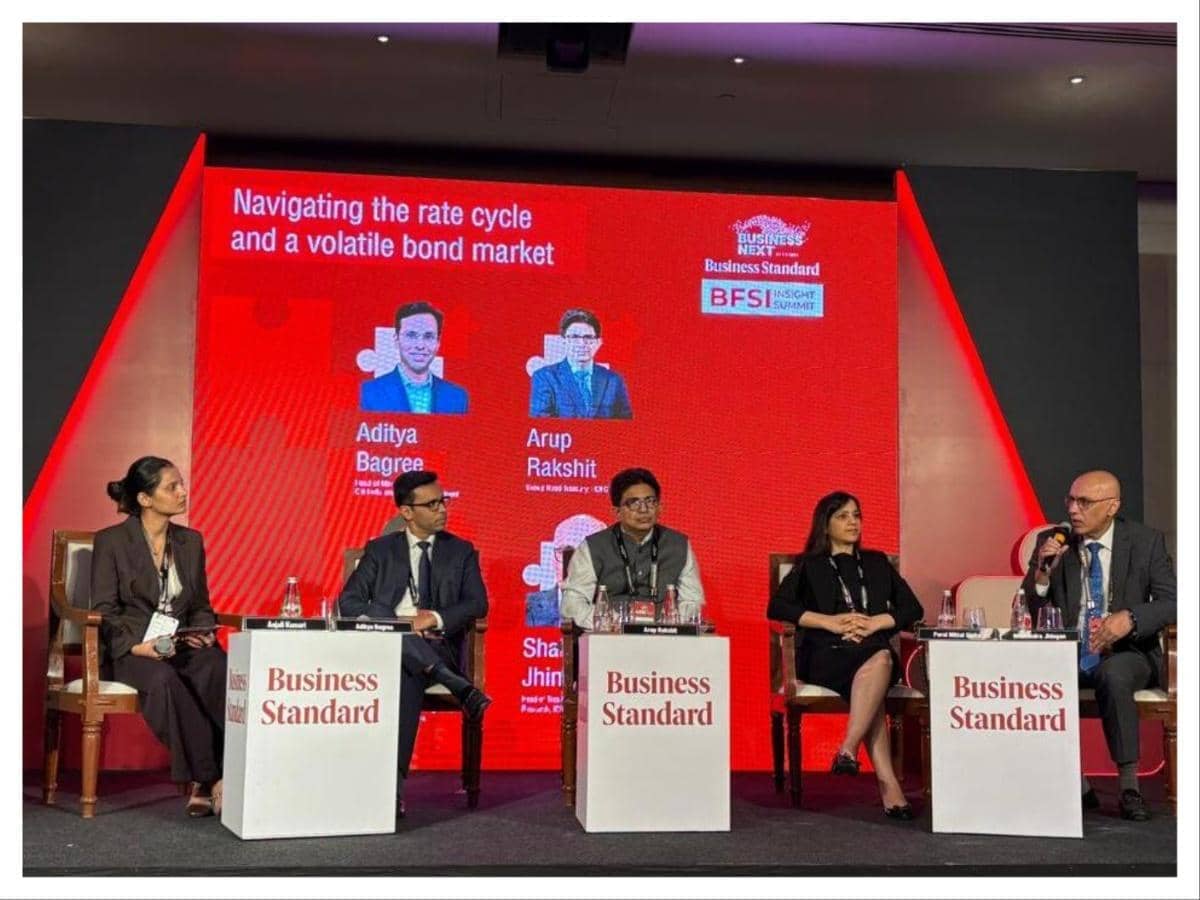
At the recent Business Standard BFSI Insight Summit 2026, financial experts discussed the ongoing pressures facing Indian financial markets due to rising global interest rates, persistent high oil prices, and capital outflows linked to the surge in artificial intelligence (AI) investments. These factors are expected to continue influencing market dynamics and investor sentiment in India for the foreseeable future.
Aditya Bagree, head of markets at Citi India and the Indian Subcontinent, highlighted several key contributors to the rupee’s depreciation. He noted that elevated global oil prices, which have remained high for longer than anticipated, significantly impact India as a major oil importer. "The current oil basket costs us nearly $120," Bagree explained, illustrating the strain on the country’s trade balance.
Bagree also pointed out the role of foreign portfolio investor (FPI) outflows in weakening the rupee. While India has managed current account deficits in the past through robust capital inflows, recent trends show a different picture. Over the last two years, Indian equities have experienced nearly $60 billion in FPI outflows, with $10 billion moving out just in the past two months. This shift is partly driven by global funds reallocating capital into AI-related ventures.
Shailendra Jhingan, head of treasury and economic research at ICICI Bank, emphasized that demand for capital to fund AI projects presents a more significant challenge to emerging markets than oil prices currently do. He noted that countries like the US and France are borrowing heavily to finance fiscal deficits, which is pushing yields higher. This environment of increased borrowing is expected to continue as AI development expands. Although AI has the potential to boost productivity and economic growth, the resulting capital outflows from emerging markets like India could persist unless there is a decline in oil prices.
While foreign investors remain cautiously optimistic about Indian equities, Bagree mentioned that they are waiting to see sustained earnings growth that justifies current valuations before resuming large-scale investments. He also touched on ongoing discussions regarding the removal of capital gains tax as a measure to encourage investment, but stressed that broader structural reforms are necessary. These include enhancing the ease of doing business, offering manufacturing incentives, and developing dedicated investment corridors.
Parul Mittal Sinha, head of markets for India and South Asia at Standard Chartered Bank, discussed the unusual nature of recent US Treasury yield increases. Unlike previous instances driven by growth expectations, the current rise to around 5 percent for the 10-year yield is largely due to worsening fiscal conditions in the US and other developed nations such as France and Japan. This has led to higher term premiums, meaning investors demand greater compensation for holding long-term bonds. Emerging markets are feeling the pressure as risk premiums increase globally.
Sinha projects Indian 10-year government bond yields could climb to roughly 7.75-7.8 percent in the next three to six months if current trends continue. Meanwhile, the Reserve Bank of India’s (RBI) recent foreign exchange risk (FERR) measures have helped remove some speculative positions, according to Arup Rakshit, group head of treasury at HDFC Bank. However, importers still hedge their currency exposure due to the relatively low cost compared to potential exchange rate fluctuations.
Rakshit also expressed skepticism about a swift return of foreign portfolio inflows into Indian debt markets, given expectations of further interest rate hikes—potentially three to four more in the near term. Moreover, elevated borrowing costs for high-rated companies could deter lower-rated firms from accessing the corporate debt market. Liquidity tightening and geopolitical uncertainties add to the complex backdrop.
Jhingan addressed challenges banks face with hedging due to the prevalence of external benchmark-linked loans and fixed-rate deposits. He suggested that the development of alternative reference rates, such as a secured overnight rupee rate (SORR), could introduce new hedging instruments but also bring fresh complexities.
The summit panel also explored the evolving landscape of financial market technology, particularly the tokenisation of securities. Sinha described the September tokenised corporate bond issuance as a landmark event enabled by the RBI and Securities and Exchange Board of India’s Demat 2.0 initiative. This approach uses distributed ledger technology (DLT) and central bank digital currency (CBDC) for settlement, promising smoother secondary market transactions in the future.
Rakshit highlighted the potential for tokenisation to extend beyond large corporate bonds to commercial paper and even retail-level transactions. He noted that tokenised digital money could enhance the delivery of government subsidies by reducing leakages. Additionally, if merchant discount rates (MDR) were introduced for Unified Payments Interface (UPI) transactions, tokenised digital payments might gain further acceptance due to the absence of MDR costs.
The discussions at the summit underscored the multifaceted challenges and opportunities facing Indian financial markets amid a shifting global economic environment. High global rates, geopolitical risks, and capital movements linked to technological innovation continue to shape the outlook for investors and policymakers alike.
What's Your Reaction?
 Like
0
 Dislike
0
 Love
0
 Funny
0
 Wow
0
 Sad
0
 Angry
0











Comments (0)