


Funding Challenges Grow for Smaller NBFCs as Sector Evolves in India

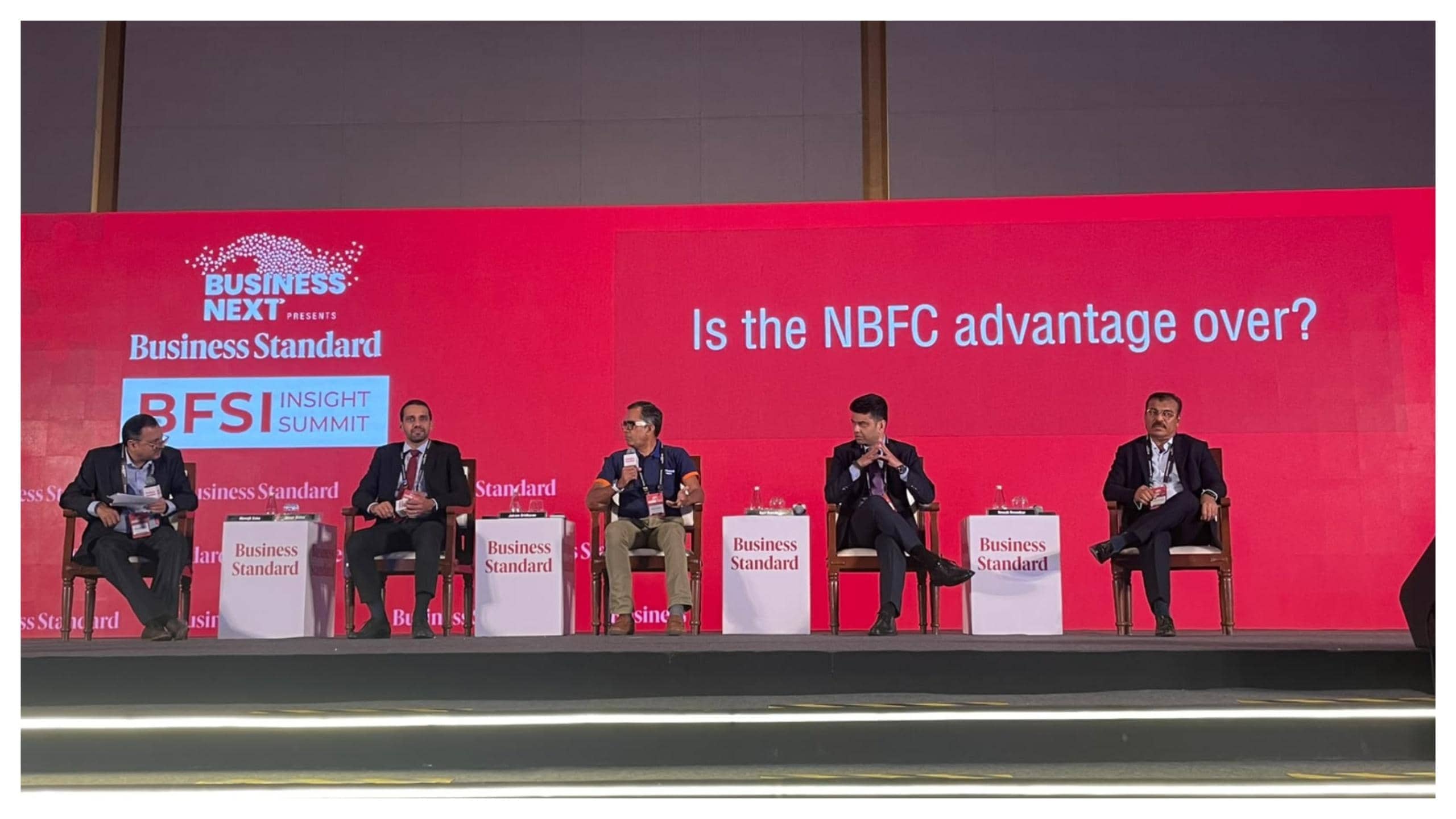


Non-banking financial companies (NBFCs) continue to hold a vital position in India's lending ecosystem, but industry leaders have highlighted widening funding disparities between large and small NBFCs. At the recent Business Standard BFSI Summit held in Mumbai on Monday, executives from prominent NBFCs discussed how this gap is shaping the sector's future and affecting smaller lenders' ability to expand.




Despite increased competition from banks, NBFCs remain key players in catering to customer segments that traditional banks find difficult to reach. Jairam Sridharan, Managing Director and CEO of Piramal Finance, pointed out that NBFCs have preserved a stable share of the lending market over nearly 40 years. He dismissed concerns about the sector's decline, emphasizing that NBFCs continue to serve diverse borrowers effectively.
Umesh Revankar, Executive Vice-Chairman of Shriram Finance, echoed this sentiment, noting that NBFCs are essential for customers who face challenges accessing bank credit. However, Raul Rebello, MD and CEO of Mahindra Finance, acknowledged that the distribution advantage NBFCs once enjoyed is narrowing as banks increase their branch networks. He added that NBFCs still hold a competitive edge in niche financing sectors, particularly through well-established dealer partnerships.
Hitesh Sethia, MD and CEO of Jio Financial Services, stressed that the future competitiveness of financial companies will hinge less on regulatory distinctions and more on their ability to understand and meet customer needs efficiently. He highlighted the importance of using modern technology to provide holistic and seamless service experiences tailored to individual customers.
The panelists agreed that while NBFCs play an indispensable role, an increasing divide is emerging between larger and smaller NBFCs regarding access to funding. Sridharan described this as a growing challenge, with bigger lenders enjoying multiple liquidity sources while smaller and mid-sized firms struggle to secure capital. Constraints related to credit ratings further limit smaller NBFCs, restricting their ability to diversify borrowing avenues.
Revankar suggested that smaller NBFCs could focus on carving out specialized market niches and collaborating with lending partners to build their creditworthiness. Achieving an investment-grade rating, he noted, is a critical milestone that opens up broader funding opportunities.
Technology was identified as a key factor in shaping competition going forward. Sethia remarked that no single firm can meet the diverse needs of India's vast population due to varying risk appetites, capital requirements, and return expectations. Instead, companies could coordinate across lending, investment, and insurance products to better align with customer risk profiles, lowering costs and improving service outcomes.
The discussion also touched on the growing interest in gold loans as an alternative borrowing option. Sethia observed a shift from personal loans toward gold-backed loans, which could help reduce borrowing costs. While Jio Financial Services is monitoring the segment, it currently has no immediate plans to enter it. Revankar emphasized the untapped potential in gold loans, pointing to the substantial value of gold held by Indian households compared to the relatively small size of the organized gold loan market.
Rebello added that gold loans could serve as a valuable entry point for self-employed individuals in rural and semi-urban areas, where income streams can be inconsistent. He cautioned against viewing repayment delays in such cases as defaults, given the irregular earnings patterns prevalent in these regions.
On the broader economic outlook, Sridharan noted that lending growth remains strong for both banks and NBFCs despite various challenges. However, he warned that ongoing geopolitical tensions in West Asia and rising oil prices could exert pressure on the economy if prolonged. He urged caution against assuming that current growth rates are guaranteed under such conditions.
Rebello highlighted that rural demand has outpaced urban demand in vehicle financing during the first half of the year but acknowledged uncertainty for the full year because of factors like El Nino and drought. Revankar mentioned the possibility of temporary asset-quality issues in areas affected by agricultural income shocks, though he did not foresee widespread problems.
The insights from the summit underline the evolving dynamics within India's NBFC sector. While large NBFCs continue to strengthen their position with diverse funding sources and technology-driven customer engagement, smaller players face significant hurdles. Their ability to specialize, build credit ratings, and form partnerships will be crucial to their sustainability. Meanwhile, emerging products like gold loans offer new opportunities to meet customer needs more affordably. The sector's trajectory will depend on how these factors interplay against the backdrop of macroeconomic developments and competitive pressures from banks.
What's Your Reaction?
 Like
0
 Dislike
0
 Love
0
 Funny
0
 Wow
0
 Sad
0
 Angry
0
















Comments (0)