


Insurance Stocks Slide Up to 20% Following IRDAI Expense Limit Proposal




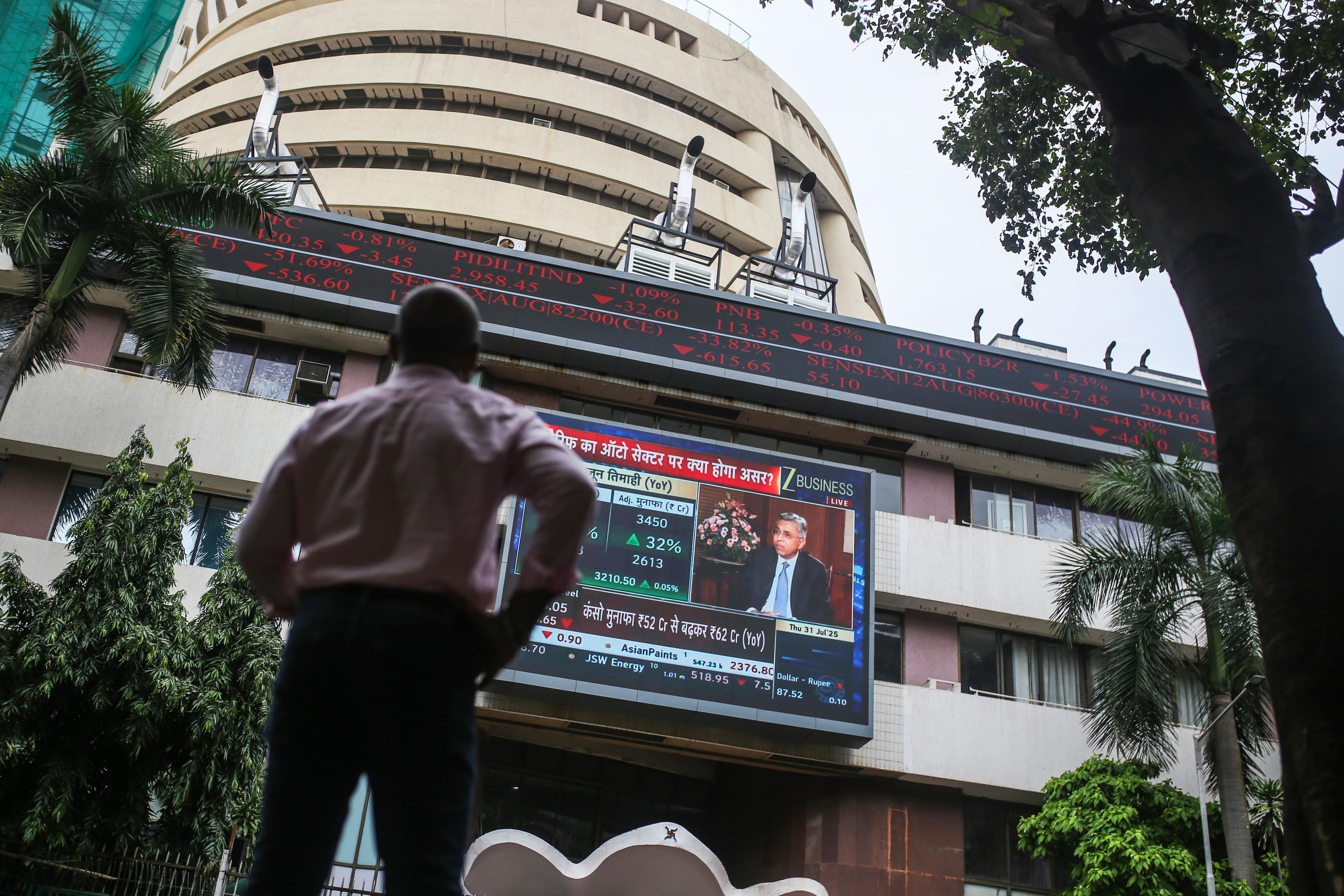
Shares in insurance and finance companies faced significant declines on Thursday, with some falling as much as 20 percent on the Bombay Stock Exchange (BSE). The downturn affected a broad range of players including life insurers, banks, and non-banking financial companies (NBFCs).




Among the hardest hit was PB Fintech, the parent company of Policybazaar, whose stock price plunged exactly 20 percent to close the day at ₹1,509. Max Financial Services, Canara HSBC Life Insurance, and L&T Finance also experienced sharp intra-day drops, each losing up to 12 percent. Another fintech newcomer, Turtlemint Fintech Solutions, saw its shares drop 20 percent to ₹109.10, marking its lowest price since going public in June 2026.
Other prominent companies including ICICI Prudential Life Insurance, HDFC Life Insurance, Cholamandalam Investment and Finance, Info Edge (India), Bajaj Finance, Axis Bank, and Bajaj Finserv recorded declines ranging from 3 to 8 percent. By comparison, the broader market benchmark, the BSE Sensex, decreased by 0.73 percent to 74,284 points at 9:30 AM.
The selloff came in the wake of a new proposal from the Insurance Regulatory and Development Authority of India (IRDAI) released on Wednesday. The regulator suggested a gradual reduction in insurers’ expense of management (EoM) limits. According to the proposal, life insurers must lower their company-level EoM to 15 percent of gross direct premium income (GDPI) within two years, further trimming it to 12.5 percent over five years.
IRDAI’s consultation paper also outlined plans for more stringent controls on commissions, based on product type and distribution channel. For life insurance policies with premium payment terms of 10 years or more, first-year commission rates would be capped at 20 percent for distribution entities and 25 percent for individual agents, with lower limits for shorter-duration products.
Health insurance commissions for individual agents and distributors were suggested at 20 percent and 15 percent respectively for the first year, followed by renewal commissions of 10 percent and 5 percent. Loan-linked insurance products would face even tighter caps, with commission rates reduced to 5 percent for select products. The regulator has invited feedback on these proposals through October 25.
Market analysts have assessed the potential impact of these regulatory changes. ICICI Securities noted that while reduced commission payouts might dampen new business growth, the resulting lower acquisition costs could improve the value of new business margins. They expect the margin gains to offset slower premium growth, especially for insurers heavily reliant on bancassurance channels. Banks, however, might see decreased income from insurance distribution fees as a result.
Motilal Oswal Financial Services (MOFSL) provided a detailed perspective, highlighting that insurance brokers and banks are likely to face greater revenue challenges than individual agents. Bancassurance-heavy insurers, particularly those operating with open architecture platforms, could be more adversely affected. MOFSL emphasized that these changes would necessitate major adjustments across product lines and distribution channels.
Despite the short-term disruptions, MOFSL forecasts improvements in insurers’ value of new business margins and combined ratios over the medium term. They also identified SBI Life and Canara HSBC Life as their preferred picks among life insurers, citing their relatively smoother transition to the new EoM limits. LIC was also viewed as better positioned due to its lower dependence on brokers and bancassurance.
The proposed regulatory reforms reflect IRDAI’s effort to streamline cost structures in the insurance sector and enhance long-term sustainability. By curbing commission expenses and tightening management cost limits, the regulator aims to balance consumer interests with business viability. This development comes at a time when the Indian insurance market is expanding rapidly, driven by increasing awareness and digital penetration.
Investors and industry participants will be closely monitoring the feedback process and subsequent policy finalization. The adjustments required by the new framework may reshape distribution strategies and product offerings in the coming years. For now, the market reaction underscores the sensitivity of insurance stocks to regulatory shifts and the critical role of cost management in this evolving environment.
What's Your Reaction?
 Like
0
 Dislike
0
 Love
0
 Funny
0
 Wow
0
 Sad
0
 Angry
0















Comments (0)