


Fed’s Collins Supports Rate Hike Amid Inflation Concerns

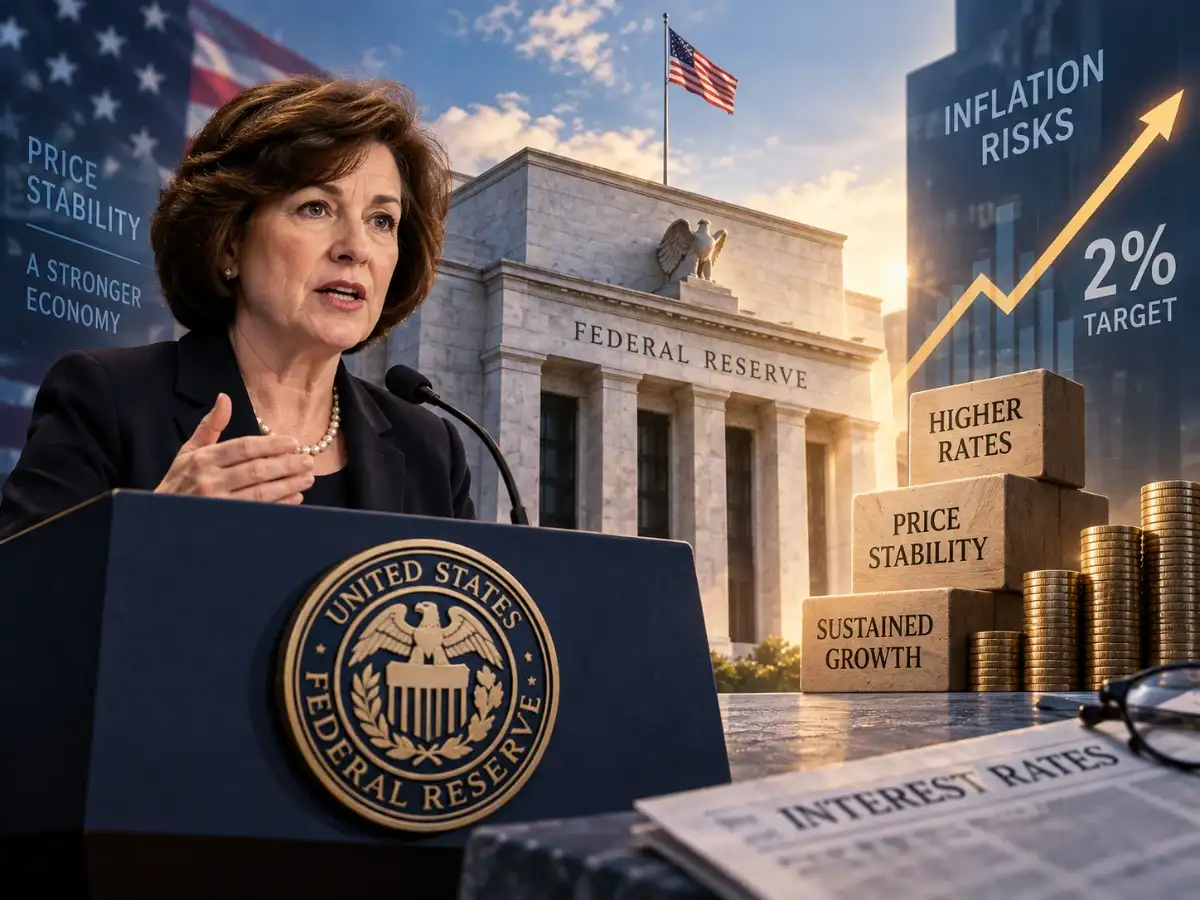


Boston Federal Reserve President Susan Collins expressed support for the Federal Reserve's recent decision to raise interest rates, highlighting ongoing concerns about inflation remaining above the central bank's 2% goal. Her remarks underline the Fed's continued vigilance as it navigates complex economic conditions marked by persistent price pressures.




Last week, the Federal Reserve increased its benchmark interest rate by 25 basis points, moving the target range to 3.75% to 4.00%. This marked the first rate hike in over three years, signaling a shift in monetary policy amid inflation challenges. Policymakers’ updated forecasts suggest the possibility of another quarter-point increase before the end of 2026, though this remains subject to evolving economic data.
Collins noted that improvements in the labor market have provided monetary officials with more flexibility to prioritize price stability. She indicated that a somewhat more restrictive policy stance might be required to keep inflation on a sustainable downward path. Despite her support for the recent hike, Collins, who is not a voting member of this year’s Federal Open Market Committee, did not specify whether she favors further increases.
The inflation backdrop confronting the Fed is complicated. Some recent price increases have been driven by supply chain disruptions and geopolitical tensions, factors typically less responsive to interest rate adjustments than inflation caused by strong demand. This dynamic poses a challenge for policymakers aiming to balance economic growth with price control.
Other Federal Reserve officials have echoed similar concerns about inflation’s persistence. Richmond Fed President Tom Barkin remarked that inflationary pressures have expanded beyond energy and tariff-related costs. Minneapolis Fed President Neel Kashkari also pointed out that elevated inflation is affecting broad segments of the U.S. economy.
These statements illustrate the Fed’s ongoing focus on preventing temporary rises in prices from becoming deeply embedded in the economy. Controlling inflation remains a priority as policymakers monitor the overall strength of the U.S. economy and the effects of external shocks on price levels.
Fed Chair Kevin Warsh has so far refrained from endorsing the projected rate path explicitly, maintaining caution about providing forward guidance. The Fed’s approach reflects the uncertainty surrounding how inflation and economic growth will evolve in the months ahead.
Understanding the Federal Reserve's decisions is critical for investors, businesses, and consumers alike, as interest rate changes influence borrowing costs, investment strategies, and economic activity. The central bank's actions come at a time when inflation has been a key concern globally, driving monetary authorities to carefully weigh the risks of tightening policy too quickly or too slowly.
As inflation shows signs of lingering above desired levels, the Fed’s balancing act will continue to shape market expectations and economic outcomes. Observers will be watching closely for further signals from Fed officials on how they plan to address inflation while supporting sustained growth.
This period highlights the challenges central banks face in managing economic stability amid a mix of supply disruptions, geopolitical uncertainties, and labor market dynamics. The Federal Reserve's policy decisions in the coming months will be pivotal in steering the U.S. economy toward its inflation target and overall financial health.
What's Your Reaction?
 Like
0
 Dislike
0
 Love
0
 Funny
0
 Wow
0
 Sad
0
 Angry
0














Comments (0)