


Singapore Core Inflation Reaches Two-Year Peak in August 2026

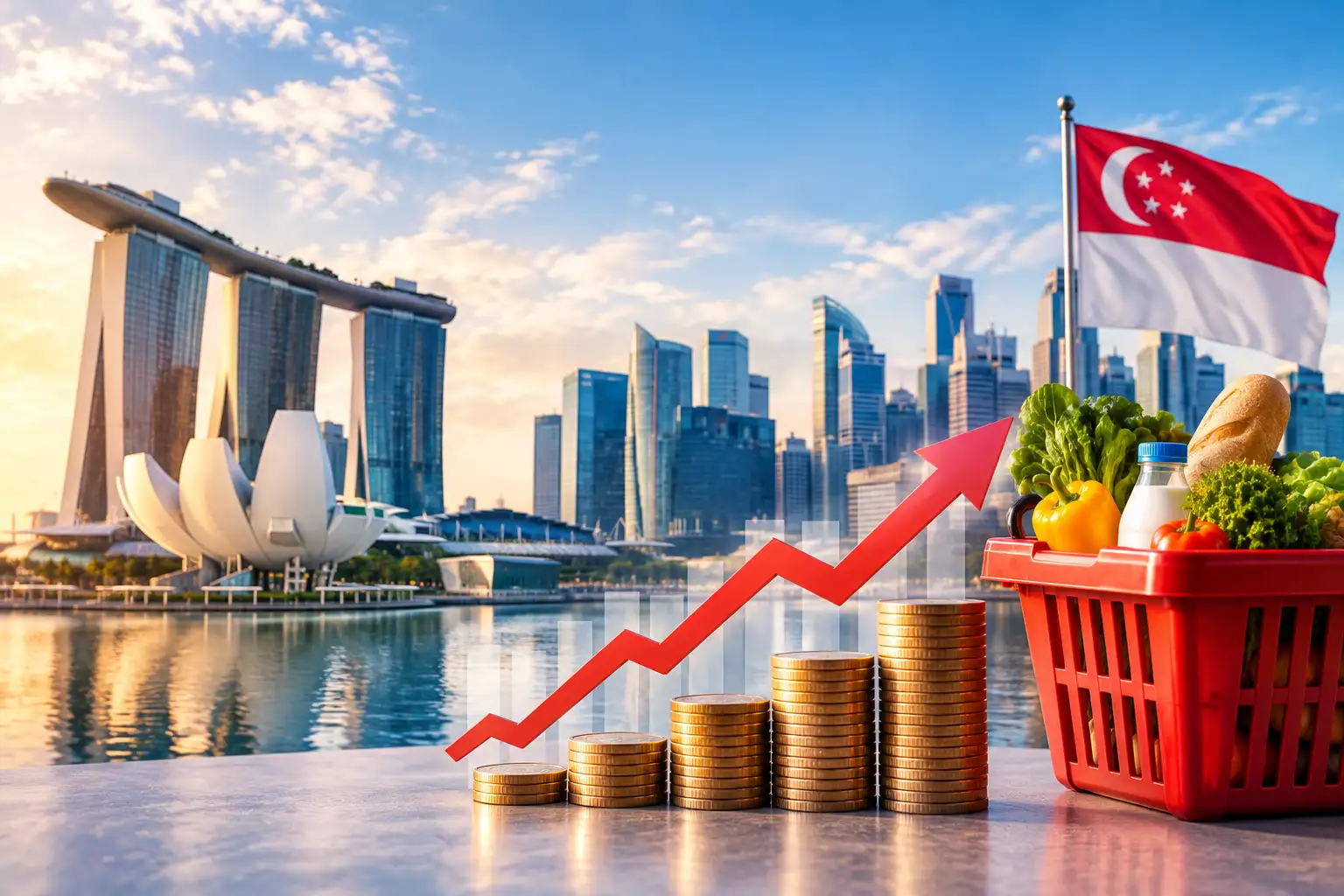


Singapore experienced a notable increase in core inflation during August 2026, with official figures revealing a 2.2% year-on-year rise. This represents the highest level in nearly two years and surpasses both the previous month’s rate and market expectations. The data underscores persistent inflationary pressures within the city-state’s economy, which are expected to continue into the next year.




The core inflation measure, which excludes more volatile components such as private road transport and accommodation costs, climbed from 2.0% in July to 2.2% in August. This exceeded the median forecast of 2.1% from a Reuters poll. The last time core inflation was higher was in September 2024, when it reached 2.8%. Such a rise signals that underlying price pressures are intensifying despite efforts to manage inflation.
Headline consumer price inflation also edged upward, increasing by 2.3% year-on-year in August. This figure aligned with market expectations and reflects the wider cost increases consumers are facing. Together, the core and headline inflation data highlight the complexity of inflation dynamics in Singapore, influenced by both domestic and external factors.
The Monetary Authority of Singapore (MAS), the country’s central bank, has been closely monitoring these trends. It recently tightened monetary policy in late July, citing concerns about inflation risks driven in part by higher energy prices. MAS has indicated that inflation is likely to remain elevated through at least the first half of 2027, suggesting a cautious approach to monetary policy will be maintained.
Alongside rising inflation, Singapore’s economic growth outlook has improved significantly. The Ministry of Trade and Industry raised its forecast for 2026 economic growth to a range between 4.5% and 5.5%, up from the earlier estimate of 2.0% to 4.0% announced in the previous quarter. This upward revision reflects stronger-than-expected performance across key sectors, including manufacturing and services, which have benefited from global demand and domestic resilience.
The combination of robust economic growth and rising inflation presents a challenge for policymakers. While stronger growth supports employment and income gains, it can also contribute to sustained price pressures, complicating efforts to keep inflation within manageable limits. This scenario means the MAS will likely continue to balance tightening monetary conditions with supporting economic expansion.
Singapore’s inflation trends should also be viewed in the context of broader regional and global developments. Many economies are confronting similar inflationary challenges, often driven by energy costs, supply chain disruptions, and shifting consumer demand patterns. Singapore’s open and trade-dependent economy is particularly sensitive to these external influences.
In practical terms, the inflation data affects a wide range of stakeholders. Consumers may face higher costs for goods and services, while businesses will need to manage input price increases carefully. The government and central bank are tasked with maintaining price stability without undermining growth prospects.
Looking ahead, the trajectory of inflation in Singapore will depend on several factors, including global commodity prices, wage growth, and monetary policy adjustments. The MAS’s recent actions and guidance suggest a readiness to respond as needed to evolving economic conditions.
Singapore’s experience is part of a larger picture where central banks worldwide are grappling with how to control inflation while sustaining recovery. For investors, consumers, and policymakers, the developments in Singapore provide a useful example of how a small, open economy manages complex economic pressures in a changing global landscape.
As inflation data continues to be released, market participants will watch closely for signs of easing or further acceleration. Until then, both core and headline inflation rates in Singapore are likely to remain critical indicators for economic decision-making throughout the remainder of 2026 and into 2027.
What's Your Reaction?
 Like
0
 Dislike
0
 Love
0
 Funny
0
 Wow
0
 Sad
0
 Angry
0













Comments (0)