


FIIs Sell Rs 13,000 Crore in Indian Financial Stocks in September

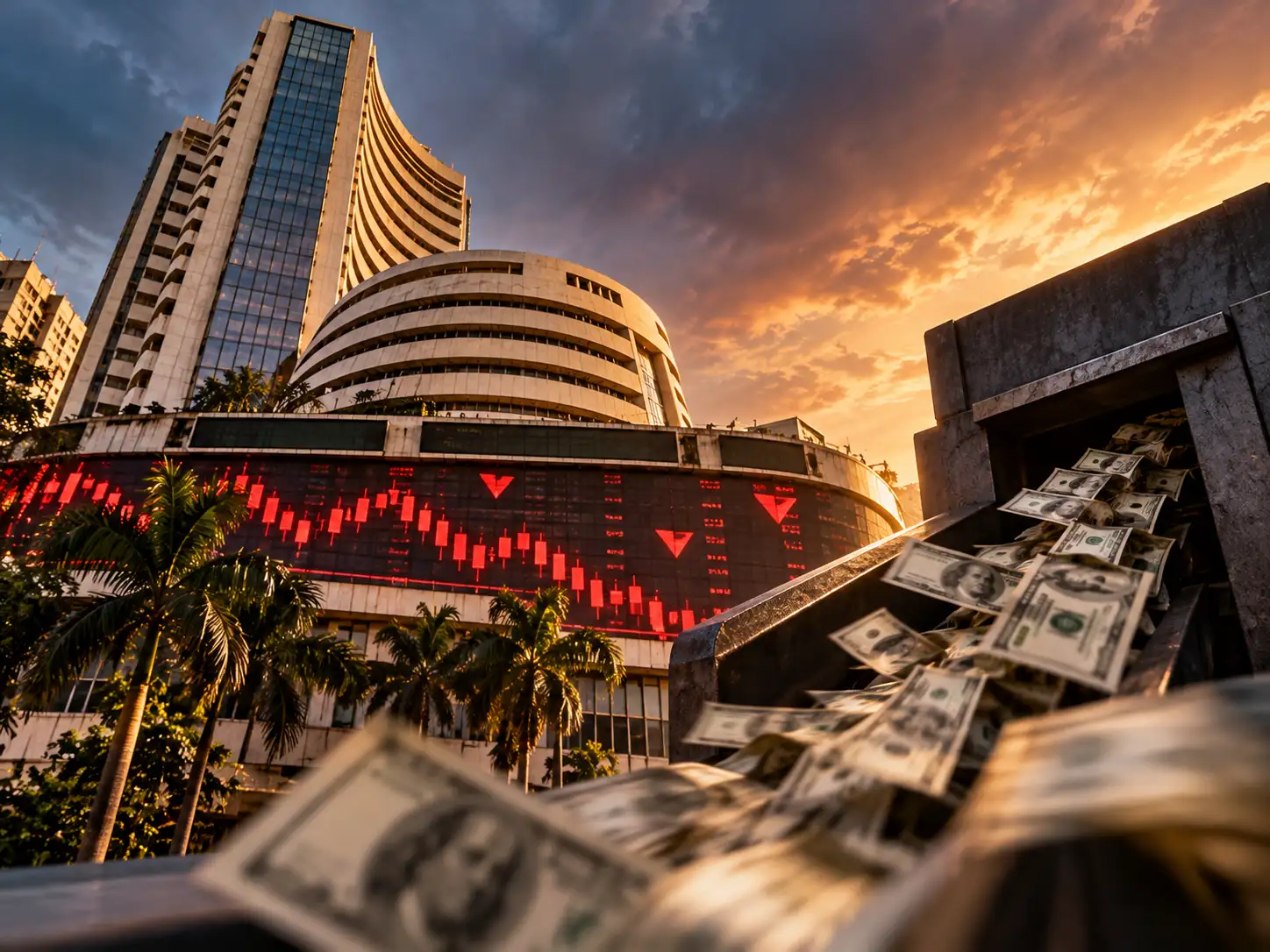


Foreign institutional investors (FIIs) significantly reduced their holdings in Indian financial stocks during September, unloading shares worth Rs 13,147 crore. This large-scale selling contributed to a prolonged decline in the Nifty index, which experienced its longest consecutive weekly losses in 25 years.




According to sectoral data for September, FIIs exited Indian equities to the tune of Rs 35,861 crore across various sectors. Financial services emerged as the most heavily sold segment, accounting for over one-third of the total outflows, marking a sharp focus of foreign investors' selloff activity.
The selling pressure in financial stocks intensified particularly in the latter half of the month. Between September 16 and 30, FIIs divested Rs 6,943 crore worth of financial services shares, following an initial Rs 6,204 crore selloff in the first two weeks. This pattern indicates a sustained shift in foreign investor sentiment against financial stocks.
However, the selloff was not limited to banks and financial services alone. Other sectors also recorded significant FII exits in September. Oil, gas, and consumable fuels suffered outflows of Rs 6,854 crore, automobiles Rs 6,212 crore, telecom Rs 3,414 crore, metals and mining Rs 3,003 crore, and fast-moving consumer goods (FMCG) Rs 3,001 crore. Despite these figures, financials clearly remained the primary target.
The trend of financial services facing the highest sectoral outflow has been consistent through much of 2024. Reports show that January, March, April, May, and September all saw the largest FII exits from this sector. June was an exception when FIIs bought financial stocks worth Rs 3,371 crore, even as they sold equities overall. Year-to-date, FIIs have sold Rs 1.15 lakh crore in financial services, which represents nearly 44% of the total equity outflows of Rs 2.60 lakh crore.
The months of July and August offered some optimism as foreign investors returned to Indian markets, with net purchases of Rs 20,202 crore and Rs 29,628 crore respectively. These months briefly reversed the earlier trend of heavy selling seen from March through June. However, the resurgence was short-lived, as September saw this momentum wiped out sharply.
Pabitro Mukherjee, deputy vice president of research at Bajaj Broking, attributed the continued selling pressure to a challenging global environment. Factors such as elevated US bond yields, strong Brent crude oil prices, and sustained FII outflows have negatively affected market sentiment and contributed to the extended decline in benchmark indices.
Financial stocks are often the largest portion of foreign portfolios in India, making them a natural starting point when FIIs seek quick liquidity. Banks, in particular, are sensitive to macroeconomic variables that foreign investors closely monitor, including bond yields, currency fluctuations, credit growth, interest rate trends, and asset quality concerns.
VK Vijayakumar of Geojit Investments pointed out that high crude oil prices and rising US bond yields pose challenges for Indian equities and foreign portfolio investments. Elevated crude prices exacerbate India’s import costs, fuel inflation, and pressure the rupee. Meanwhile, attractive US yields draw investors towards dollar-denominated assets instead of emerging market stocks.
If the rupee remains weak and US yields stay high, foreign investors may continue to reduce their exposure to sectors sensitive to interest rates and domestic economic conditions, such as financials.
Anish Tawakley, chief investment officer at DSP Mutual Fund, advised against trying to predict Indian market movements solely based on foreign fund flows, describing it as betting on market mood swings. He expects earnings growth, rather than liquidity trends, to influence portfolio decisions over the next one to one and a half years, and remains optimistic about large-cap banks.
This recent activity highlights how global economic factors and domestic sensitivities converge to shape foreign investor behavior in Indian equity markets. The financial sector, as a key barometer, often reflects broader trends impacting capital flows and market performance.
Disclosure: This article was authored by Podishetti Akash, who is not a SEBI-registered Research Analyst or Investment Adviser. Neither the author nor his relatives hold financial interests in any companies mentioned as of the publication date. The views expressed here represent those of the respective SEBI-registered analysts or brokerages referenced and should not be interpreted as recommendations by The Economic Times Digital or the journalist. Readers are encouraged to consult original research and make investment decisions based on their own analysis.
What's Your Reaction?
 Like
0
 Dislike
0
 Love
0
 Funny
0
 Wow
0
 Sad
0
 Angry
0


















Comments (0)