


How Hall and Woodford Transformed Economic Policy with Nobel-Winning Research

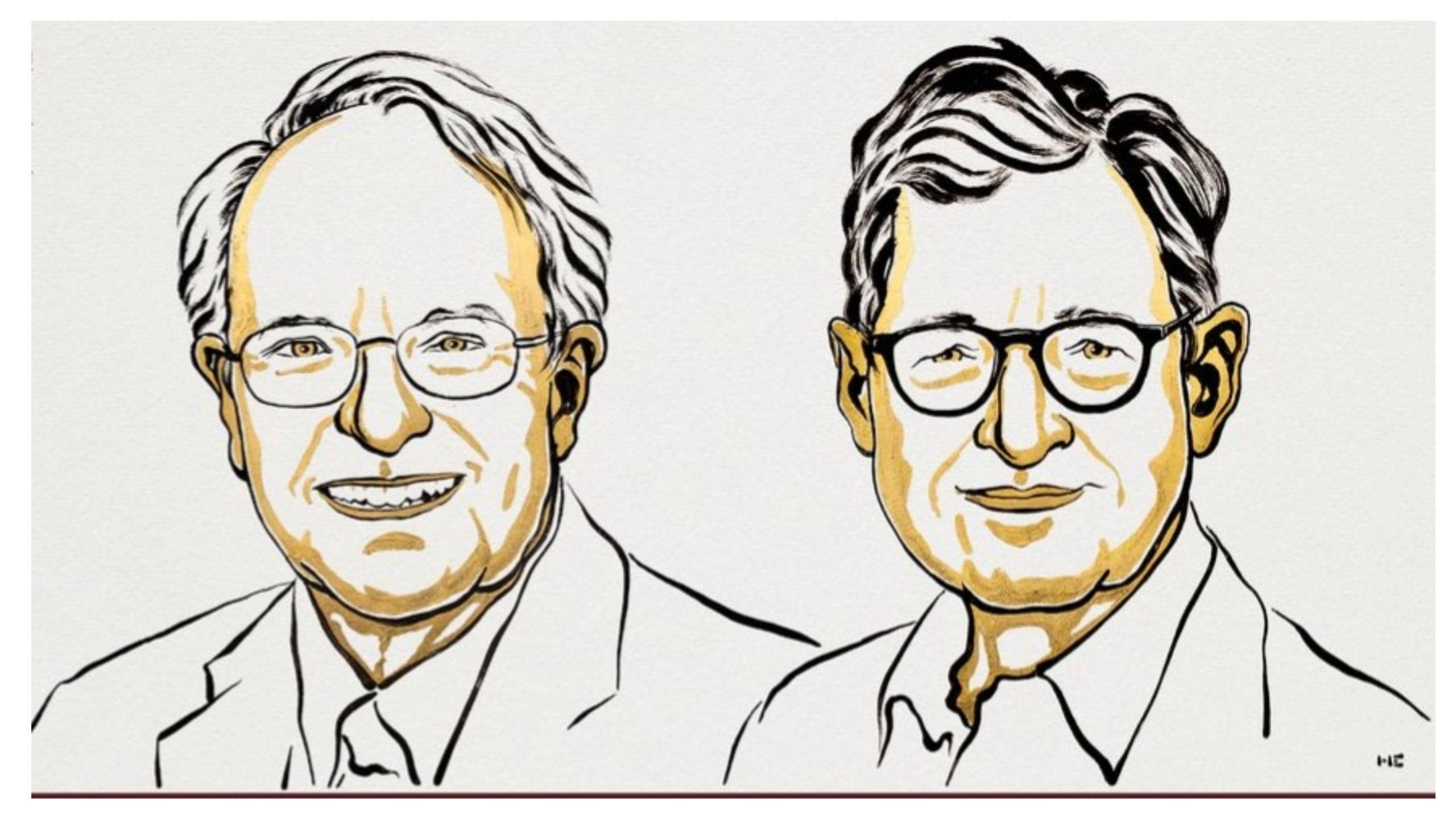


The 2026 Nobel Prize in Economics was awarded to Robert E Hall and Michael Woodford for their groundbreaking contributions to understanding and improving stabilization policies. Their work introduced New Keynesian models that provide a clear framework for how monetary and fiscal policies influence business cycles. These models have become essential tools for central banks and finance ministries worldwide in shaping economic decisions.




The Royal Swedish Academy of Sciences honored Hall and Woodford "for microeconomic foundations of macroeconomic stabilization," recognizing their efforts to connect individual behavior with broader economic outcomes. To appreciate the significance of their research, it helps to look back at how economic policymaking was conducted before the shocks of the 1970s.
Traditional macroeconomic theory, largely rooted in John Maynard Keynes’s ideas from nearly a century ago, emphasized the need for government intervention to stabilize demand. According to Keynes, markets do not always self-correct efficiently, leading to periods of unemployment or inflation. Policymakers were tasked with balancing demand to keep the economy running smoothly—stimulating it when growth lagged and cooling it when inflation surged.
Before the oil crises, economists relied on the Phillips curve, which suggested an inverse relationship between unemployment and inflation. If unemployment rose, inflation was expected to fall, and vice versa. Additionally, it was assumed that people’s spending would rise predictably with increases in disposable income.
However, the oil shocks of the 1970s disrupted these assumptions. The sudden spike in oil prices increased production costs, leading to rising inflation alongside weak economic growth and higher unemployment—a phenomenon termed stagflation. Existing models failed to explain why inflation and unemployment could rise together, challenging long-held beliefs.
Economist Robert Lucas, awarded the Nobel Prize in 1995, argued that earlier models erred by assuming stable relationships between economic variables despite changing policies. This insight prompted a shift toward microfoundations, which examine how individual households and firms make decisions, laying the groundwork for Hall and Woodford’s research.
Robert E Hall’s Insights on Consumption
Hall revolutionized the understanding of household spending by emphasizing the role of expectations. He proposed that consumption depends not just on current income but on anticipated future earnings. For example, a person expecting a salary increase is likely to spend more today, while another fearing job loss might cut back despite earning the same amount currently.
In a pivotal 1978 paper, Hall argued that if consumers use all available information efficiently, changes in their consumption are essentially unpredictable. This explained why traditional models that tried to forecast spending based on income changes often failed. Furthermore, Hall’s work showed that responses to policy changes, such as tax cuts, could vary widely depending on individuals’ expectations and financial security. Not all households operate on forward-looking plans; some live paycheck to paycheck, which affects how they respond to economic policies.
Michael Woodford’s Framework on Monetary Policy
Woodford developed a comprehensive model that integrates consumer behavior, firm pricing strategies, and central bank actions. His 2003 formulation of the New Keynesian model included microfoundations inspired by Hall’s findings and other research.
One key concept Woodford introduced is the natural or neutral interest rate—an ideal level at which monetary policy neither stimulates nor restricts economic activity. Central banks adjust rates relative to this benchmark to influence borrowing, spending, and inflation.
Woodford also addressed the reality of sticky prices. Many businesses cannot adjust prices instantly due to menu costs or customer reactions. For example, a restaurant facing rising ingredient costs may delay increasing menu prices. This price rigidity can cause output and employment to fluctuate when demand changes.
Another important element in Woodford’s work is the role of expectations. If businesses and consumers believe a central bank is committed to controlling inflation, their behaviors adjust accordingly, making policy more effective. This insight highlighted the importance of credibility, transparency, and communication in monetary policy.
Woodford’s model also introduced the concept of the output gap, which measures the difference between actual economic output and the level achievable if prices were flexible. During the 1970s oil crisis, higher production costs reduced potential output, meaning demand was excessive relative to capacity. This mismatch helped explain the coexistence of inflation and unemployment that baffled earlier models.
Impact on Policymaking and Economic Thought
The research by Hall and Woodford has reshaped how central banks and governments approach stabilization. By grounding macroeconomic policy in individual behavior and expectations, their models provide tools to better predict and manage economic fluctuations. This has influenced policy decisions globally, from interest rate adjustments by the Reserve Bank of India to fiscal planning in advanced economies.
Their work represents a major advancement in macroeconomics, linking micro-level decision-making with the broader economic environment. It has helped policymakers respond more effectively to crises and understand the complex interplay between inflation, growth, and employment.
As the global economy continues to face challenges, including supply shocks, inflationary pressures, and shifting consumer behavior, the frameworks developed by Hall and Woodford remain vital in guiding economic stabilization efforts.
What's Your Reaction?
 Like
0
 Dislike
0
 Love
0
 Funny
0
 Wow
0
 Sad
0
 Angry
0


















Comments (0)