


Nifty Ends Seventh Week of Losses, Longest Downturn Since 2020 Crash




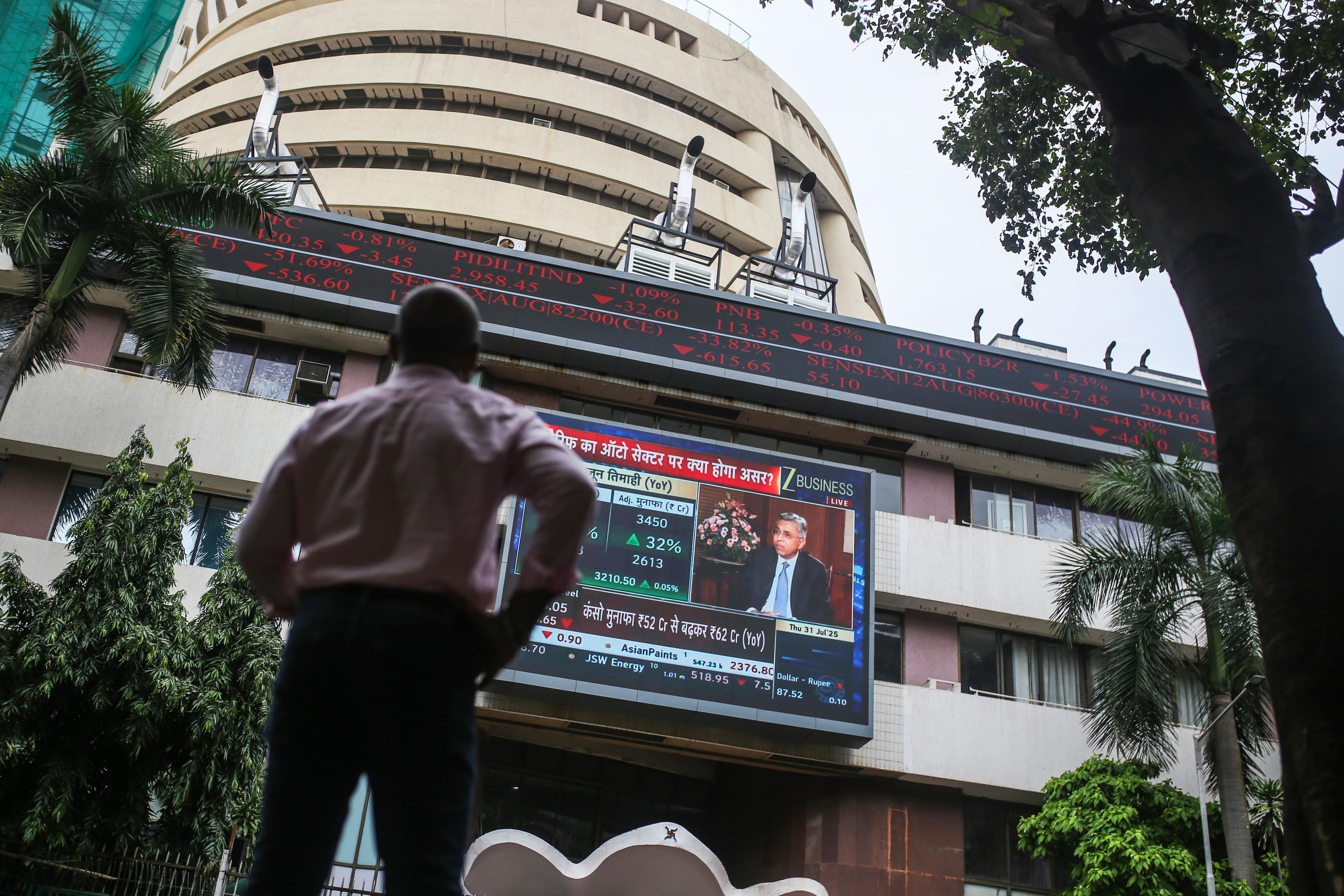
The Nifty 50 index experienced a seventh consecutive week of losses, closing at 23,140.50 points on Friday. This marks the longest streak of weekly declines since the Covid-19 related market crash between February and April of 2020, when the index similarly recorded seven straight weeks of downturn amid the pandemic-triggered global sell-off.




Over the week, the benchmark index dropped 205.90 points, falling from 23,346.40 points in the previous week. The index had briefly risen to 23,414.30 on Monday, coinciding with a 3.4 percent decline in Brent crude oil prices. However, those gains were reversed by the end of the week, despite a modest 0.3 percent recovery on Friday. Currently, the Nifty stands 12.3 percent below its 52-week high of 26,373.20 and remains 4.3 percent above its recent low.
Several notable events contributed to the turbulent trading week. The Tata group's internal dispute, which could alter the ownership structure of its parent company, attracted significant market attention. Additionally, a new circular from the Insurance Regulatory and Development Authority of India (IRDAI) negatively affected the market capitalization of insurance companies. The price of Brent crude also fluctuated, touching $106 per barrel at one point. The week also featured the listing of the National Stock Exchange (NSE), which debuted at Rs 1792 per share but closed the week down 0.39 percent from its initial price.
Indian markets were reminded of their sensitivity to global financial conditions, particularly as yields on US Treasury bonds rose. The 10-year and 30-year US bond yields reached 5.18 percent and 5.35 percent respectively, levels not seen since 2007. Abhay Agarwal, founder and fund manager at Piper Serica, highlighted the effect of these rising yields: "The spike in U.S. bond yields, especially the 10-year and 30-year, is unsettling global investors. Despite intervention efforts, yields remain high, which is a cause for concern."
Brent crude prices declined by 11.5 percent over the week, settling at $98.59 per barrel from $111.35 on September 18. Meanwhile, India's benchmark 10-year government bond yield increased by 5 basis points to 7.119 percent, marking the highest close since May 18. Since the conflict in Iran began, bond yields have risen by 46 basis points, and over the past year, they have climbed by 62 basis points, according to analysis by Business Standard. The Indian rupee weakened slightly, falling 0.06 percent to 95.82 against the US dollar for the week.
The equity sector most affected was information technology, which lost ₹48,435 crore in market value, a 2.1 percent decline. Insurance stocks also faced significant pressure, shedding ₹7,000 crore or 0.6 percent during the week. PB Fintech, a major player in insurance distribution, saw its market capitalization plunge by ₹28,000 crore, representing a 33 percent drop.
The insurance sector's slide was largely attributed to the impact of rising yields and regulatory changes. The BSE Insurance index fell 2 percent to 1,486.5 points for the week. Over the past year leading to August 31, the NSE Nifty Insurance index declined 10.5 percent. Major companies such as SBI Life, HDFC Life, and Life Insurance Corporation of India constitute more than half of the index's weight.
Jefferies analysts Supratim Datta, Prakhar Sharma, and Satvik Kanabar pointed out that PB Fintech indicated a potential reduction in the net present value (NPV) of its non-life insurance business to between 33 and 40 percent of the original NPV if the IRDAI's proposed commission cuts for health and motor insurance are implemented. They also noted that life insurance NPV might remain stable due to higher renewal commissions in term insurance. The report estimated a 10 percent cut in new business commission rates could lead to a 10-12 percent decrease in earnings. PB Fintech also revealed that around 20 percent of its revenues (equivalent to 40 percent of expenses) go towards operating call centers, suggesting the company may reduce hiring and marketing efforts in response to the regulatory changes. The proposed IRDAI reforms could significantly impact PB's near-term profitability.
The IRDAI's consultation paper, aimed at overhauling insurance distribution regulations, could restructure commission frameworks for online aggregators like PB Fintech's Policybazaar. Policybazaar holds nearly 90 percent market share in online insurance aggregation but has experienced prolonged share price pressure over the past year.
Meanwhile, the Tata group remained in the spotlight amid internal disagreements. The Tata Sons board reappointed N Chandrasekaran as chairman, a move opposed by Tata Trusts led by Noel Tata. This dispute influenced trading sentiment, resulting in losses across 18 of the 23 listed Tata companies, with a combined market value decline of ₹40,681 crore. Gains from five other companies, including Titan and Tata Steel, partially offset the losses.
Market participants expressed cautious optimism that both the Tata group issues and the IRDAI regulatory concerns will be resolved through ongoing discussions. However, global economic factors continue to weigh on the Indian market, especially rising borrowing costs due to higher bond yields globally.
As Abhay Agarwal explained, "India is indirectly affected by these global trends. Despite rising domestic yields, foreign investors remain hesitant to bring capital into India. Crude prices have not fallen sufficiently, and inflationary pressures persist, which the Reserve Bank of India is monitoring closely. These factors contribute to sustained market uncertainty."
This ongoing interplay between domestic corporate developments, regulatory changes, and global financial conditions underscores the challenges facing Indian equity markets as they navigate a complex economic environment.
What's Your Reaction?
 Like
0
 Dislike
0
 Love
0
 Funny
0
 Wow
0
 Sad
0
 Angry
0














Comments (0)