


IRDAI Proposes Ban on Dark Patterns, Pressures Insurance Stocks

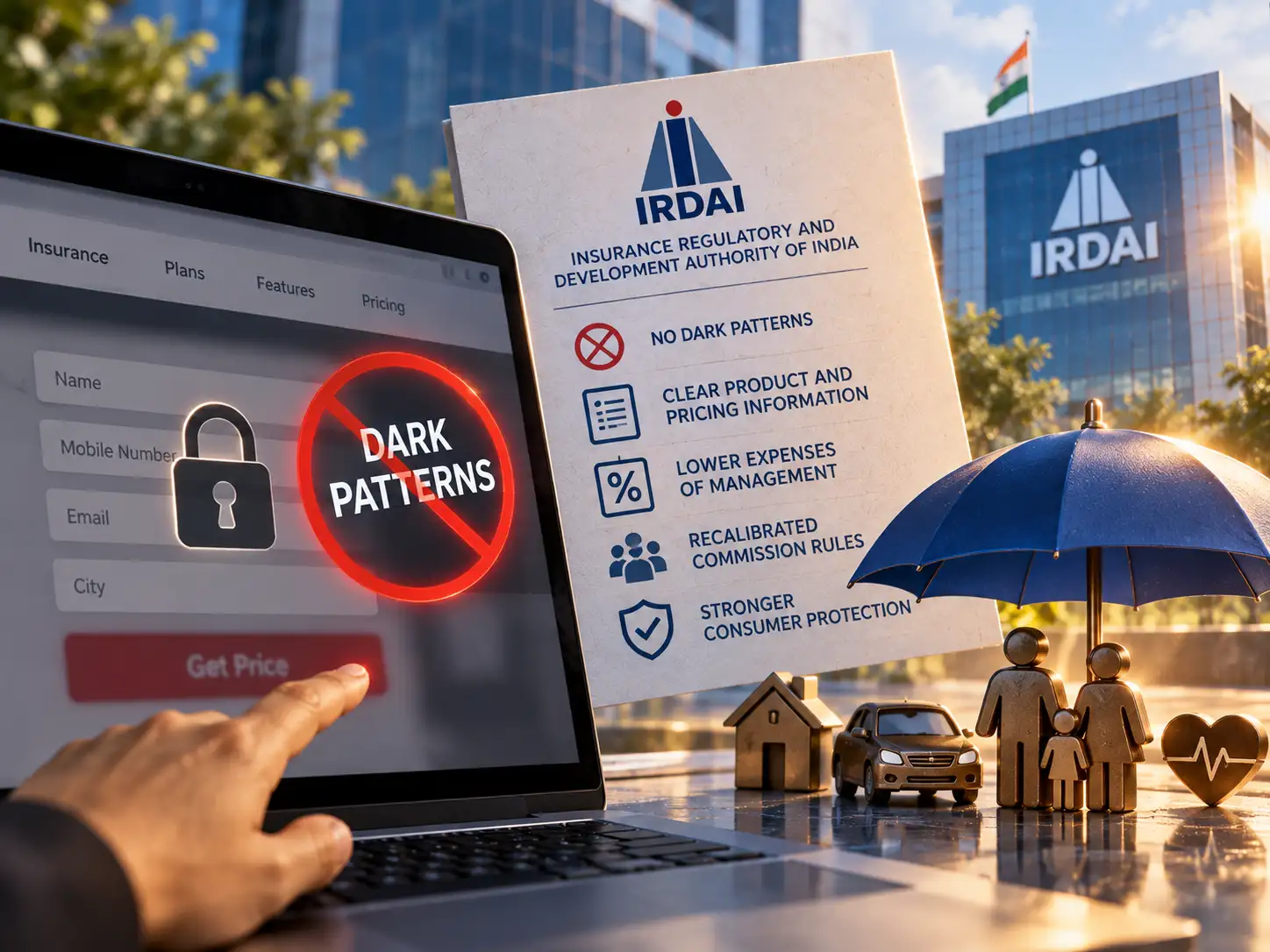


Shares of major Indian insurance companies including PB Fintech, SBI Life Insurance, HDFC Life Insurance, and ICICI Lombard General Insurance experienced sharp declines on Thursday following an announcement by the Insurance Regulatory and Development Authority of India (IRDAI). The regulator proposed a ban on ‘dark patterns’ used on insurance websites, a move that could reshape the way insurance products are marketed and sold online.




Dark patterns refer to tactics where websites require customers to enter personal information before revealing product details such as features and pricing. IRDAI’s draft proposal seeks to eliminate these practices to ensure greater transparency and consumer protection. The announcement triggered a selloff, with PB Fintech shares hitting the 10% lower circuit at Rs 1,701, SBI Life Insurance dropping over 3% to Rs 1,700, and HDFC Life Insurance plummeting nearly 7% to Rs 523 per share.
The regulator’s recommendations include significant changes to the expense structure governing commission and distribution costs, which could pressure insurers’ profitability. Currently, insurers can spend up to 30% of their gross written premium (GWP) on commissions and other operating expenses. IRDAI proposes reducing this limit progressively to 20% of the domestic Gross Direct Premium Income (GDPI) over five years. This recalibration is intended to lower the overall cost of insurance, broaden coverage, and improve returns on life insurance products.
IRDAI’s consultation paper outlines a new framework to simplify the fragmented distribution channels in the industry. It suggests categorizing entities involved in insurance sales into three groups: Insurance Distribution Entities (IDEs), Insurance Distribution Persons (IDPs), and Market Infrastructure Institutions (MIIs). This restructuring aims to streamline operations and make insurance products more accessible, especially to underserved populations.
One key aspect of the proposal is the requirement for insurers to disclose product features, pricing, and commission rates upfront without requiring customers to provide personal data first. This approach aligns with consumer protection laws and is designed to prevent deceptive marketing practices. The regulator also plans to ban compulsory bundling of insurance products, such as credit life insurance, and restrict the types of policies that banks can sell. Additionally, there will be a prohibition on incentives offered to agents to avoid conflicts of interest and mis-selling.
In terms of commissions, IRDAI wants to move away from a one-size-fits-all model. Instead, commission limits will vary based on factors like the insurance segment, product complexity, distribution channel, and servicing effort. Insurers and large distribution firms will be required to publicly disclose their commission policies in a clear and accessible manner, enhancing transparency.
To combat mis-selling, the draft also introduces enforceable obligations related to suitability. Insurers must document customer needs and ensure the insurance product matches those needs before finalizing sales. These measures are intended to build greater market discipline and protect consumers from inappropriate insurance purchases.
The insurance sector in India has been growing steadily, driven by increasing awareness and government initiatives promoting insurance penetration. However, distribution costs and complex sales practices have been longstanding challenges. IRDAI’s proposals represent a significant regulatory push towards a more consumer-friendly and cost-efficient market environment.
Public feedback on the draft consultation paper is currently being solicited, and the regulator will review comments before finalizing the rules. Market participants will be closely watching the outcome, as the new regulations could reshape commission structures and digital sales strategies for insurers.
In summary, IRDAI’s proposed ban on dark patterns and overhaul of distribution norms aims to boost transparency, reduce costs, and foster sustainable growth in India’s insurance industry. While these changes could introduce short-term challenges for insurers’ business models, they also promise a fairer and more open marketplace for policyholders.
Disclaimer: The views and recommendations in this article reflect those of the referenced SEBI-registered analysts and do not represent the opinions of The Economic Times Digital or its journalists. Readers should consult original research reports and make investment choices based on their own judgment.
What's Your Reaction?
 Like
0
 Dislike
0
 Love
0
 Funny
0
 Wow
0
 Sad
0
 Angry
0


















Comments (0)