


How India's Wealth Portfolios Are Shifting with SIFs, Passive Funds, and GIFT City

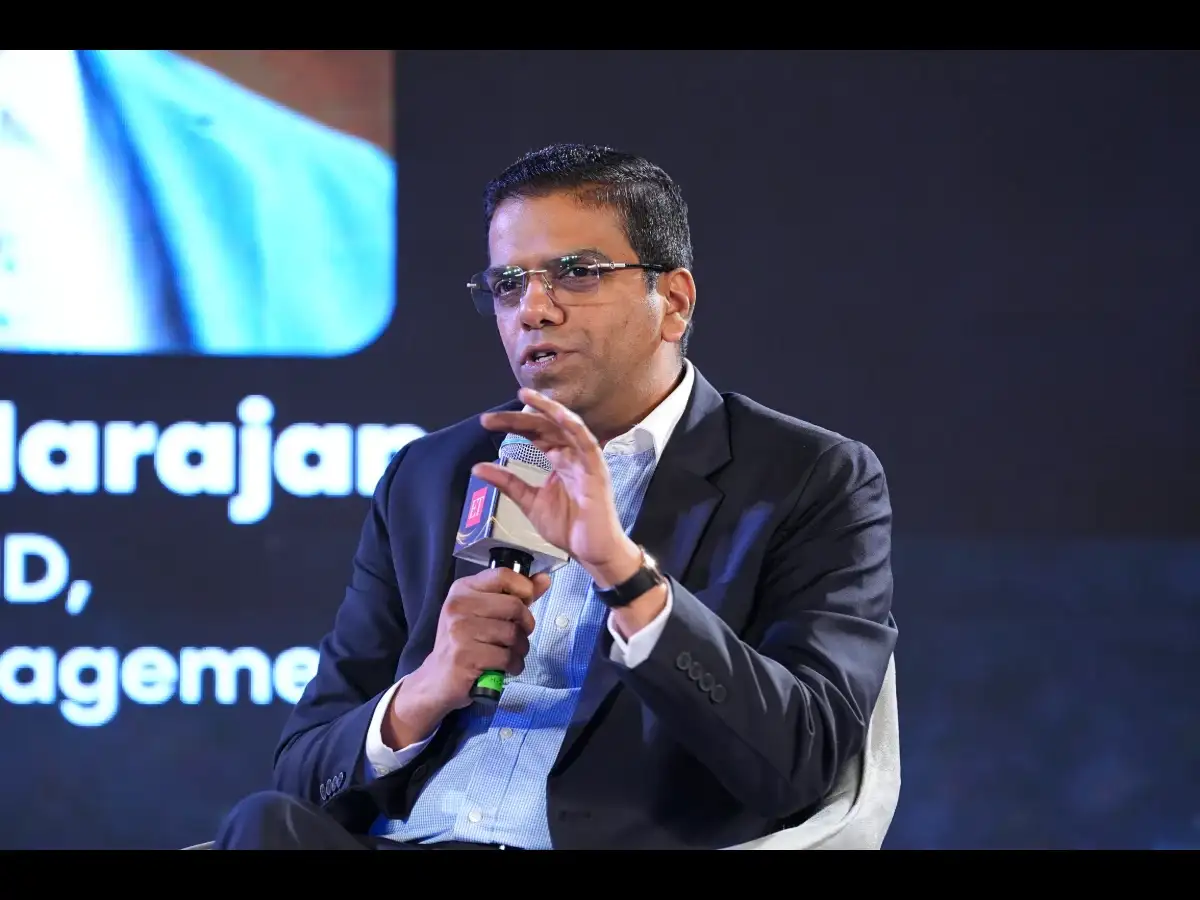


India's wealth management sector is undergoing notable transformation as investors seek to expand beyond conventional equity and debt investments. Anand Vardarajan, Managing Director and CEO of Tata Asset Management, highlighted this shift during a conversation at the ET Alpha Wealth Summit 2.0 held in Mumbai.




Vardarajan emphasized the growing role of passive funds, Specialised Investment Funds (SIFs), and investment opportunities through the Gujarat International Finance Tec-City (GIFT City) as pivotal tools in modern portfolio construction. These products are enabling investors to diversify more strategically and access sophisticated investment strategies previously less available to the Indian market.
Global Bond Yields and Market Impact
A key point in Vardarajan's discussion was the importance of the US 10-year Treasury yield as a global financial market barometer. At the time of his remarks, the yield had surged by approximately 70 basis points in a month, influencing bond markets not only in the US but across Europe and India.
Rising government bond yields signal higher costs of capital. This dynamic pressures equity markets to generate stronger returns to remain attractive to investors. Vardarajan pointed out that as yields increase, equities must "run harder" to justify valuations, noting that higher interest rates can suppress corporate profits and lead to valuation adjustments.
Aside from interest rates, persistent crude oil prices and inflation concerns are factors that may continue to contribute to market volatility in the near term.
Complementary Roles of Active and Passive Investing
Vardarajan challenged the notion of choosing between active and passive investment styles, advocating instead for their combined use in portfolio management. He suggested passive funds serve as a cost-effective foundation by tracking broad market indices, while active funds can be layered on to seek excess returns or alpha.
He also recommended incorporating multi-asset strategies to span different asset classes such as commodities and currencies, alongside long-short strategies that offer potential downside risk management. Each investment layer should reflect the investor’s goals and risk tolerance.
To illustrate market concentration, Vardarajan referenced the dominance of the 'Magnificent Seven' technology stocks in the US. When a few companies drive index performance, passive investors benefit directly, whereas active managers who underweight these stocks may lag. He drew a parallel with India’s 2017 market, where a handful of large companies like HDFC, Reliance, Infosys, ICICI, TCS, and Kotak significantly influenced the benchmark.
Why Passive Investing Is Gaining Traction
Using an analogy, Vardarajan compared passive investing to boarding a crowded Mumbai local train. While securing a window seat (alpha) is desirable, all passengers ultimately reach the same destination. Active managers can outperform, but consistently picking winners is challenging. Passive funds provide broad market exposure without the need to predict individual stock performance.
He noted the rapid growth of passive funds in India, with industry figures showing mutual funds growing at about 19%, active funds at 17%, and passive funds expanding faster at 27%. Although passive funds remain smaller in absolute size, their accelerated growth marks them as a significant trend in investor preferences.
The Emergence of Specialised Investment Funds
Vardarajan introduced Specialised Investment Funds as a relatively new and important category in India's investment ecosystem. SIFs blend features of mutual funds and alternative investment funds, allowing access to advanced strategies such as long-short positions.
They cater to investors seeking more nuanced portfolio management tools, with a lower entry barrier of Rs 10 lakh compared to Rs 1 crore typically required for alternative funds. SIFs may also offer a more straightforward tax framework, particularly for strategies involving short selling or market hedging.
He described traditional mutual funds as vehicles with only a forward gear, while SIFs add a reverse gear, enabling investors to navigate falling markets more effectively. However, the success of these strategies depends heavily on the skill of the fund manager.
At the time of his talk, assets under management in the SIF category were approximately Rs 38,000 crore, signaling early but promising adoption.
GIFT City as a Gateway to Broader Opportunities
GIFT City is gaining attention as a platform that expands investor access to a wider array of investment products, including overseas opportunities that have traditionally demanded high minimum investments and were distributed mainly through banking channels.
By lowering entry thresholds, GIFT City is facilitating broader participation from retail investors, high-net-worth individuals, and family offices. This development aligns with a trend toward more sophisticated wealth management solutions designed to improve tax efficiency and risk-adjusted returns.
Adapting to a New Wealth Creation Framework
Vardarajan's insights underscore a shift in how investors approach portfolio construction. The traditional dichotomies of equity versus debt or active versus passive investing no longer capture the full picture. Instead, a layered approach combining different fund types, asset classes, and strategic vehicles like SIFs and GIFT City offerings is becoming the norm.
As India’s wealth management industry evolves, these new tools and strategies are likely to play an increasingly important role in helping investors meet their financial objectives amid changing market conditions.
What's Your Reaction?
 Like
0
 Dislike
0
 Love
0
 Funny
0
 Wow
0
 Sad
0
 Angry
0
















Comments (0)