


US Stocks Dip as Oil Prices Surge and Treasury Yields Climb

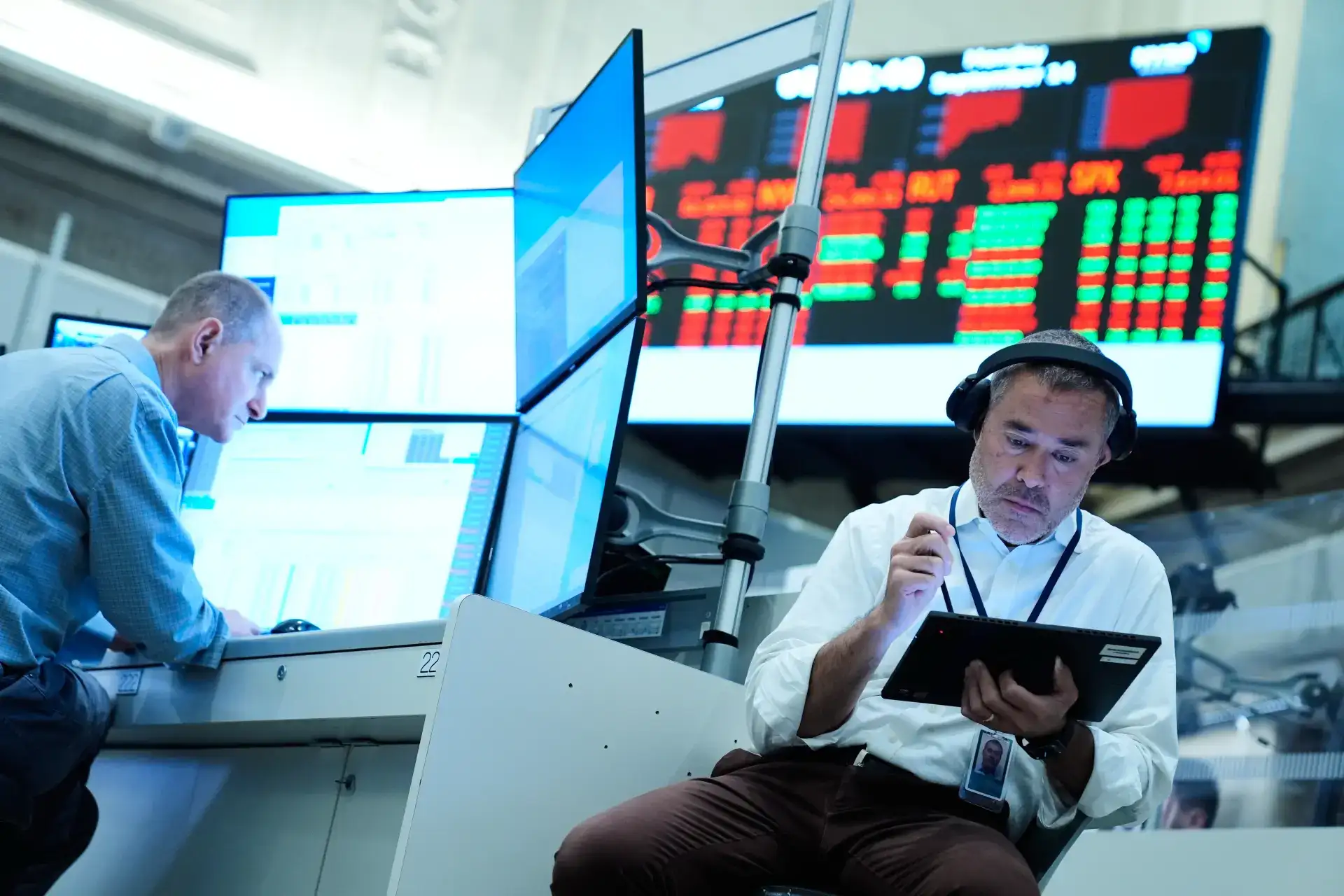


Wall Street experienced a notable downturn on Wednesday, with major indices retreating due to disappointing performances from tech giants Alphabet and Amazon, alongside rising Treasury yields. The market's cautious mood was further influenced by a sharp increase in oil prices, following comments made by Iran's President Masoud Pezeshkian at the United Nations. These developments combined to weigh on investor sentiment throughout the trading session.




Oil prices surged by nearly 4 percent, triggering a rally in the S&P 500 energy sector index. This spike came after Pezeshkian asserted that Tehran would never yield to pressure from the United States, intensifying geopolitical tensions just one day after US President Donald Trump warned he could take severe action against Iran.
Investors also reacted to fresh economic data indicating that US business activity jumped to its highest level in over five years during September. This robust economic performance contributed to higher government bond yields, with two-year Treasury yields reaching levels not seen since 2024 and 10-year yields climbing to heights last recorded in 2007. The rise in yields has increased expectations that the Federal Reserve will raise interest rates at its upcoming October policy meeting.
Lauren Cassidy, chief investment officer at Founders 100 ETF in Dallas, commented on the market outlook, saying, "The stock market wants a resolution to the Middle East conflict, and if we don't get that, we will have higher rates for longer, and that's going to continue to weigh on the equity market." Her remarks highlight how geopolitical and monetary policy risks are combining to influence investor behavior.
Within the technology sector, Meta Platforms continued to gain momentum this week, buoyed by positive reception to its new "Muse" artificial intelligence assistant. Analysts suggest that Muse could provide a boost to tech infrastructure companies, while potentially challenging sectors such as banking and online retail. However, Alphabet, Google's parent company, and Amazon both suffered losses on Wednesday. Amazon notably blocked the Muse assistant from its shopping platform, which may have contributed to investor concerns.
The semiconductor space also saw declines, with the PHLX chip index falling and Nvidia shares dropping. Other consumer-focused companies like Expedia and Airbnb experienced similar downward pressure during the session.
Despite Wednesday's pullback, the Nasdaq Composite had recorded record-high closes in the two previous sessions, supported by optimism around AI-related businesses. As of Wednesday's close, the S&P 500 remained less than 2 percent below its all-time high, reached on August 13.
On the geopolitical front, US President Donald Trump welcomed Chinese President Xi Jinping to Washington for a three-day visit focused on extending the trade truce established last year, discussions on AI regulation, and US arms sales to Taiwan. These talks carry significant implications for global markets and investor confidence amid ongoing trade tensions.
In terms of market performance, the S&P 500 declined 57.74 points, or 0.74 percent, ending at 7,706.39. The Nasdaq Composite fell 308.24 points, or 1.10 percent, closing at 26,943.61, while the Dow Jones Industrial Average dropped 340.39 points, or 0.66 percent, settling at 51,523.30. The S&P 500's current price-to-earnings ratio stands just under 19 times expected earnings, marking its lowest valuation since 2023, according to LSEG data. Much of the recent upward revision in earnings estimates has been driven by AI-focused companies.
Federal Reserve Governor Michael Barr contributed to market uncertainty by stating that the central bank would likely need to continue raising interest rates to combat inflation, which remains above the Fed's 2 percent target. Traders now assign a 71 percent probability to an interest rate hike at the Federal Reserve's October meeting, according to the CME Group's FedWatch Tool.
Among individual stocks, casual dining chain Cracker Barrel saw gains after surpassing fourth-quarter sales expectations. Conversely, Paychex, a human resources and payroll services provider, declined after reporting that its largest business segment missed first-quarter revenue forecasts.
Overall, the market is navigating a complex mix of geopolitical tensions, rising interest rates, and evolving economic conditions. Investors are closely monitoring developments in the Middle East, Federal Reserve policy signals, and corporate earnings reports to gauge the path forward.
What's Your Reaction?
 Like
0
 Dislike
0
 Love
0
 Funny
0
 Wow
0
 Sad
0
 Angry
0















Comments (0)