


Taiwan Surpasses South Korea as Leader in AI-Driven Market Growth

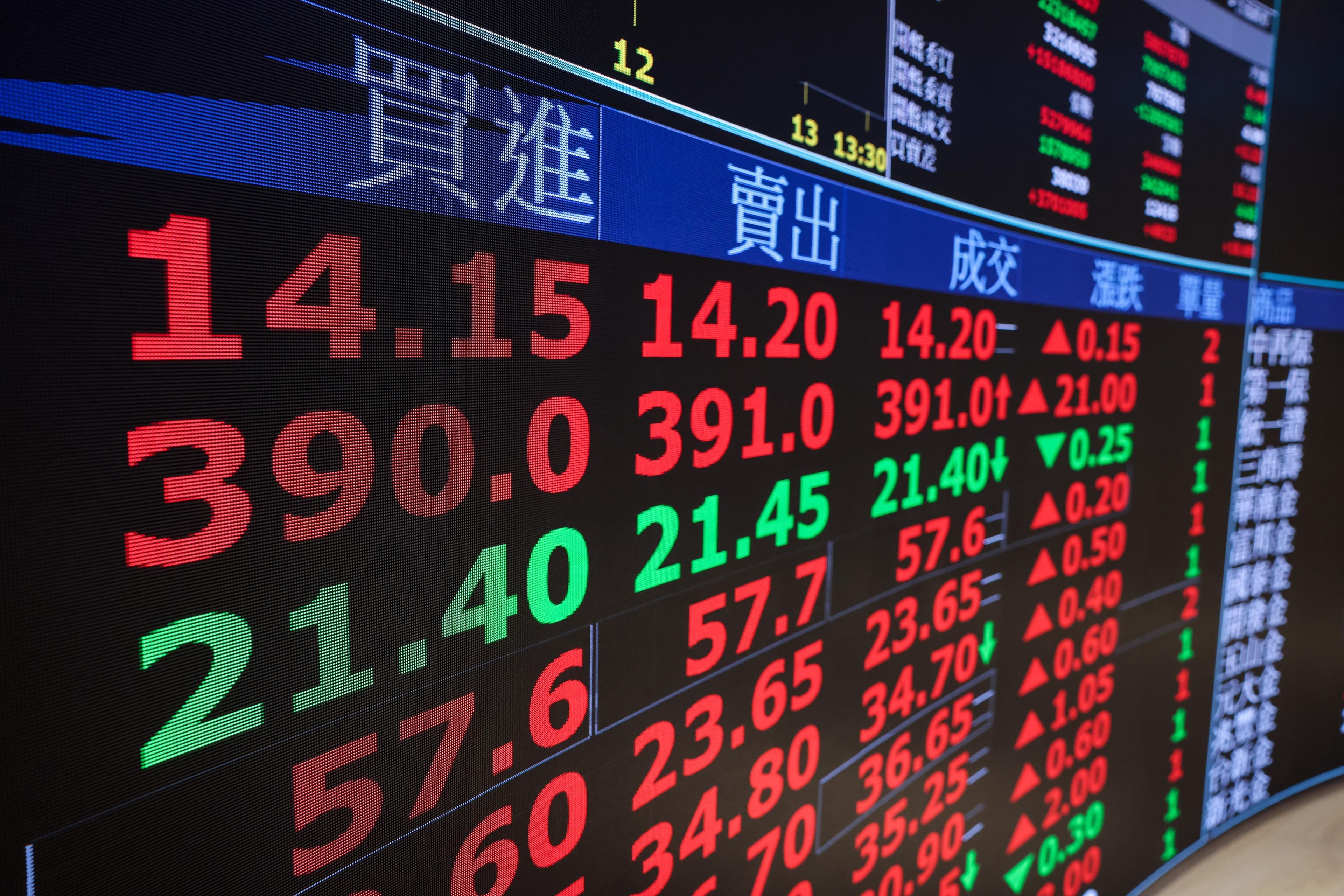


As 2026 moves toward its final months, Taiwan is emerging as the standout market in the global race connected to artificial intelligence trade, overtaking South Korea in performance and investor preference. The Taiex Index outpaced South Korea's Kospi by roughly 23 percentage points in the last quarter, marking the widest lead since the early 2000s. This shift also reflects in earnings expectations, with Taiwanese companies receiving more upward revisions than their Korean counterparts for the first time since March 2025.




According to a recent Bank of America survey, about 40 percent of fund managers favored Taiwan with overweight positions, while only 25 percent did so for Korea. This growing enthusiasm is tied to Taiwan's extensive involvement across the AI supply chain and a more positive earnings forecast.
Vikas Pershad, a portfolio manager at M&G Investments in Singapore, highlighted that the difference lies not just in AI exposure levels but in the quality of earnings. He pointed out that Taiwan’s profits are driven by volume, which leads to broader and more sustainable earnings upgrades. In contrast, South Korean earnings are currently more dependent on pricing, which may offer less stability.
Taiwan offers investors diversified exposure across multiple segments including chip design, manufacturing, packaging, networking, and server technologies. This breadth positions Taiwan well to benefit as AI-related spending expands globally. South Korea’s market, on the other hand, remains heavily reliant on two major players: Samsung Electronics and SK Hynix. This concentration increases vulnerability, especially amid uncertainty about the longevity of the current memory chip upcycle.
The competition between the Taiex and Kospi has been a key feature of 2026. Taiwan’s benchmark has surged 72 percent this year, securing the top spot among over 90 global equity indexes tracked by Bloomberg. South Korea’s Kospi follows closely with gains near 63 percent. However, recent declines in the shares of Samsung and SK Hynix, falling between 19 percent and 33 percent over the three months to September, have contributed to Taiwan’s outperformance. These declines came after a strong six-quarter rally fueled by rising memory chip prices and rapid earnings upgrades.
Samsung’s upcoming preliminary earnings report will be closely watched as investors seek clarity on the company’s longer-term prospects. Meanwhile, strategists at Societe Generale expressed a preference for Taiwanese equities over Korean, citing diverging earnings growth trends. Their analysis suggests that memory chip price increases will slow in the near term before stabilizing around 2028, amid growing competition from Chinese manufacturers. Additionally, South Korea’s market has seen a broader retreat following deleveraging efforts in July.
According to Bloomberg data, earnings estimates for the Taiex increased about 19 percent in the September quarter, compared to a 15 percent rise for the Kospi. Some analysts hold a more optimistic view of Korean chipmakers, arguing that AI-driven demand could worsen the global semiconductor shortage and sustain prices for high-bandwidth memory chips. Peter Lee, managing director at Citigroup, recommended buying shares in Samsung and SK Hynix, anticipating underestimated demand for these chips in 2027.
In valuation terms, Taiwan’s Taiex trades at approximately 18 times its forward earnings over one year, while the Kospi trades near 5.5 times. This lower multiple reflects concerns about a potential peak in the memory cycle and the so-called "Korea discount," a longstanding trend of cheaper valuations compared to global peers.
Investor sentiment surveys reinforce Taiwan’s advantage. When asked which market stands to benefit most from the next AI cycle phase, 35 percent chose Taiwan, with only 5 percent selecting Korea.
Shares of Taiwan Semiconductor Manufacturing Co. (TSMC) have risen 2.9 percent in the three months to September, marking six consecutive quarters of gains. The Taiex’s overall performance also reflects wider participation, with around 10 percent of its stocks doubling in value this year, compared to 4.1 percent for the Kospi and 5.7 percent for Japan’s Nikkei 225.
Gary Tan, portfolio manager at Allspring Global Investments, noted that future gains in Taiwan’s market will likely depend less on broad AI enthusiasm and more on local tech firms addressing critical bottlenecks within the AI value chain. This suggests that Taiwan’s diverse tech ecosystem may offer more durable growth opportunities as AI technologies continue to evolve.
The unfolding developments in Taiwan and South Korea illustrate how closely intertwined global equity markets are with the semiconductor and AI industries. Investors continue to weigh the benefits of diversified exposure against concentrated market leadership, making these markets key areas to watch as the AI trade expands worldwide.
What's Your Reaction?
 Like
0
 Dislike
0
 Love
0
 Funny
0
 Wow
0
 Sad
0
 Angry
0















Comments (0)