


Jio Platforms' ₹11 Trillion IPO Could Boost Bharti Airtel Value and Tariffs

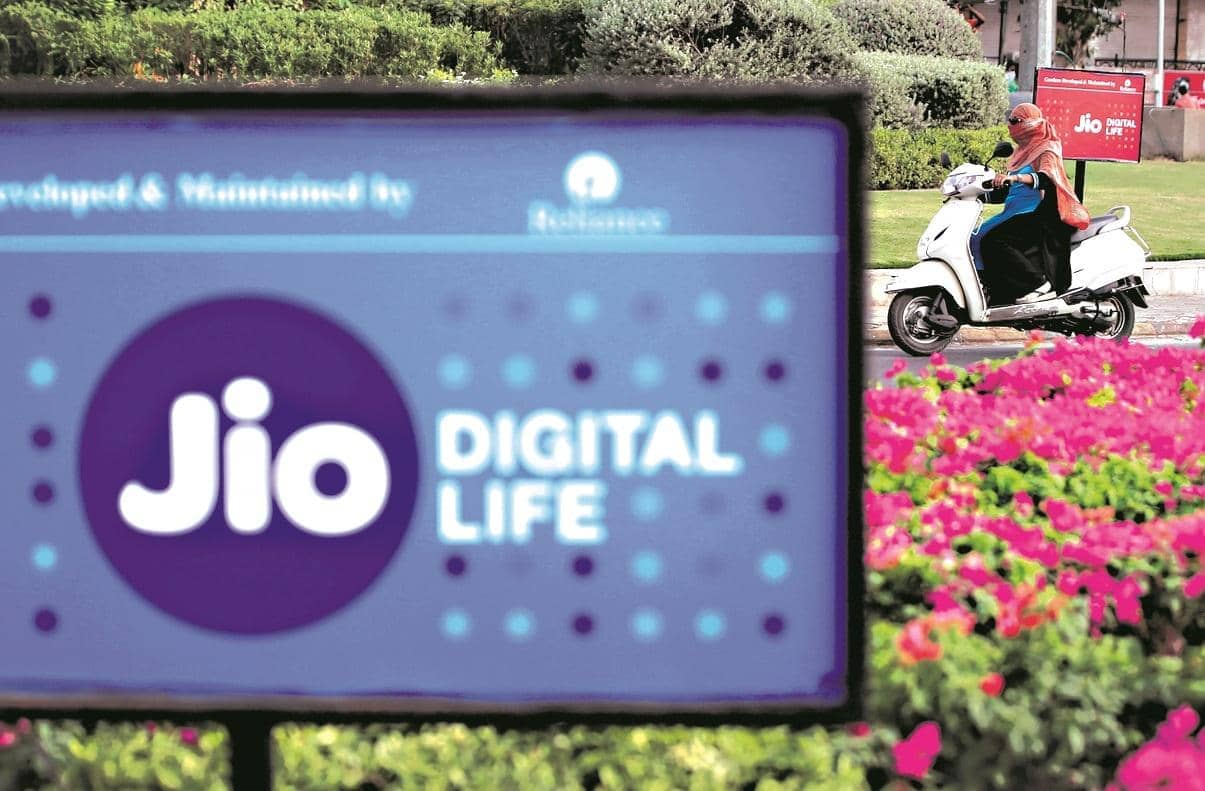


Reliance Industries’ telecom arm, Jio Platforms, is preparing to launch an initial public offering (IPO) worth approximately ₹11 trillion. This move is expected to trigger a reassessment of Bharti Airtel’s market valuation and bolster the prospects for a tariff increase in India’s telecom industry, according to analysis from Motilal Oswal Financial Services (MOFSL).




The proposed IPO suggests a valuation near 12 times the estimated enterprise value to EBITDA for the fiscal year 2028. This figure represents roughly a 17 percent premium over the current valuation multiple applied to Bharti Airtel’s India operations. Jio Platforms, as the dominant player in both wireless and home broadband services, wields considerable influence over the pricing structure in the sector.
MOFSL emphasized that it does not see justification for Bharti Airtel to trade at a significant discount compared to Jio Platforms. The brokerage highlighted Bharti’s stronger free cash flow generation and higher return on capital employed, factors that support comparable valuation multiples. Both companies are currently valued close to 12 times FY28 enterprise value to EBITDA in MOFSL’s models.
Beyond its core telecom business, Bharti Airtel holds a majority stake of about 51 percent in Indus Towers and approximately 80 percent ownership in Airtel Africa. These assets alone are valued at around ₹1.25 trillion, factoring in a 25 percent holding company discount relative to their current market prices. Additionally, Bharti offers investors exposure to data centers through a roughly 60 percent stake in Nxtra Data and to financial services via Airtel Money, which operates in both India and African markets. These diversified holdings strengthen the argument for valuation parity with Jio Platforms.
Recent reports from Bloomberg indicate that Jio Platforms has completed gauging investor demand for the IPO and is expected to begin formal meetings with potential investors soon. The public offering is anticipated to open during the week starting October 19 and could be listed on stock exchanges before October 30.
The telecom sector is closely watching how Jio’s listing might affect Bharti Airtel. Some investors worry that the addition of Jio Platforms as a large, investable entity could shift market allocations away from Bharti. However, MOFSL downplayed these concerns, noting that Jio’s initial free float will be limited compared to the existing substantial foreign institutional investor and domestic institutional investor ownership in Bharti Airtel.
Furthermore, with a tariff hike expected shortly after Jio’s IPO, both Bharti Airtel and Jio Platforms stand to benefit from improved earnings performance. This scenario could lead to a re-rating of multiples for both companies, supporting further share price appreciation.
For Reliance Industries, Jio’s public listing offers a direct investment avenue for shareholders interested in the telecom and digital services segment. Despite this, RIL will continue to be recognized primarily as India’s largest retailer and integrated energy company. MOFSL pointed out that RIL’s medium-term stock performance will likely be driven by earnings upgrades linked to a stronger refining and petrochemical cycle, as well as a recovery in retail revenue growth and profitability.
On the tariff front, MOFSL expects a smartphone tariff increase of approximately 15 percent to take effect around December 2026, following Jio’s IPO and the impending fundraise by Vodafone Idea. This adjustment is projected to support an EBITDA compound annual growth rate of about 15 percent from fiscal years 2026 through 2029.
The upcoming Jio Platforms IPO thus represents a significant event for India’s telecom industry, with implications for market valuations, investor allocations, and service pricing. As the sector evolves, the interplay between these major players will shape competitive dynamics and financial outcomes for the foreseeable future.
Disclaimer: The views and projections mentioned are those of the respective brokerages and analysts and have not been endorsed by Business Standard. Readers are advised to exercise their own judgment.
What's Your Reaction?
 Like
0
 Dislike
0
 Love
0
 Funny
0
 Wow
0
 Sad
0
 Angry
0















Comments (0)