


Goldman Sachs, BNP Paribas Sell Over 68 Lakh BSE Shares Before Nifty 50 Debut

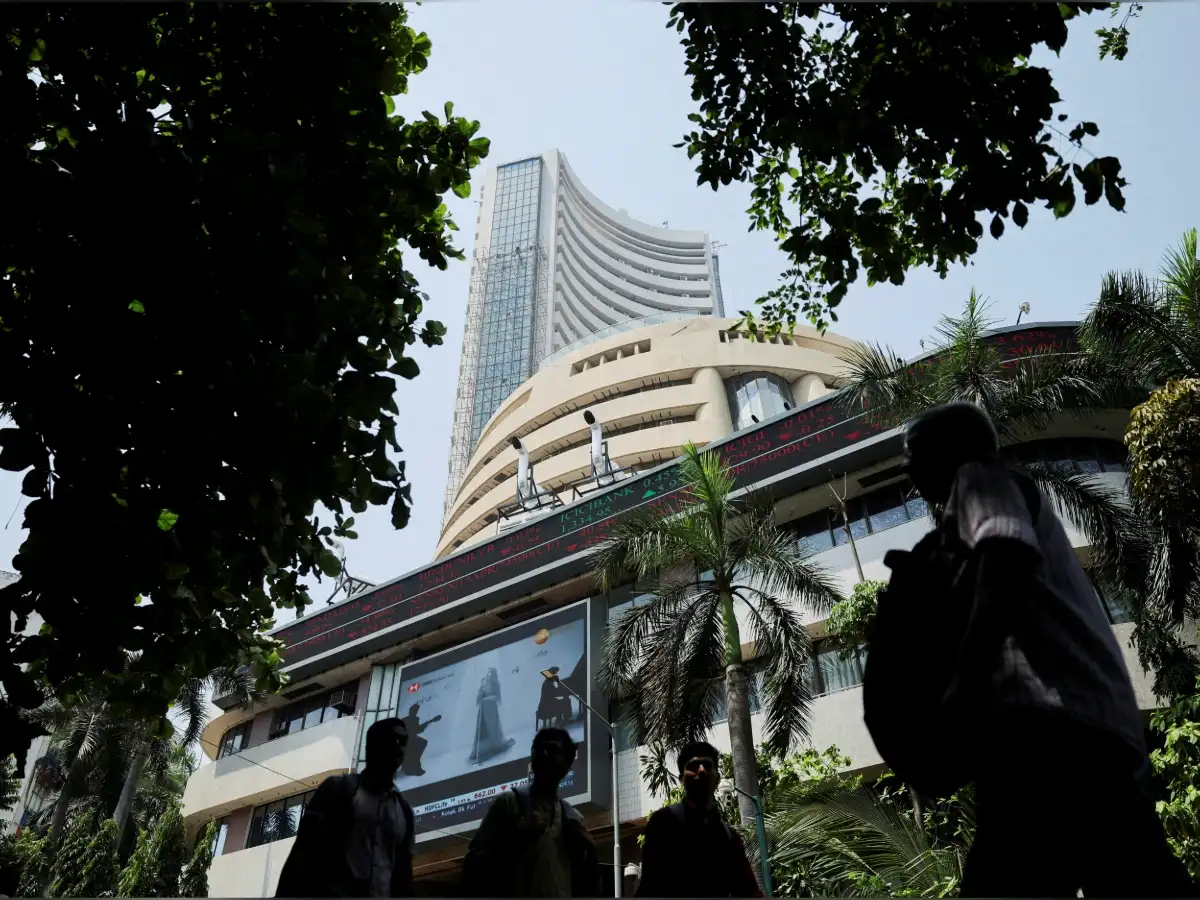


Goldman Sachs and BNP Paribas executed significant share sales in Bombay Stock Exchange (BSE) ahead of the stock’s upcoming addition to the Nifty 50 index. On Tuesday, the two financial institutions sold a combined total of 68.33 lakh shares valued at approximately Rs 2,186.44 crore through bulk deals on the National Stock Exchange (NSE).




According to data from NSE’s bulk-deal segment, Goldman Sachs Investments Mauritius I Limited offloaded 23,81,571 BSE shares at Rs 3,200 each. Meanwhile, BNP Paribas Financial Markets sold 44,51,693 shares with a weighted average price close to Rs 3,199.54 per share. Together, these sales represented roughly 1.67 percent of BSE’s total equity.
On the purchasing side, two major mutual funds emerged as key buyers. UTI Mutual Fund acquired 27,12,950 shares at Rs 3,200 apiece, while Nippon India Mutual Fund purchased 25,29,550 shares at the same rate. Combined, these mutual funds invested around Rs 1,677.60 crore to buy over 52 lakh shares.
Following these transactions, BSE shares closed the trading session 3.31 percent higher at Rs 3,200 on the NSE, up from the previous day’s close of Rs 3,097.50. The stock fluctuated between Rs 3,100 and Rs 3,200 during Tuesday’s trading. Since the start of the year, BSE shares have climbed 21.77 percent according to NSE data.
Despite recent gains, BSE’s current share price remains about 28 percent below its 52-week high of Rs 4,446.80, which was recorded on May 27, 2026. This highlights some volatility in the stock over the past year.
The forthcoming inclusion of BSE in the Nifty 50 index, effective Wednesday, September 30, is a significant milestone. This change replaces Wipro in the benchmark index as part of the NSE’s standard semi-annual rebalancing process. The entry is anticipated to attract substantial passive investment, as index funds adjust their portfolios to include BSE shares.
Industry estimates suggest that index funds could purchase approximately 15.7 million BSE shares, equating to inflows near $657 million. This projection is based on Axis Capital’s analysis. BSE’s eligibility for the Nifty 50 was backed by a six-month average free-float market capitalization of Rs 1,40,879 crore, which is at least 1.5 times larger than Wipro’s valuation, the outgoing constituent.
The broader market impact of BSE’s inclusion is a subject of debate among brokerage firms. Some analysts see promising growth potential, while others caution about regulatory and operational challenges.
For instance, Macquarie recently initiated coverage on BSE with an Outperform rating and set a target price of Rs 4,000. The brokerage views BSE as a strong competitor in a market sector that is growing at a compound annual growth rate of 12 percent.
Conversely, Jefferies holds a more cautious stance, issuing an Underperform rating with a target price of Rs 2,940. The firm points to risks related to BSE’s significant exposure to domestic proprietary traders, who contribute about half of the trading turnover. Additional concerns include recent increases in Securities Transaction Tax (STT), revised Reserve Bank of India (RBI) bank guarantee rules, and changes in the Consolidated Audit Trail (CAS) system.
Nuvama also recently downgraded BSE from Buy to Hold and lowered its price target to Rs 3,240 from Rs 4,090, citing several converging challenges expected in the fiscal year 2027.
BSE’s upcoming debut in the Nifty 50 reflects evolving dynamics in India’s capital markets, where benchmark indices play a crucial role in guiding institutional investment and shaping market trends. As BSE prepares to become part of this flagship index, investor attention will likely focus on how the stock performs amid changing regulatory landscapes and ongoing competition in the exchange sector.
Disclosure: This article was written by Kumar Gaurav, who is not a SEBI-registered Research Analyst or Investment Adviser. Neither Gaurav nor their relatives hold financial interests in the companies mentioned as of the publication date. Opinions and recommendations cited originate from the respective SEBI-registered analysts and brokerages and are reproduced with attribution. Readers should consider original research reports and conduct their own assessments before making investment decisions.
What's Your Reaction?
 Like
0
 Dislike
0
 Love
0
 Funny
0
 Wow
0
 Sad
0
 Angry
0

















Comments (0)