


Indian Markets Tumble Amid Rising Oil, Weak Rupee, and Rate Hike Concerns

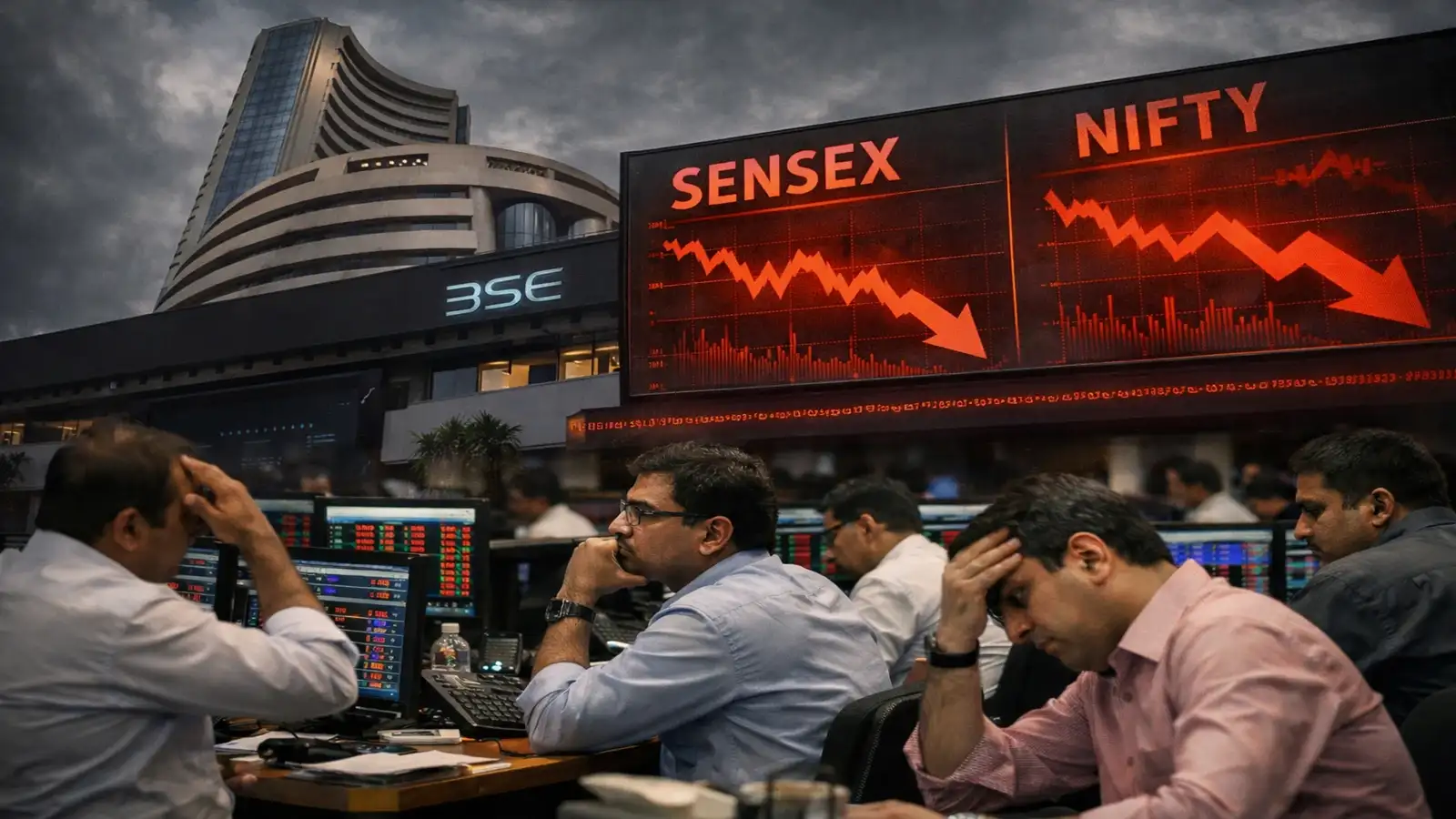


Indian stock markets experienced a sharp decline on Thursday, with key indices hitting their lowest levels for the year so far. The BSE Sensex dropped by 1,045.46 points, or 1.44%, closing at 71,593.24, marking its lowest finish since February 2024. Meanwhile, the Nifty 50 index declined 371.25 points, or 1.64%, ending the day at 22,231.80, its lowest close since April 2025. This sell-off erased nearly ₹10 lakh crore from the combined market capitalization of companies listed on the BSE.




Investors reacted negatively to several factors weighing on sentiment. Among them were rising crude oil prices, persistent weakness in the Indian rupee, and concerns about future interest rate hikes by central banks worldwide. Brent crude oil prices surged over 4% on Thursday, climbing above $104 per barrel amid renewed tensions in the West Asia region. This increase in oil costs adds inflationary pressure on the Indian economy, which is heavily reliant on oil imports.
The Indian rupee continued to show signs of vulnerability against the US dollar, exacerbating worries about currency depreciation and its impact on corporate earnings and inflation. At the same time, global central banks have signaled the possibility of further interest rate increases to combat inflation, causing apprehension among investors about tighter monetary conditions ahead.
Market breadth was overwhelmingly negative, with out of 4,654 shares traded on the BSE, 3,545 closing lower and only 910 advancing. Large-cap stocks saw significant losses as well, with Adani Enterprises falling 5.4%, JSW Steel declining 4.5%, and ITC dropping 4%. Midcap and smallcap segments also suffered notable declines, with the Nifty Midcap 150 and Nifty Smallcap 250 indices falling 2.4% each on the day.
India’s Volatility Index (VIX), often referred to as the market’s fear gauge, spiked by over 10%, underscoring heightened uncertainty among traders. The broader Asian markets mirrored this downtrend, as China’s Shanghai Composite lost 0.8%, Hong Kong’s Hang Seng index fell 1.4%, South Korea’s KOSPI dropped 2.7%, and Taiwan’s TAIEX declined 0.9%. European stocks were also under pressure, with the Stoxx 600 index down 0.3% at the time of reporting.
Market experts believe the combination of a weakening rupee, surging oil prices, global interest rate hikes, ongoing supply chain disruptions, and political unrest has created a challenging environment for Indian equities. Nilesh Shah, Managing Director at Kotak Mahindra Asset Management, commented on the situation, stating, "The market is witnessing a barrage of bad news - rising rates globally, weakening rupee, triple-digit oil prices, IPO supply, political protests, supply chain disruptions, below-average monsoon, lack of AI opportunities and FPI selling." His remarks highlight the multifaceted pressures affecting investor confidence.
Since the start of 2026, the Sensex has declined nearly 16%, and the Nifty has dropped approximately 15%, positioning Indian equities among the weakest performers globally this year. The midcap segment has fallen 4.3% year to date, while smallcaps have managed a modest gain of 4.8% despite recent losses.
The ongoing volatility in Indian markets reflects broader global economic concerns, including inflationary risks and geopolitical tensions. For domestic investors and fund managers, the challenge remains to navigate these headwinds while assessing the longer-term outlook for economic growth and corporate profitability in India.
As crude oil prices remain elevated and the rupee shows no signs of stabilizing, market participants will likely continue to monitor central bank policies closely. Given the importance of monetary policy decisions, future rate hikes could influence liquidity conditions and investment flows in Indian equities.
In summary, Thursday’s sharp sell-off across Indian stock markets underscores the sensitivity of equities to external shocks and domestic economic challenges. With multiple factors in play, cautious sentiment appears to be the prevailing mood among investors as they weigh the risks ahead.
What's Your Reaction?
 Like
0
 Dislike
0
 Love
0
 Funny
0
 Wow
0
 Sad
0
 Angry
0















Comments (0)