


RBI Schedules Rs 25,000 Crore OMO Sale of Government Bonds on Oct 13

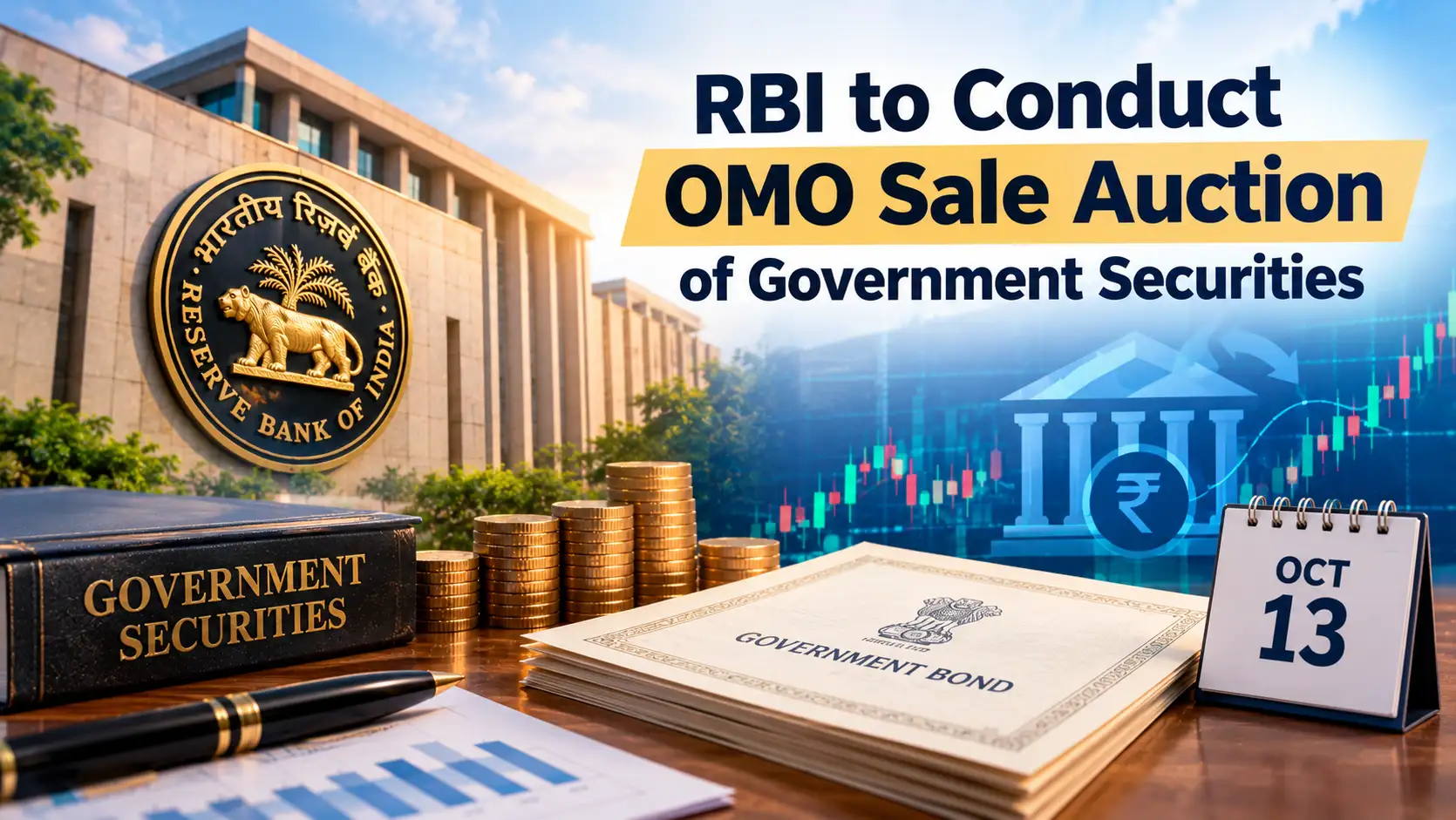


The Reserve Bank of India (RBI) has announced plans to conduct an open market operation (OMO) sale auction of government securities valued at Rs 25,000 crore on October 13. This move is part of the central bank's ongoing efforts to regulate surplus liquidity in the banking system.




The auction will feature six different government securities with maturities spanning from March 2030 to April 2034. The bonds offered include the 7.88 percent government security maturing in 2030, the 6.10 percent in 2031, the 7.95 percent in 2032, two securities maturing in 2033 with yields of 7.26 percent and 7.18 percent respectively, and the 7.10 percent government security due in 2034.
While the RBI has disclosed the total amount for sale, it has not allocated specific quantities for each security. The central bank retains full discretion to determine the exact amount of each bond to be sold and may accept bids below the announced aggregate. It also reserves the right to accept or reject any or all bids either in whole or in part without providing any reasons.
OMO sales are a standard tool used by the RBI to withdraw excess funds from the banking system. By selling government bonds to banks, the RBI pulls liquidity out, which helps in managing money supply and aligning short-term interest rates with policy targets.
Currently, the banking system is experiencing a notable surplus liquidity estimated at around Rs 3.88 lakh crore as of October 8. This excess cash is partly due to significant inflows from Foreign Currency Non-Resident (Bank) deposits, which brought foreign currency into the economy. When banks swap these foreign currency deposits with the RBI, they receive rupee liquidity, thereby increasing the overall cash available in the system.
Along with these inflows, routine government expenditures such as salary and pension payments at the end of the month further add to liquidity levels. To address this, the RBI has conducted various Variable Rate Reverse Repo (VRRR) auctions over the past two months aimed at absorbing surplus funds and keeping overnight money market rates close to the repo rate.
On October 6, RBI Governor Sanjay Malhotra emphasized that the central bank intends to absorb the excess liquidity within the current financial year. The absorption will be achieved through a combination of currency leakage, liquidity operations like the upcoming OMO sale, and adjustments to banks' reserve requirements.
Additionally, from October 16, banks will face a higher cash reserve ratio requirement, which will further tighten liquidity conditions. This step follows the RBI's recent policy rate hike, the first in nearly four years, signaling a possible phase of monetary tightening.
The OMO auction scheduled for October 13 is a critical component of the RBI's broader strategy to maintain monetary stability and control inflationary pressures. By managing liquidity carefully, the central bank aims to ensure that interest rates remain conducive to sustainable economic growth without triggering excessive inflation.
Government securities auctions like this one also provide banks with opportunities to invest in safe assets while helping the government finance its fiscal needs. The balance between absorbing liquidity and ensuring adequate credit flow to the economy remains a key challenge for the RBI amid evolving economic conditions.
Investors and market participants will be closely watching the auction results and subsequent monetary policy moves to gauge the RBI's stance on liquidity management and its outlook on inflation and growth in the coming months.
What's Your Reaction?
 Like
0
 Dislike
0
 Love
0
 Funny
0
 Wow
0
 Sad
0
 Angry
0















Comments (0)