


Quanshium AI Core Develops India’s Quantum-Secure Drone Communication

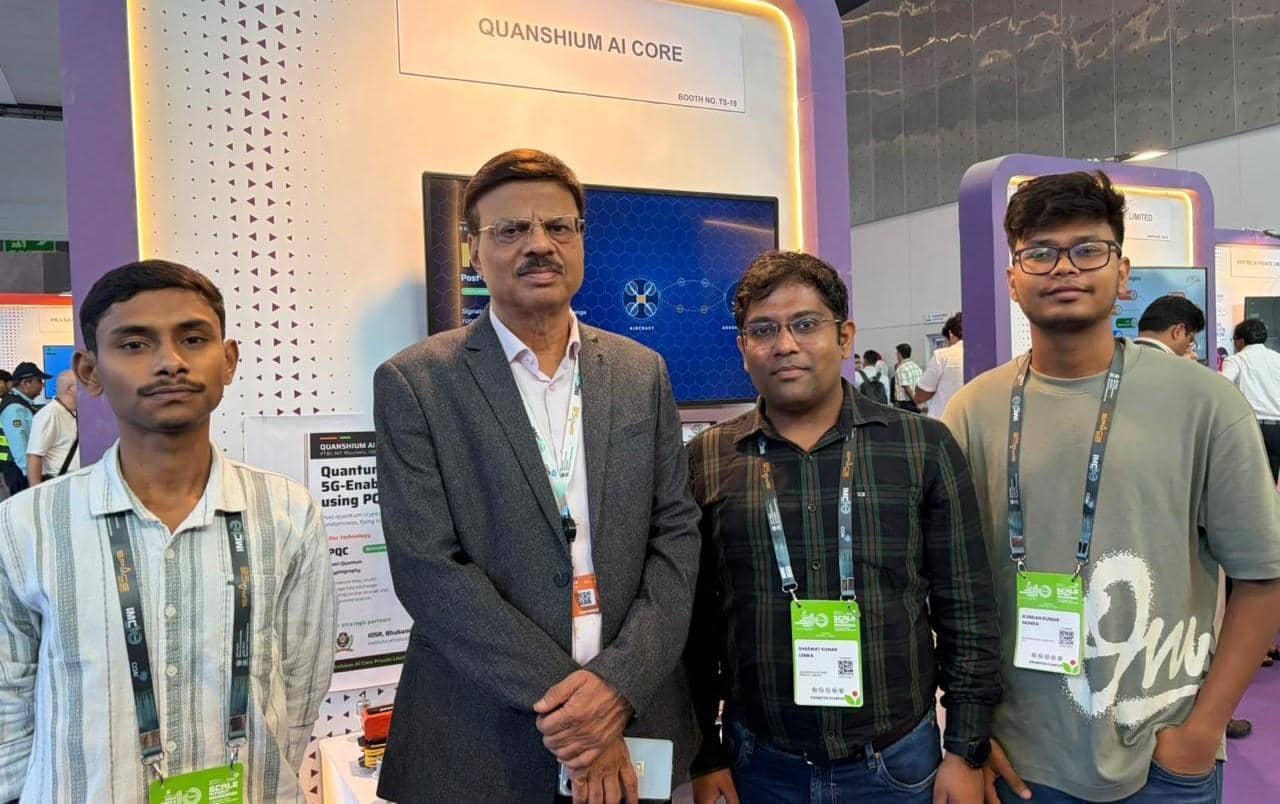


Quanshium AI Core Private Limited, a deep-tech startup based in Odisha, has achieved a significant technological breakthrough by successfully demonstrating a quantum-secure communication link between a ground control station and a 4G/5G-enabled drone. This test covered a distance of 10 kilometers, marking an important step towards operational quantum-grade security in India.




The company’s new system integrates a quantum random number generator (QRNG) with post-quantum cryptography (PQC) to protect the exchange of data between the drone and its control station. This combination is designed to safeguard communications from cyberattacks, including those potentially launched by powerful quantum computers in the future.
India is currently focused on transitioning quantum security technologies from research environments into practical applications. With global competition intensifying around next-generation encryption methods, Quanshium’s development represents a move closer to real-world deployment of quantum-safe communication platforms.
Drones are increasingly utilized across various sectors such as military surveillance, border security, reconnaissance, logistics, and protection of critical infrastructure. The need for secure communication channels has become paramount, especially given the strategic risks posed by reliance on imported security technologies and the vulnerability of conventional encryption methods against future quantum computing capabilities.
Shaswat Kumar Lenka, founder and CEO of Quanshium AI Core, emphasized the importance of securing telemetry, video transmissions, and command signals. He explained that communication links between drones and ground stations are susceptible to interception, disruption, or manipulation, making robust encryption essential, particularly for defense and other sensitive uses.
Quanshium's quantum random number generator produces cryptographic keys from physical quantum phenomena rather than software algorithms, which significantly increases unpredictability and security. The post-quantum cryptography layer then encrypts the data, employing algorithms resistant to both classical and quantum computational attacks. This dual approach enhances the overall security framework against emerging quantum threats.
The system’s architecture places the QRNG hardware at the ground control station while implementing PQC encryption at both ends of the communication link. This setup allows full protection of telemetry, live video, and command data transmitted over 4G/5G networks without burdening the drone with additional quantum hardware. It also helps reduce the drone’s weight and complexity.
Lenka highlighted that most secure communication systems currently used in India are either foreign-made or rely on encryption methods vulnerable to future quantum computing attacks. By developing a quantum-safe system domestically and validating it on an operational drone platform, Quanshium is setting a new benchmark for indigenous security solutions.
This advancement carries broad implications for India’s defense and telecommunications sectors. As drones and remotely operated platforms become more integral to military and civilian operations, ensuring secure communication channels is critical to protecting sensitive information and maintaining operational integrity. A compromised link could jeopardize surveillance data, disrupt missions, or allow unauthorized interference.
Beyond drone applications, the technology holds promise for securing government communications, defense networks, satellite systems, financial infrastructure, power grids, and other critical sectors. As India expands its digital infrastructure, such quantum-safe encryption solutions will be essential to counter future security challenges posed by quantum computing advancements.
Looking ahead, Quanshium AI Core plans to extend its technology to satellite communications. The next goal involves developing quantum-secure satellite links using free-space optical quantum key distribution (QKD) between ground stations and satellites, and potentially between satellites themselves. Unlike the current drone system, which uses QRNG and PQC over standard 4G/5G links, satellite QKD employs quantum states of light to establish cryptographic keys over long distances, offering enhanced security.
This transition to satellite-based quantum communication will require overcoming significant technical hurdles such as maintaining stable optical links over vast distances and mitigating atmospheric interference. However, the successful 10-kilometer drone test demonstrates the feasibility of integrating QRNG and PQC in real-world, mobile environments.
Quanshium AI Core, incubated at NIT Rourkela, is also advancing indigenous solutions for quantum random number generation and post-quantum cryptography tailored to defense, government, and critical infrastructure needs. The team includes key engineers Kundan Kumar Munda and Alish Patel, guided by faculty mentor Hanumantha Rao Bokkisam.
This development underscores India’s commitment to building homegrown capabilities in advanced quantum-secure communications, a field expected to play a pivotal role in future strategic and telecom systems.
What's Your Reaction?
 Like
0
 Dislike
0
 Love
0
 Funny
0
 Wow
0
 Sad
0
 Angry
0



















Comments (0)