


CII Applauds GST Council's Move to Decriminalise Tax Enforcement

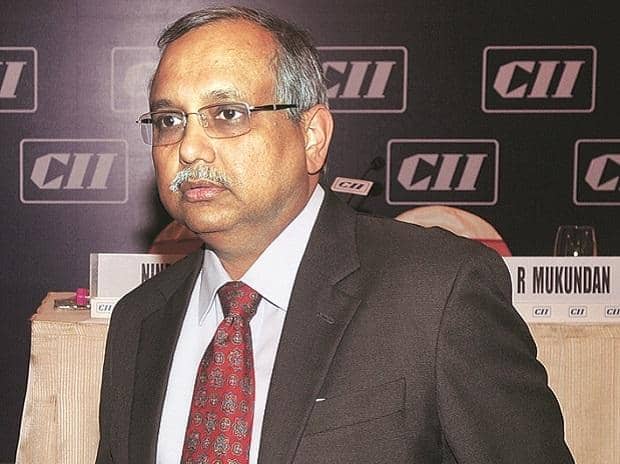


The Confederation of Indian Industry (CII) has recognized the Goods and Services Tax (GST) Council’s latest decisions on decriminalisation and enforcement rationalisation as a major institutional reform in India's economic governance. These measures mark a significant shift towards a trust-based approach between tax authorities and taxpayers.




At the GST Council meeting held on October 8, leaders from the central and state governments reached consensus on several key reforms that extend beyond the realm of taxation. The decisions highlight effective collaboration between the Centre and states in addressing complex issues related to enforcement powers, safeguarding revenue, and protecting taxpayer rights.
Among the important changes proposed is the removal of arrest powers by deleting Section 69 from the Central GST Act. Additionally, the monetary threshold for initiating prosecution under GST has been raised fivefold, increasing from ₹1 crore to ₹5 crore. The scope of offences listed under Section 132 has been narrowed, and imprisonment provisions have been rationalised to allow more judicial discretion in sentencing. These reforms are contingent upon legislative amendments and are scheduled to take effect from April 1, 2027. It is notable that criminal prosecution will still apply in cases involving deliberate fraud and tax evasion.
Chandrajit Banerjee, Director General of CII, described the Council’s decisions as "landmark institutional reform". He commended Prime Minister Narendra Modi and Finance Minister Nirmala Sitharaman for their leadership, and acknowledged the constructive role played by state governments in reaching agreement.
Banerjee emphasized that the reforms are significant not merely because certain enforcement powers will be removed, but because they reflect a fundamental change in how tax administration operates. "Effective tax administration need not depend on the threat of criminal sanctions," he said. This change is particularly impactful given the GST’s wide coverage across nearly all sectors of the Indian economy.
Following the Council meeting, the Central Board of Indirect Taxes and Customs (CBIC) issued several circulars on October 26 to address practical issues related to registration, notices, and adjudication. These circulars stress the importance of substantiating allegations of fraud with concrete evidence, enhancing clarity in tax notices, and providing reasoned adjudication decisions. They also aim to minimize unnecessary queries during registration and promote pre-show-cause notice communication when possible.
On October 30, CBIC further instructed its field officers to halt arrests under GST provisions temporarily. This step is intended as a trade facilitation measure while legislative changes to remove Section 69 are underway. The instruction also streamlines e-way bill interception processes and introduces a ₹10,000 threshold for issuing show-cause notices under Sections 73, 74, and 74A.
CII pointed out that the GST Council’s consensus-based decision-making process serves as a model for future economic reforms in India, especially those requiring coordination between the Centre and states. Areas such as land use, construction permits, labour regulations, utility connections, logistics, and local approvals could benefit from a similar approach.
Banerjee noted, "India’s next phase of economic transformation will depend increasingly on cooperative federalism." Many remaining obstacles to investment and business growth lie at the intersection of central, state, and local regulations, he added.
The shift towards a governance model built on trust also places a heightened responsibility on industry players. Businesses, particularly micro, small, and medium enterprises (MSMEs), need to adopt stronger voluntary compliance, maintain thorough internal controls, and ensure responsible tax practices. CII committed to supporting its members in these efforts.
According to Banerjee, "The strength of a regulatory system lies not in the severity of the powers it possesses, but in the compliance it secures, the fairness with which it operates, and the confidence it inspires."
These reforms are expected to reduce uncertainty, legal expenses, reputational risks, and operational disruptions for businesses, especially for MSMEs and first-generation entrepreneurs. At the same time, stringent measures will remain in place to combat intentional fraud effectively. The ultimate success of these reforms will depend on consistent application across different states and jurisdictions.
What's Your Reaction?
 Like
0
 Dislike
0
 Love
0
 Funny
0
 Wow
0
 Sad
0
 Angry
0



















Comments (0)