


Nomura Initiates Buy on IndiGo with Rs 6,000 Target Amid Fuel Price Challenges

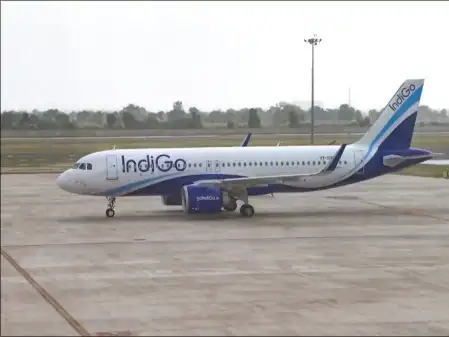


Nomura has begun coverage on InterGlobe Aviation, the parent company of IndiGo, assigning a Buy rating and setting a price target of Rs 6,000. This target suggests a potential upside of nearly 20 percent from IndiGo’s closing stock price of Rs 4,984 on September 30. The brokerage firm highlights IndiGo’s extensive aircraft order book, its efficient low-cost operating model, and its growing international reach as key factors that could help the airline strengthen its position even if high fuel prices persist.




Despite the immediate pressure rising fuel costs place on profitability, Nomura argues that IndiGo’s advantage over competitors with higher operating expenses could expand. They forecast revenue and EBITDA growth with compound annual growth rates of 16 percent and 38 percent respectively between fiscal years 2026 and 2029, assuming a partial easing of geopolitical tensions by fiscal 2028.
Robust Fleet Expansion Secures Market Position
IndiGo currently operates a fleet of 441 aircraft and has a substantial backlog of approximately 900 planes scheduled for delivery over the coming years, extending into the mid-2030s. This order includes about 800 narrowbody aircraft, 40 extra-long-range models, and 60 widebody jets. Nomura views this substantial order pipeline as a strategic asset that will allow IndiGo to maintain its domestic market leadership while broadening its international footprint.
The airline’s share of the domestic passenger market has grown from roughly 37 percent in fiscal 2016 to an estimated 64 percent by fiscal 2026, while the Air India group holds around 27 percent. Together, these two groups control close to 90 percent of India’s domestic aviation market, underscoring IndiGo’s dominant role.
Nomura also points out that IndiGo’s scale and fleet strategy contribute to its cost efficiency. Its cost per available seat kilometer (CASK), excluding fuel and foreign exchange costs, is 10 to 15 percent lower than domestic competitors and ranks among the lowest for low-cost carriers globally. Factors such as a standardized fleet, high aircraft utilization rates, dense seating configurations, and bulk purchases from a single manufacturer help keep operating costs down.
Fuel Costs Present Short-Term Challenges
One of the largest hurdles facing IndiGo is the spike in fuel prices. Jet fuel prices in Singapore have increased by 60 to 70 percent compared to pre-conflict levels, and Brent crude oil currently trades near $100 per barrel, up from about $70 before the war. In the first quarter of fiscal 2027, fuel expenses made up around half of IndiGo’s total costs, causing a 36 percent year-over-year rise in CASK excluding forex and acquisition expenses.
Nevertheless, IndiGo has shown an ability to partially offset these higher costs through increased ticket prices. Passenger revenue per available seat kilometer (PRASK) rose 19 percent year-over-year in the same quarter, recovering about half of the fuel-related cost inflation. Nomura expects IndiGo to continue recovering between 50 and 70 percent of this inflation, with management aiming for a 25 percent PRASK increase in the second quarter of fiscal 2027.
Looking ahead, Nomura anticipates that IndiGo’s EBITDA margin will improve to between 20 and 23 percent in fiscal years 2028 and 2029, up from 15 percent in fiscal 2027 as fuel costs ease. Even if fuel prices remain high for an extended period, the brokerage believes IndiGo could still gain market share as airlines with higher costs face more significant financial pressures.
Long-Term Growth Prospects in India’s Aviation Market
Beyond current challenges, Nomura sees India’s aviation sector as poised for sustained growth. Air travel penetration in India stands at approximately 0.2 trips per capita, considerably below levels in China (around 0.5) and the United States (about 2.5). Additionally, the number of upper-income households in India is projected to rise from 49 million in fiscal 2025 to 66 million by fiscal 2030, which should support increased spending on air travel.
Nomura views IndiGo’s combination of dominant domestic market share, solid cost advantages, and structural demand growth as factors that make the current period of elevated fuel prices a temporary obstacle rather than a fundamental shift in the company’s long-term prospects.
Disclaimer: This article was written by Sakshi Kumari, who is not a SEBI-registered Research Analyst or Investment Adviser. As of the publication date, Sakshi Kumari and related parties do not hold financial interests in the companies mentioned. The views expressed here reflect those of the referenced SEBI-registered Research Analyst or brokerage and are reproduced with attribution. Readers should consult the original research and form their own investment judgments. Brokerage disclaimers apply.
What's Your Reaction?
 Like
0
 Dislike
0
 Love
0
 Funny
0
 Wow
0
 Sad
0
 Angry
0













Comments (0)