


Deloitte Raises India GDP Growth Forecast to 7.1%-7.3% for FY27

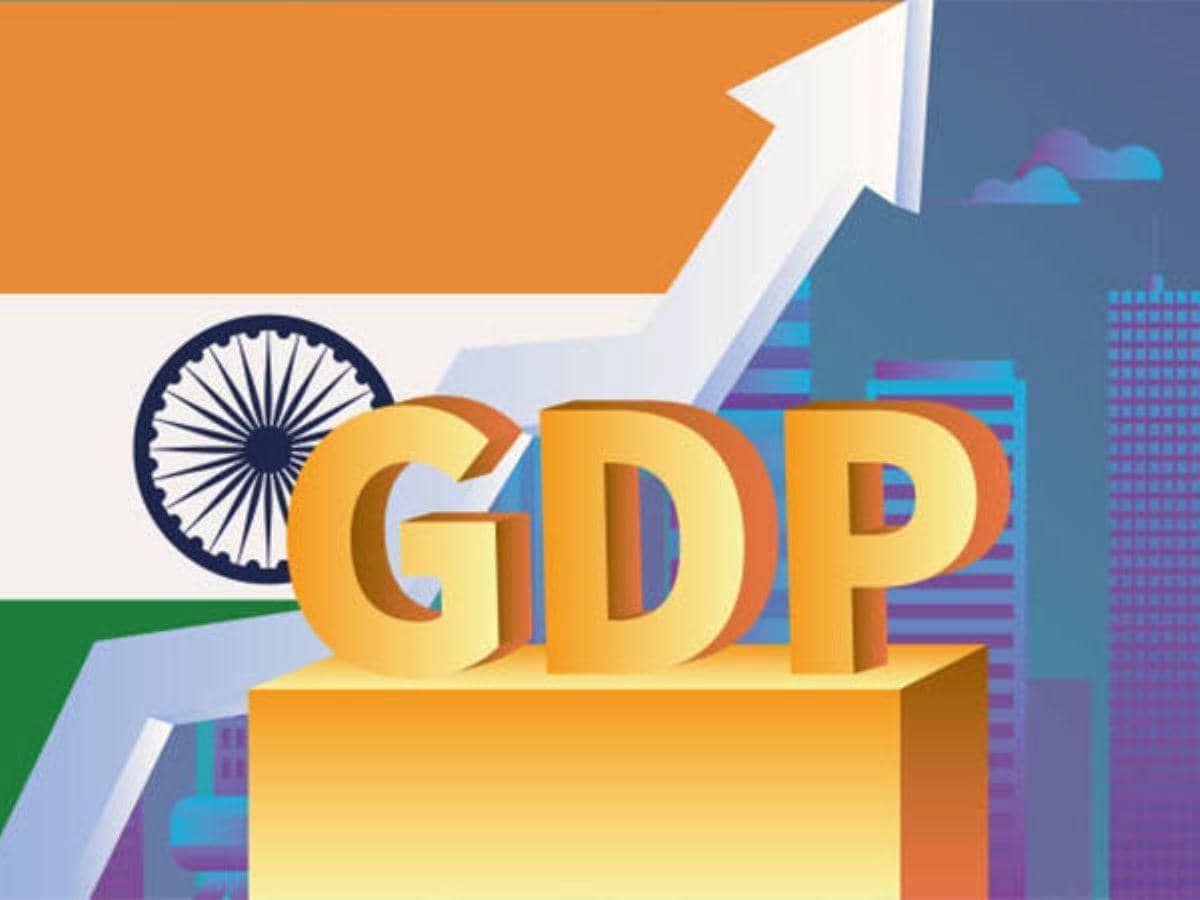


Deloitte India has increased its forecast for the country's economic growth in the financial year 2026-27 (FY27) to a range between 7.1 and 7.3 percent. This is a notable rise from the earlier estimate of 6.5 to 6.8 percent, primarily attributed to sustained private sector demand. Despite this optimistic outlook, the consulting firm cautions that ongoing geopolitical conflicts, disruptions in trade, and energy market volatility could challenge the growth trajectory.




The report highlights that private investment typically gains momentum when companies observe steady demand, consider expanding their production capacity, and have access to adequate financing. Deloitte points out that these favorable conditions appear to be emerging in India. For six consecutive quarters, capacity utilization has stayed above 75.7 percent, suggesting a decline in spare capacity and providing firms with stronger incentives to invest, especially those with robust financial health.
Gross fixed capital formation, a key indicator of investment activity, recorded an 11.9 percent increase in the first quarter of FY27. This marks the fastest growth in fixed investments in four years, signaling a possible revival in economic momentum driven by investment.
Economist Rumki Majumdar of Deloitte India commented on the outlook, saying, "India's growth over the last decade has largely depended on resilient household consumption and continuous public infrastructure development. Now, with better connectivity, healthier corporate balance sheets, and higher capacity utilization, the environment is becoming more conducive to business expansion. The critical question is whether private investment will significantly contribute to growth in the near future."
Earlier in September, Finance Minister Nirmala Sitharaman underscored the importance of increasing both the scale of investment and private sector involvement to enhance India’s innovation potential. This emphasis aligns with the trend of improving investment conditions in the country.
The Reserve Bank of India’s September bulletin estimated private sector capital expenditure at Rs 3.2 trillion for FY27, up from Rs 2.6 trillion in FY26. Moreover, the total cost of projects under implementation reached a record Rs 4.4 trillion in FY26, an increase from Rs 3.7 trillion in FY25. This rise in project costs reflects a growing pipeline of infrastructure and industrial projects.
New private projects surged by 70.6 percent compared to the previous quarter (Q4 FY26), driving a rise in fresh investment plans during the first quarter of FY27. However, according to a report by Business Standard in August, when excluding four large nuclear power projects valued at Rs 6.5 trillion announced in Maharashtra in May, fresh investment plans actually declined by 4.27 percent quarter-on-quarter to Rs 8.27 trillion from Rs 8.63 trillion. Private investments specifically fell by 31.88 percent sequentially during the same period.
Majumdar noted that investments in strategic sectors often require significant upfront capital but could lead to sustained acceleration beyond a single quarter. The Deloitte report also highlights several factors that can help convert investment intentions into operational projects. These include faster land acquisition processes, predictable regulatory approvals, dependable utility services, and efficient enforcement of contracts.
The report calls for the development of industrial ecosystems surrounding India’s expanding infrastructure, coupled with deeper capital markets and increased participation from institutional investors. These improvements are essential to support the scale and efficiency of private investment needed to maintain the country’s growth momentum.
India’s economy has shown resilience through a combination of household spending and public infrastructure investment. The recent signals of private sector revival come at a crucial time as the country seeks to sustain higher growth rates while navigating external uncertainties. Continued policy support and improvements in the investment climate will be vital in shaping India’s economic landscape in the coming years.
What's Your Reaction?
 Like
0
 Dislike
0
 Love
0
 Funny
0
 Wow
0
 Sad
0
 Angry
0














Comments (0)