


Why India’s Fireworks Industry Struggles to Expand Its Export Market

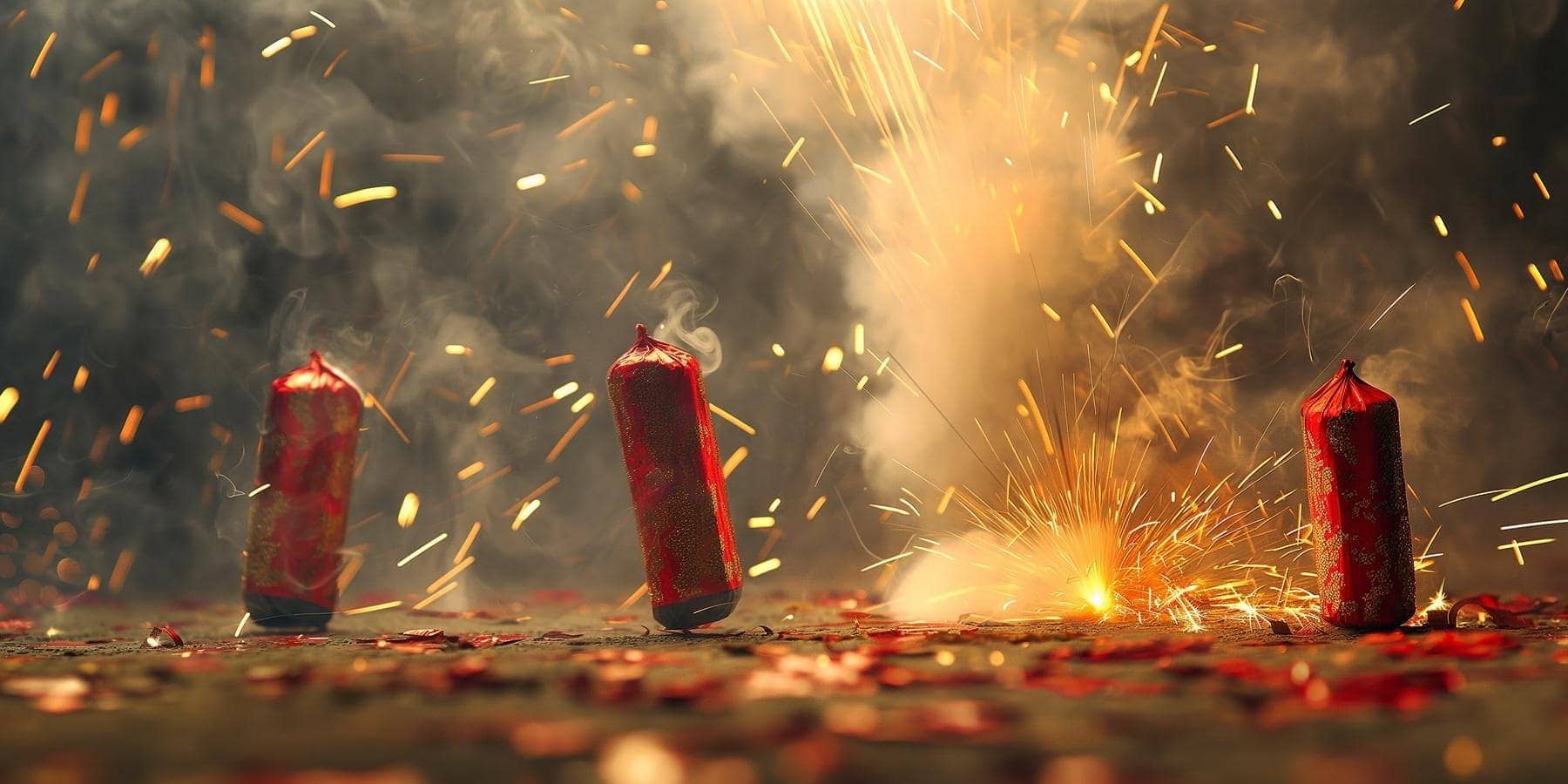


In India, the festival of Diwali is closely linked with the bursting of firecrackers, a tradition that remains deeply rooted despite increasing environmental concerns and tighter regulations. The domestic fireworks sector in India is substantial, valued at around ₹7,000 crore, yet its presence in the international market is surprisingly minimal. Official data shows that India’s fireworks exports are less than $1 million per year, with over 99 percent of production consumed within the country.




The main hub of India’s fireworks manufacturing is Sivakasi, a town in Tamil Nadu responsible for approximately 85 to 90 percent of the nation’s output. According to the Tamil Nadu Fireworks and Amorces Manufacturers Association (TANFAMA), the overall value of the industry includes both factory-level production, estimated at ₹2,000 crore, and an additional ₹5,000 crore generated through distribution channels such as wholesale, transportation, and retail.
Domestic demand peaks around the Diwali festival when more than 80 percent of annual revenue—over ₹4,000 crore—is earned. Other regional celebrations like Vishu in Kerala and Ganesh Chaturthi in Maharashtra also contribute to sales, though to a lesser extent. However, despite the size and vibrancy of the local market, India’s footprint in global fireworks trade is negligible. Data from the UN Comtrade Database and the World Bank’s World Integrated Trade Solution indicates Indian fireworks exports amount to just $757,000 annually, representing a mere 0.042 percent of the global market. The main foreign buyers include countries such as Vietnam, Bulgaria, and the United States.
In contrast, China dominates international fireworks commerce. Chinese exports are valued between $1.1 billion and $1.23 billion, with shipments reaching approximately 360,000 to 408,000 tonnes every year. Liuyang city in Hunan province is the epicenter of this production, known worldwide as the "fireworks capital". This industrial cluster supplies about 60 percent of China’s domestic demand and roughly 70 percent of its exports.
China’s export success is supported by specialized industrial zones, inexpensive labor, easy access to raw materials, a broad product range, and government backing. The industry benefits from generations of expertise that help maintain competitive pricing and efficiency. According to Dr Biswajit Nag, an economics and trade policy professor at the Indian Institute of Foreign Trade (IIFT), China also enjoys extensive global distribution networks and strong relationships with international buyers, which create barriers for Indian producers trying to enter those markets. Other significant players in the global fireworks sector include Germany, the Czech Republic, and Poland.
India’s limited export performance stems from multiple challenges. Logistical issues, strict chemical regulations, and the classification of fireworks as dangerous cargo complicate shipping. Discrepancies between central and state regulations, along with port restrictions, further hinder exports. Dr Nag noted that strong domestic demand and established local distribution networks reduce manufacturers’ motivation to pursue overseas markets, especially when domestic orders already consume available production capacity.
Fireworks in India are categorized as "low-hazard explosives" under the Explosives Rules of 2008, but Tamil Nadu places them in the "red" category, which requires more stringent handling procedures. The industry has sought reclassification to "low-risk pyrotechnic devices" and inclusion in the "white" category to ease regulatory burdens, but this change has not yet been approved. High costs related to transport, insurance, and hazardous cargo handling add to the difficulties, especially for smaller exporters who must also comply with international safety and certification standards.
Dr Ajay Sahai, director general and CEO of the Federation of Indian Export Organisations (FIEO), explained that specialized handling, appropriate packaging, and assured shipping capacity are necessary, but challenging for smaller shipments. International markets like the European Union and the United States require specific safety testing, labeling, and conformity certification, which pose additional hurdles.
Chemical regulations also create barriers. The Supreme Court’s 2018 ban on barium nitrate, intended to reduce air pollution, restricts manufacturers’ ability to produce formulations commonly used in global markets. Barium nitrate is a key ingredient in almost 80 percent of fireworks worldwide. Alternatives such as potassium perchlorate, popular in Western countries, are difficult to use in India due to regulatory limits, making it challenging to manufacture export-compatible products.
Another factor is the fragmented nature of India’s fireworks industry, which is largely composed of micro, small, and medium enterprises (MSMEs). This structure limits economies of scale and cost competitiveness. Manufacturers often tailor products to local festivals and consumer preferences that differ from those abroad.
Despite these obstacles, experts believe India has potential to grow its share of the global fireworks market. Dr Sahai suggested that improving product quality, adherence to international standards, and reliable delivery schedules could help build buyer confidence. A focused export development program centered around Sivakasi could accelerate progress by offering shared testing facilities, access to global certification, product and packaging development, predictable approvals, and dependable shipping solutions. Investments in factory modernization, worker safety, and quality assurance are also vital.
Aggregating orders and collaborating with established foreign distributors may enable smaller manufacturers to participate more effectively. Simplifying approval processes and aligning production with destination market requirements would also support export growth.
Dr Nag emphasized the need for technology upgrades to boost productivity and called for government facilitation to streamline export procedures without compromising safety. He reiterated that reclassification of fireworks to "low-risk pyrotechnic devices" would greatly ease both domestic and international clearances.
Expanding exports could position India as an alternative sourcing option capable of competing with China. However, Sahai highlighted the importance of commercial viability, noting that overseas orders must cover freight and compliance costs. He recommended starting with dedicated export production based on confirmed orders and scaling up as business relationships develop.
In summary, India’s fireworks industry holds significant domestic value but faces a complex set of regulatory, logistical, and market challenges that restrict its global reach. Addressing these issues through coordinated policy efforts and industry modernization could help unlock export opportunities and diversify the sector’s revenue streams beyond the domestic festival season.
What's Your Reaction?
 Like
0
 Dislike
0
 Love
0
 Funny
0
 Wow
0
 Sad
0
 Angry
0
















Comments (0)