


Diyas & delicacies: Diwali entertaining gets a touch of luxury, tradition



Last Diwali, Damini Ralleigh, cofounder of Delhi-based experiential food lab Indicā, hosted a Rajasthani dinner featuring dal-baati-churma, kachori-kadhi, laal maas, and khoba roti, accompanied by live music from the Manganiars, traditional Rajasthani folk musicians. Desserts, an assortment of regional mithais, were displayed on cake stands.




Inspired by her grandmother, Ralleigh’s decor celebrated repurposing. Old martabans became vases, dupattas and saris transformed into table linen, while ceramics held diyas and indigenous flowers. Even the cocktails incorporated Indian botanicals such as rose, mogra, khus, tulsi and sandalwood. “I find it slightly odd to eat a plate of chaat with an Espresso Martini. They don’t speak to each other. Sandalwood pairs with whisky, khus makes its way into a gin-based cocktail, and so on,” she explains.
The focus is on food displays and visual composition (Photo: Courtesy VW Cuisine & Concepts)
This interplay of food, design and personal storytelling is defining Diwali entertaining this year as well. Think miniature bites, elaborate grazing tables, interactive food stations, champagne-and-chaat counters and regional cuisine presented with contemporary flair. At its heart is an intimate, individual expression of luxury.
Also Read
The art of the tablescape
A mixed-media work from the exhibition ‘Sculpted Monolith’ by multidisciplinary culinary artist Eeshaan Kashyap (Photo: Courtesy Tablescape by Eeshaan)
For food and beverage curator Eeshaan Kashyap, who works with luxury brands and ultra-high-networth individuals, the tablescape and menu must speak the same design language. Edible gold on a plate, for instance, finds an echo in the decor.
This season, Kashyap is turning to heirloom textiles — patola saris, ajrakh prints and Kashmiri kani shawls — as luxurious table linen. Limited-edition art objects, precious stones, clay, terracotta and brass lend further character. “I see people mixing diyas, candle stands and many different materials all together in their own personal style,” he says.
Kashyap putting together a table with textiles, ingredients, and art objects (Photo: Courtesy Tablescape by Eeshaan)
A rich festive look offered by a combination of brass and fresh flower(Photo: Courtesy Tablescape by Eeshaan)
Sustainability and mindful indulgence are equally prominent. Sumit Chichra, founder and director of RSJ Hospitality, which runs the catering brand 3Hats Kitchen Studio, is seeing growing demand for handcrafted crockery, zero-waste entertaining and bite-sized food served in artisanal bowls. Villas and farmhouses are becoming preferred settings, with some transformed into casino-style lounges for traditional Diwali parties.
“Everything is customised, bite-sized, or served in bowls, so it’s easy for guests to mingle,” he says.
Chef Bharati Sanghi, director of Life Artisanal Food, favours Marwari heirloom recipes, traditional diyas and elaborate floral arrangements. “No one wants an elaborate sit-down meal,” she says, advocating a fluid style of entertaining rooted in tradition.
Meanwhile, catering company Cuisines and Concepts is exploring themes such as “marigold and kansa” and “rosewood and gold”, combining textured linens, warm lighting and earthy palettes that carry through to the food and cocktails.
Menu matters
Fresh, comforting food with inventive flourishes is shaping festival menus. Vishal Sinha, founder of We The Chefs, which connects home chefs with hosts, cites Chicken 65 canapes, pulled mutton vol-au-vents and jackfruit kosha rolls served with artisanal cocktails at an intimate 12-guest party. Brass diyas, beeswax candles and marigold strings completed the setting.
For another gathering, his team devised a modern Indian taco bar, replacing sour cream with hung-curd raita and conventional taco shells with miniature kesari warqi. A ladies-only party featured an interactive DIY, or do-it-yourself, chaat bar.
“Hosts are moving away from chaotic buffets in favour of meticulously curated, paired-and-plated multicourse mains that offer a fine-dining restaurant feel right at home,” says Sinha.
Chaat and chatter
India’s street-food traditions are finding new expression on luxury menus. Chaat Co is serving avocado khakhra with togarashi dust, dragon fruit chaat and lotus root bhel with pomegranate pearls alongside traditional favourites.
Innovations like avocado khakhra with togarashi dust and lotus root bhel for this season’s house parties (Photo: Courtesy
Chaar Co)
Palak patta chaat (Photo: Courtesy
Chaar Co)
“The idea is to bring together global ingredients with the soul of Indian street food,” says cofounder Havneet Singh, who identifies regional storytelling through food as an emerging trend.
In Bengaluru, Kaushik Raju, founder of Tijouri, curates menus celebrating India’s regional culinary heritage. For one gathering, his team recreated dishes from destinations the hosts had travelled to, pairing each course with decor inspired by those places.
“As the food from each region came out, they told the story that went with it,” recalls Raju. He is also seeing renewed interest in nature-inspired settings, indigenous crafts and local culinary traditions.
Interior stylist Anubha Aneja, founder of HōmAnAn, a New Delhi-based experiential luxury home decor showhouse, brings a similar sensibility to festival decorating. “I like to build the room almost the way one dresses for a celebration, through layers,” she says. Her approach layers silks, brocades and velvets, which “bring richness, not necessarily through excess, but through texture and the way they catch the light”.
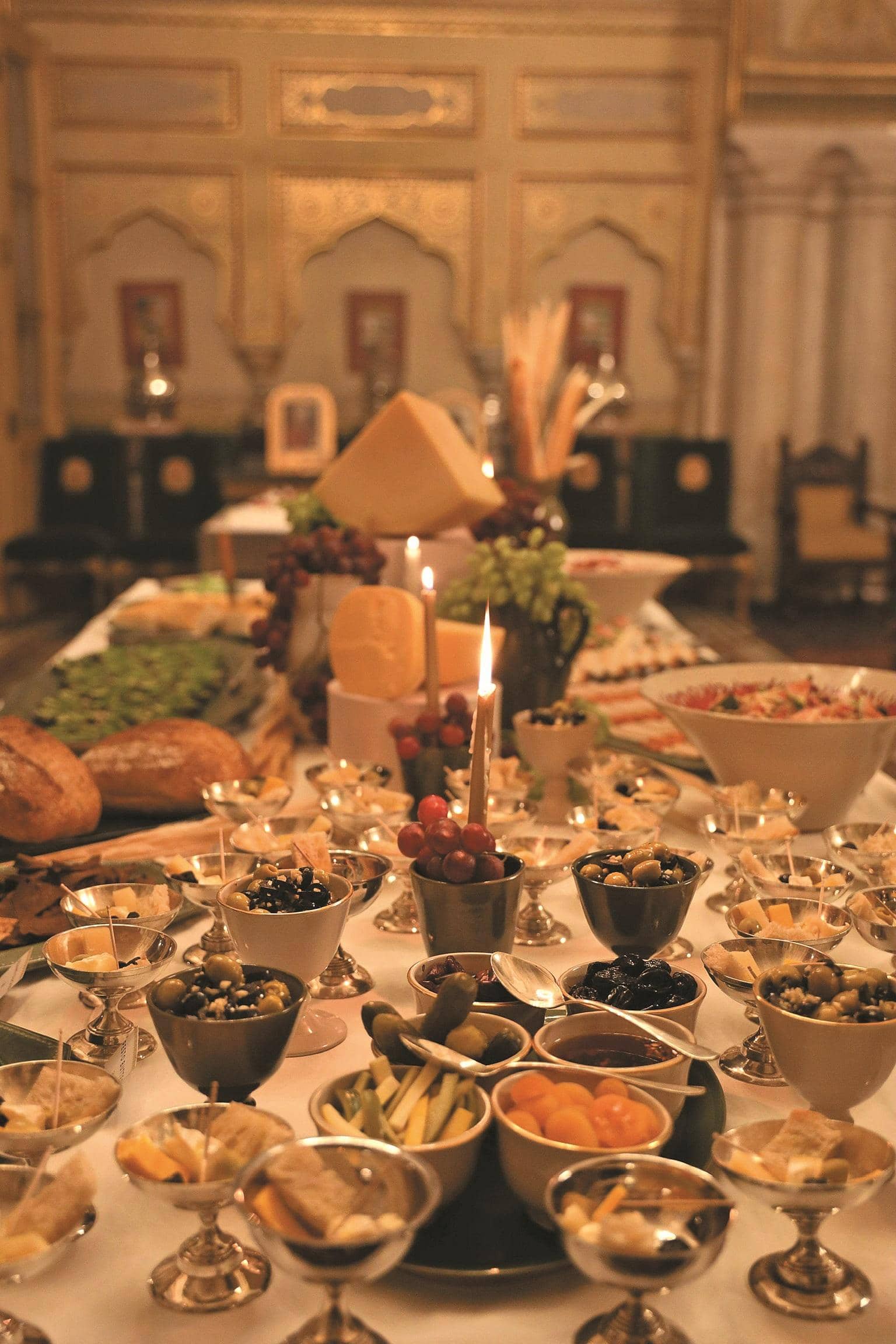
Chef Tejasvi Chandela of Dzurt Patisserie and Cafe preparing a grazing table with a selection of desserts and savoury canapes at Jaipur’s City Palace (Photo: Courtesy Dzurt Patisserie and Cafe)
She brings out heirloom pieces at this time of the year: An old silver bowl, a brass object, a textile that has been in the family. “These are the details that stop a festive home from feeling styled for a photograph and make it feel personal,” she says.
When food becomes design Food, too, is integral to the design. “The idea is to create something visually striking but effortless for guests to enjoy,” says chef Tejasvi Chandela, founder and managing director of Dzurt Patisserie & Café, Jaipur.
Chef Pradeep Panwar, culinary director at The Charcuterie Co, agrees. Grazing tables are becoming architectural compositions, with carefully considered heights, colours and finishing details. Regional Indian cheeses are increasingly sharing space with celebrated international varieties.
“There has to be live craftsmanship, visual appeal and interactive hospitality,” says Panwar.
At Nama by Arq, breads ranging from sourdough to baguettes become part of a tonal tablescape. Cofounder chef Ashay Dhopatkar is also seeing Korean cuisine, particularly ramen bowls, gaining popularity alongside grazing tables. For a recent party, he replaced the conventional printed menu with an upright dining table displaying visual mock-ups of every dish. So people looked not at a paper menu but at a real dining table with visuals of the dishes.
Premium ingredients are another marker of contemporary festival entertaining. “People are pushing boundaries for their house parties, whether it’s through premium ingredients, interactive live counters, global flavours, or elevated menus reflecting their personalities,” says Tanveer Kwatra, hospitality entrepreneur and founder of Delhi restaurant GRAMMIE. At one recent gathering, he served caviar and oysters as welcome bites.
Yet, amid the elaborate styling and culinary innovation, the appeal of Diwali entertaining remains unchanged: The warmth and exclusivity of celebrating at home. The house, like its hosts, is dressed for the occasion.
What's Your Reaction?
 Like
0
 Dislike
0
 Love
0
 Funny
0
 Wow
0
 Sad
0
 Angry
0














Comments (0)