


India to Maintain Capital Spending Until Private Sector Expands: FM Sitharaman

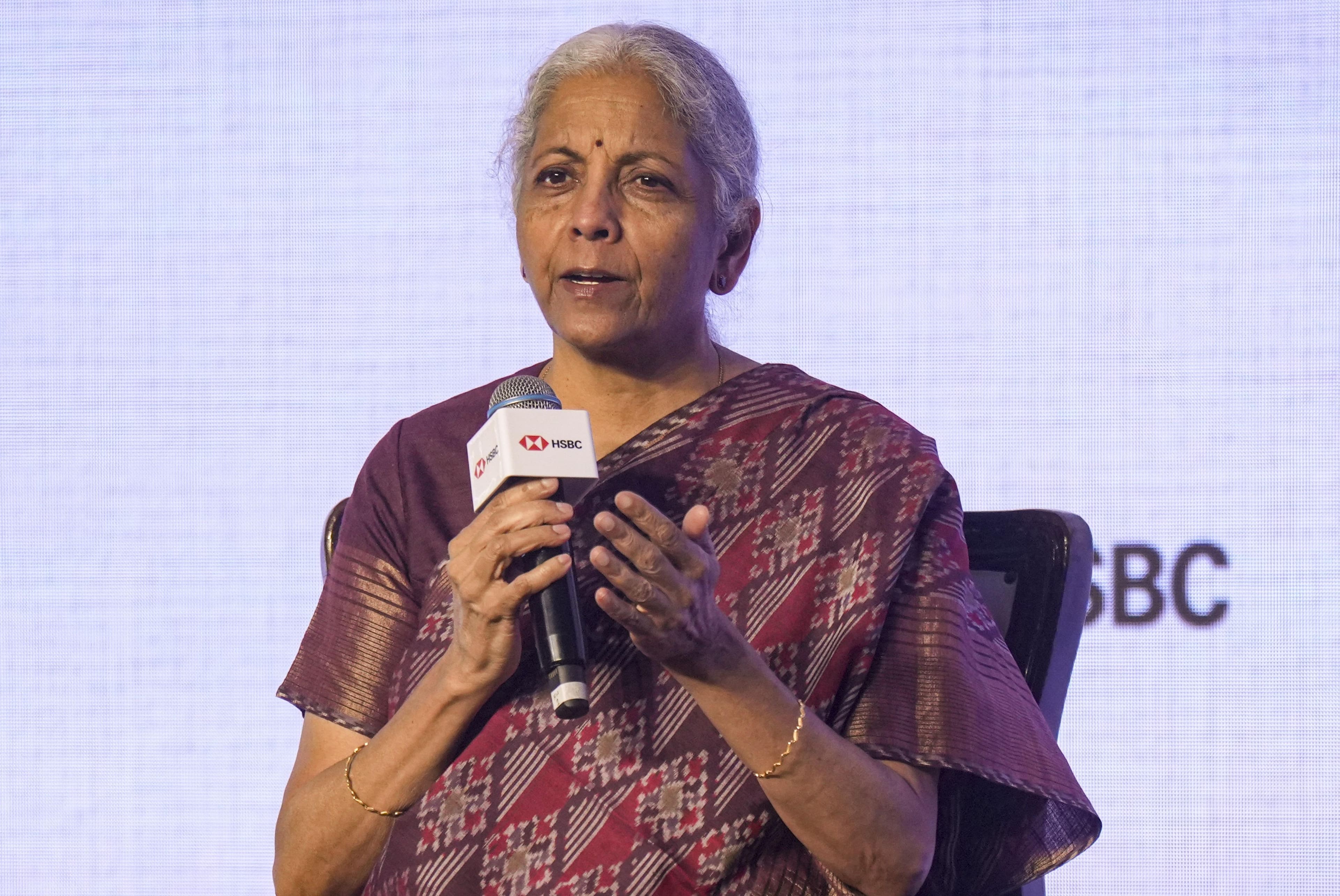


Indian Finance Minister Nirmala Sitharaman reaffirmed the government's commitment to sustaining capital expenditure efforts until the private sector ramps up its investment and capacity expansion. Speaking at HSBC's Algorithm of Inclusion event in Mumbai on Monday, she emphasized that preserving India's economic growth momentum is critical amid ongoing global uncertainties.




"Capital expenditure plays a vital role in our growth strategy," Sitharaman explained. "Until the private sector steps up to expand capacity, the government must continue driving capital spending." She highlighted the positive outcomes of the government's capex initiatives over the last five years, noting the multiplier effect that has supported broader economic activity.
Despite the aggressive capex push, the finance minister stressed the importance of maintaining fiscal discipline. "We agree that spending is necessary, but it must be responsible," she said, underlining that fiscal prudence remains a priority under Prime Minister Narendra Modi’s administration.
Turning to India's economic fundamentals, Sitharaman urged a more confident narrative about the country's prospects. She pointed to robust goods and services tax (GST) revenues and a stable banking system as indicators of strength. "Key pillars of our economy are functioning well; there is no sign of fragility," she added.
The finance minister also called for reducing skepticism in discussions about India's economic progress. "India needs optimism and a belief in itself," she said, remarking that even well-informed observers sometimes express undue doubt about developments.
She identified domestic demand, rising purchasing power, and policy stability as core factors behind the economy’s resilience. The expanding middle class, with its growing consumption capacity, is playing a crucial role in sustaining internal demand. "We now have a large domestic market with enhanced purchasing power, which is increasingly driving consumption," Sitharaman noted.
In line with this economic environment, the government is prioritizing financial inclusion initiatives, particularly expanding insurance coverage and pension schemes to underserved populations. "Insurance for all is at the top of our agenda," she stated. Programs like the Pradhan Mantri Jeevan Jyoti Bima Yojana and Pradhan Mantri Suraksha Bima Yojana offer affordable insurance options, while subsidized pension plans aim to protect those unable to work.
Another key objective is improving access to formal credit, especially for entrepreneurs seeking to start or grow businesses. This effort aligns with the Insurance Regulatory and Development Authority of India's goal for universal insurance coverage by 2047.
On the skills front, the government plans to establish artificial intelligence training centers in each district to address the gap between industry needs and the capabilities of new workforce entrants. Sitharaman noted that graduates from smaller towns and rural areas often do not meet employer expectations, making such initiatives essential.
She also mentioned support for upgrading Industrial Training Institutes (ITIs), many of which have lagged behind evolving industry demands. The partnerships between Assam, Odisha, and Singapore for industry-focused training and certification were cited as positive examples.
Regarding banking reforms, Sitharaman announced the formation of a high-level committee tasked with assessing future sector requirements and recommending improvements. The panel is chaired by former Central Vigilance Commissioner S N Patel and includes notable members such as RBI Deputy Governor Shirish Chandra Murmu. It is expected to deliver its findings by April 2027.
Finally, Sitharaman touched on the impact of welfare programs in reducing poverty. She referenced World Bank data showing a decline in poverty from around 25 percent to just over 2 percent by the end of the 2023 financial year, attributing this progress to enhanced access to healthcare, food security, housing, and basic amenities.
In summary, the Indian government remains focused on balancing proactive capital investment with fiscal responsibility, while bolstering domestic demand and social safety nets to ensure sustained economic growth in a challenging global environment.
What's Your Reaction?
 Like
0
 Dislike
0
 Love
0
 Funny
0
 Wow
0
 Sad
0
 Angry
0















Comments (0)