


Government Revises Auction Rules for Critical Mineral Blocks, Launches New Bids



The Indian government announced significant changes to the bidding process for critical mineral auctions on Thursday, aiming to increase participation and reduce the number of unsold blocks. The Ministry of Mines has lowered the minimum threshold of technically qualified bidders from three to two, a modification incorporated into the latest auction rounds.




This adjustment was formalized through the Mineral (Auction) Third Amendment Rules, 2026, notified on October 16, 2026, and now applied to the ninth tranche of critical and strategic mineral block auctions as well as the third tranche of exploration licence blocks. According to the Ministry, this move directly addresses a key factor behind the previously unsold mineral blocks.
In prior auction rounds, the government offered 100 critical and strategic mineral blocks, successfully auctioning 64 while 36 remained unsold. Several blocks had their auctions cancelled due to inadequate bidding activity or failure to meet the requirement of having at least three technically qualified bidders. The new rule easing this criterion is expected to prevent such cancellations and encourage greater investor interest.
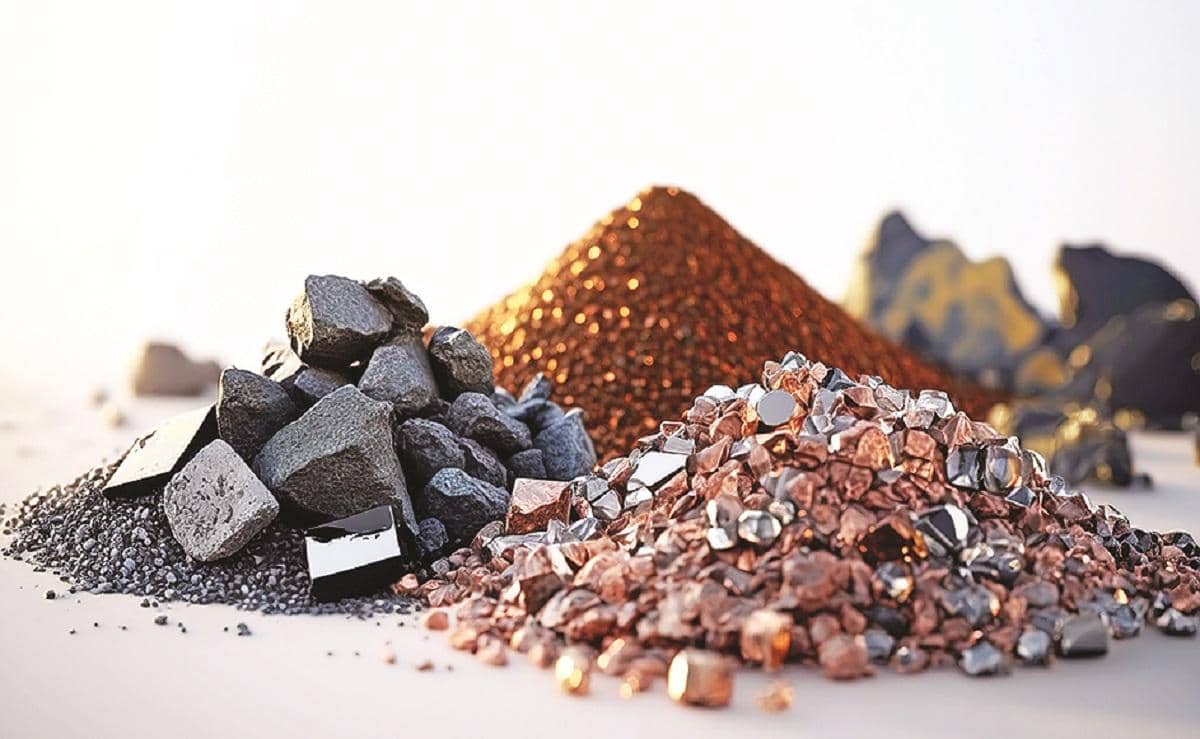
The ninth tranche features 20 mineral blocks distributed across eight states. Chhattisgarh leads with five blocks, followed by Rajasthan, Telangana, and West Bengal with three blocks each. Madhya Pradesh and Maharashtra have two blocks apiece, and Andhra Pradesh and Bihar have one each. The mineral resources on offer include graphite, glauconite, vanadium, gallium, titanium, rare earth elements (REE), bauxite, aluminous laterite, potash, halite, tungsten, scandium, and other rare metals.
These minerals are vital for industries focusing on clean energy solutions, electric vehicles, advanced manufacturing, fertilizers, defense, aerospace, electronics, and other strategic sectors, highlighting their importance in the country’s industrial growth and technological ambitions.
Alongside the mineral block auctions, the government also launched the third tranche of exploration licence auctions, offering 14 blocks across six states. Rajasthan tops this list with four blocks, Telangana follows with three, and Madhya Pradesh, Maharashtra, West Bengal, and Gujarat each have one block. These exploration licences cover minerals such as copper, vanadium, rare earth elements, potash, and halite, including associated mineralisation.
Exploration licences were introduced under Section 10BA of the Mines and Minerals (Development and Regulation) Act. They allow private entities to invest in exploring 29 critical and deep-seated minerals listed in the Act’s Seventh Schedule before mining activities commence. So far, 11 exploration licence blocks have been auctioned in the first two tranches.
This latest set of reforms builds on previous amendments like the Mineral (Auction) Second Amendment Rules, 2025, and the introduction of insurance surety bonds. These measures collectively aim to enhance the ease of doing business, improve transparency, and boost investor confidence in the mining sector.
The process for these auctions is scheduled to begin with the sale of tender documents starting November 5. Interested parties can purchase these documents until 5 pm on January 1, 2027. Technical bids and initial price offers must be submitted by 5 pm on January 7, 2027.
Auctioning of critical mineral blocks under composite licence and mining lease will follow a two-stage ascending forward auction process, where the highest percentage of revenue share proposed by a bidder determines the winner. Exploration licence blocks will be auctioned through a two-stage descending reverse auction, where the bidder offering the lowest percentage of revenue share wins.
These developments reflect the government's ongoing efforts to secure domestic supplies of minerals that are crucial for multiple strategic sectors, reduce reliance on imports, and encourage private sector participation in mineral exploration and mining activities.
What's Your Reaction?
 Like
0
 Dislike
0
 Love
0
 Funny
0
 Wow
0
 Sad
0
 Angry
0

















Comments (0)