
Supreme Court Questions Election Commission's New Voter Form 6 Requirement

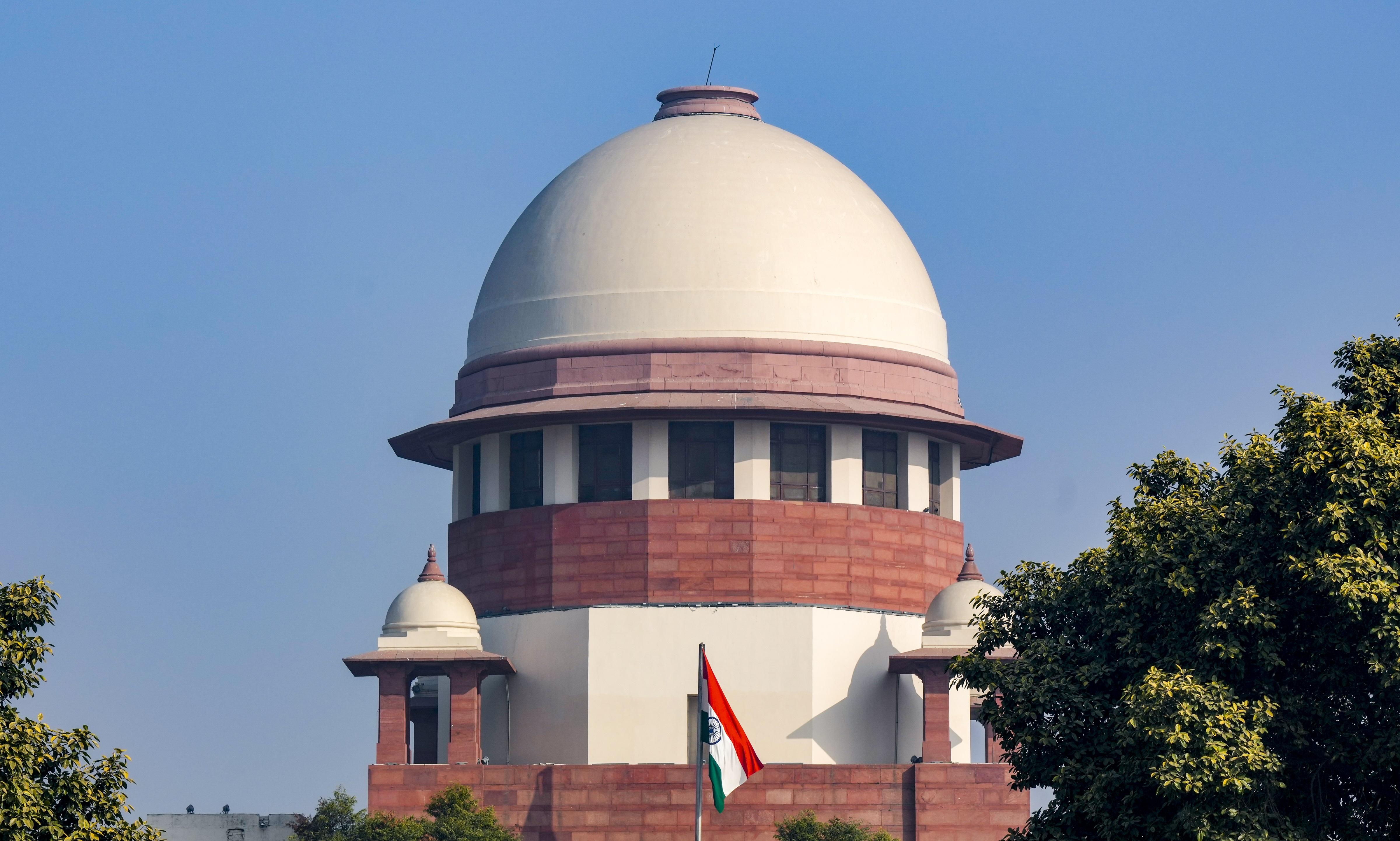
On October 5, the Supreme Court of India raised a significant legal question regarding the Election Commission of India's (ECI) powers under Article 324 of the Constitution. The Court pointed out that any modified version of Form 6, which is the application form for voter enrolment, has not received judicial approval. This observation emerged during hearings on the case of Shailendra Mani Tripathi v Union of India, which challenges unilateral changes made by the ECI in the Special Intensive Revision (SIR) process and the electoral roll system.
The bench, led by Chief Justice of India Surya Kant alongside Justices Joymalya Bagchi and V Mohana, has requested the Election Commission to produce all relevant documents concerning the modification of Form 6. The Court stated that once these records are presented, it will scrutinize who authorized the changes. However, at this stage, the Court has not declared the ECI’s actions illegal nor invalidated the SIR process.
This development is noteworthy because the ECI had previously claimed that the additional declaration attached to Form 6 for the SIR process had been endorsed by the Supreme Court. The Court’s recent remarks clarify that the specific altered version of Form 6 under dispute does not have judicial sanction.
The Legal Basis and Controversy Surrounding Form 6
Form 6 serves as the official document for individuals seeking to be registered in the electoral rolls. Its existence and format are governed by the Registration of Electors Rules, 1960, which are issued under the Representation of the People Act, 1950.
The current controversy stems from the ECI’s online ECINET system introducing an extra declaration as part of the SIR. This declaration requires applicants to state if they, their parents, or grandparents appeared in the previous electoral roll prepared during the last SIR, including details such as constituency, polling station, and serial number. The physical and downloadable versions of Form 6, however, do not include this additional declaration.
Legal experts have highlighted that while Article 324 grants the ECI broad authority to oversee elections and electoral rolls, it does not permit the Commission to unilaterally alter a statutory form or add substantive conditions for voter registration without legislative backing. Saloni Shah, founding partner at Khanwilkar & Shah Associates, emphasized that the ECI’s power cannot be interpreted as limitless when statutory rules are already in place.
Within the Election Commission itself, two Election Commissioners, Sukhbir Singh Sandhu and Vivek Joshi, reportedly opposed the addition, arguing that modifying a statutory form without formally amending the Registration of Electors Rules is impermissible. The ECI contends that the core Form 6 remains unchanged and that the requirement is merely an additional annexure related to the SIR.
Article 324 Powers: Extensive but Not Boundless
The constitutional provision under Article 324 grants the ECI comprehensive supervisory powers over elections and electoral rolls. However, the Supreme Court has clarified through precedent that these powers do not override existing legislation. Advocate Siddharth Batra explained that Article 324 acts as a residual source of authority, applicable only where no law exists or leaves gaps.
In Mohinder Singh Gill v Chief Election Commissioner (1978), the Court acknowledged the Commission’s plenary powers but affirmed that the ECI must operate within the limits of valid parliamentary legislation. The ruling in A C Jose v Sivan Pillai (1984) further underscored that the ECI cannot displace statutory rules under the guise of constitutional authority. The Commission’s powers supplement rather than replace enacted laws, and they remain subject to principles of natural justice and the rule of law.
Applying this doctrine to Form 6 means that if the Registration of Electors Rules clearly specify the form and its contents, the ECI cannot use Article 324 to alter these requirements. Yet, if the additional declaration is considered an ancillary or procedural step outside the legislative framework, it might fall within the Commission’s constitutional remit. The issue hinges on the practical effect of the declaration, not just its label as an annexure.
Context from Recent State-Level SIR Cases
The Supreme Court’s May 27, 2026 judgment in Association for Democratic Reforms v Election Commission of India upheld the ECI’s authority to conduct SIR under Article 324, read with Section 21(3) of the Representation of the People Act. That ruling recognized the Commission’s ability to adapt election procedures, ruling that Form 6 may not apply literally during an intensive revision.
However, the Bihar judgment examined only the documentation framework attached to Form 6 and Form 8 at that time, including Annexure D, which required declarations about age, residence, and citizenship. The specific online declaration linking applicants to previous electoral rolls, which is now contested, was introduced after that judgment and has not yet been addressed by the Court.
The West Bengal SIR offers a practical example of the impact these changes can have. The revision there led to the deletion of roughly 9 million voters, with over 2.2 million appeals filed for reinstatement. The total number of appeals concerning voter inclusion and exclusion has exceeded 3.8 million. The Supreme Court has been actively monitoring the appellate tribunals handling these cases.
According to advocate Priya Dhankhar, the key question is how the additional declaration affects voter eligibility. If applicants can leave the declaration blank or answer "no" without repercussions, the requirement may be administrative. But if the response triggers rejection, notice, inquiry, or shifts the burden of proof, it effectively changes the conditions for enrolment.
This distinction is critical because individuals removed from the rolls or young voters lacking family linkage in previous SIR documents could face obstacles enrolling due to the declaration. The instructions given to election officers on processing these declarations will be decisive in determining their legal weight.
Question of Authority and Decision-Making Within the ECI
The ongoing case also raises concerns about the internal governance of the Election Commission. The petition alleges that several decisions related to the SIR and software modifications were made without consensus among the Election Commissioners. This would contravene the collective decision-making requirements set forth in the Chief Election Commissioner and Other Election Commissioners Act, 2023.
If the altered Form 6 requirement was implemented without following the legally mandated procedures for decision-making within the Commission, it could cast doubt on the procedural validity of these changes. The Supreme Court’s inquiry into who authorized the modifications reflects this broader institutional issue.
The outcome of these proceedings will have significant implications for the conduct of electoral roll revisions and the balance of power between the Election Commission’s administrative autonomy and statutory frameworks governing elections in India.
What's Your Reaction?
 Like
0
 Dislike
0
 Love
0
 Funny
0
 Wow
0
 Sad
0
 Angry
0












Comments (0)