


US Stocks Slip as Treasury Yields Hit Highest Since 2002, Software Stocks Rally

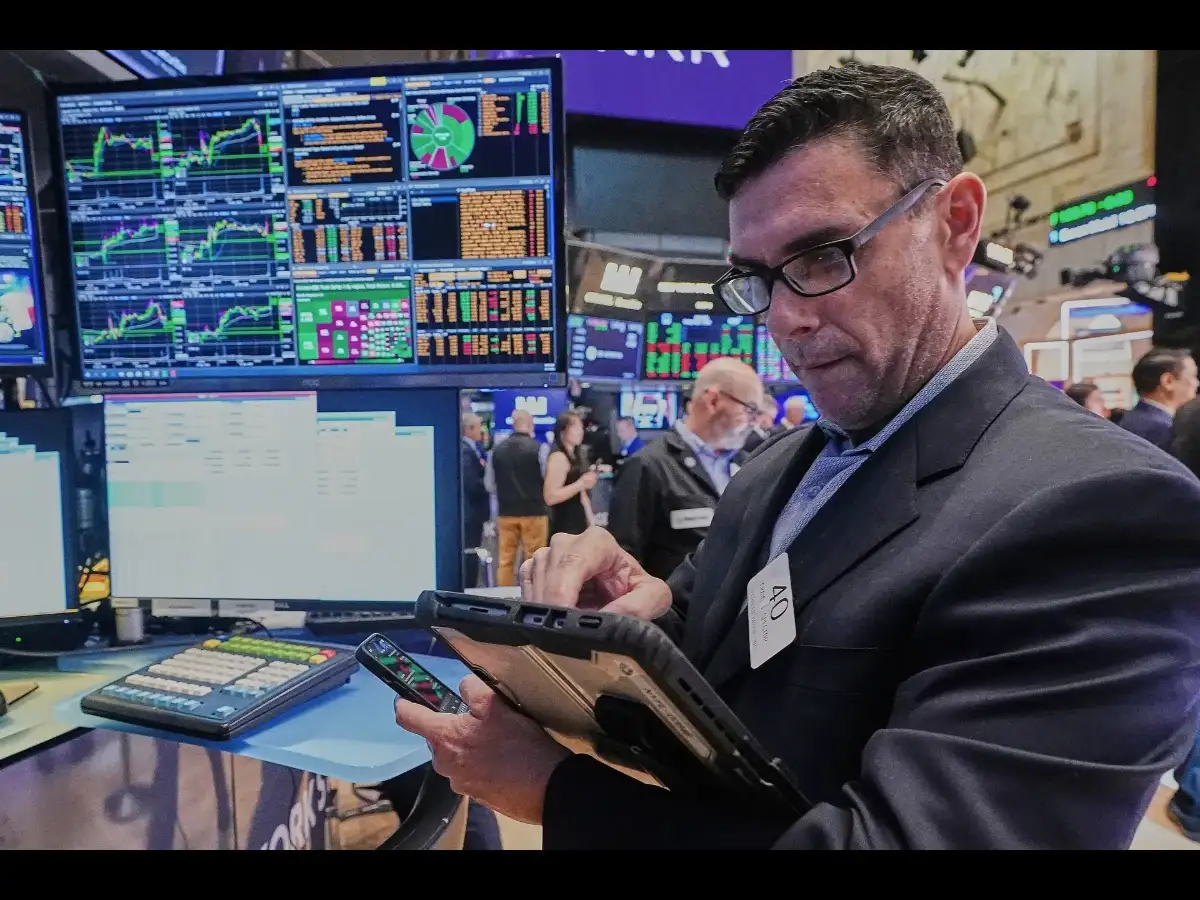


Wall Street's major indexes declined on Thursday as a sharp selloff in the bond market pushed Treasury yields to levels not seen in over two decades. This surge in yields weighed heavily on equities, overshadowing gains in technology shares, particularly software stocks, according to Reuters.




The benchmark 10-year Treasury note yield climbed to 5.3445 percent, marking its highest point since 2002. This rise came amid a broader global bond market selloff and followed the worst quarterly performance for Treasuries since 1994. Investors are closely watching interest rates and inflation concerns as government borrowing remains substantial.
Brian Jacobsen, chief economist at Annex Wealth Management, explained the challenge for stocks in this environment: "When a safe government bond pays more than 5 percent, stocks have to earn their keep. Company profits become the whole story." With third-quarter earnings season set to begin in mid-October, corporate results will be critical in shaping market sentiment.
Stocks sensitive to interest rates faced notable declines. Housing shares dropped 1.4 percent, while banking stocks lost 2.2 percent. Other sectors often considered bond proxies, including real estate investment trusts, utilities, and consumer staples, also saw their share prices fall. Meanwhile, the Cboe Volatility Index, a measure of market uncertainty, rose to a two-week peak around 17.23.
Technology stocks provided a rare bright spot amid the broader declines. Software companies rallied after strong earnings guidance from consulting firm Accenture, which surged 22 percent following its forecast of better-than-expected revenue growth for the full year. Competitors like Cognizant and IBM also advanced, up 10 percent and 4.2 percent respectively. The S&P 500 software index climbed 1.7 percent to its highest level since November, outperforming the broader tech sector's modest 0.3 percent gain.
Steve Sosnick, chief market analyst at Interactive Brokers, noted, "Many institutional investors appear underinvested in software. This was evident with Accenture's results, prompting a swift reassessment of the company's prospects." Additionally, Micron Technology, a key player in the artificial intelligence supply chain, strengthened the AI investment narrative with a favorable revenue forecast and $32 billion in customer supply commitments. Nonetheless, its shares declined slightly by 0.9 percent after a strong performance earlier in the year.
Market indices reflected the mixed sentiments. By 10:27 a.m. Eastern Time, the Dow Jones Industrial Average was down 231.69 points (0.46 percent) at 50,674.36. The S&P 500 decreased 15.85 points (0.22 percent) to 7,635.69, and the Nasdaq Composite slipped 18.52 points (0.07 percent) to 26,842.55.
September proved turbulent for Wall Street, with the Dow and S&P 500 posting losses during a period traditionally weak for equities. The Nasdaq bucked the trend, buoyed by enthusiasm for artificial intelligence-related stocks.
Recent inflation data came in softer than expected, reinforcing bets that the Federal Reserve may hold interest rates steady at its October meeting. Market pricing currently assigns a 63 percent probability of a pause, although a rate hike in December remains possible, given inflation remains above the Fed's 2 percent target. Labor market data showed ongoing resilience, with jobless claims falling and layoffs easing in September.
Minneapolis Fed President Neel Kashkari commented that the labor market is not the main driver of inflation, suggesting that the central bank might achieve its goal without inducing significant labor-market pain. Upcoming remarks from Fed officials such as Thomas Barkin, Christopher Waller, Philip Jefferson, Michelle Bowman, and Lorie Logan are anticipated for further insights on monetary policy direction.
In other corporate news, Constellation Energy's shares rose 3 percent after the utility signed a 20-year power purchase agreement with Amazon.com. Market breadth was weak, with decliners outnumbering advancers by roughly 2.5 to 1 on the New York Stock Exchange and nearly 2 to 1 on the Nasdaq.
The S&P 500 recorded three new 52-week highs and 35 new lows, while the Nasdaq Composite logged 17 new highs against 171 new lows. These figures highlight the uneven performance across sectors and stocks amid current market pressures.
Investors remain cautious as they await upcoming earnings reports and Fed commentary, balancing optimism around technology and AI developments against the challenges posed by rising borrowing costs and inflationary pressures.
What's Your Reaction?
 Like
0
 Dislike
0
 Love
0
 Funny
0
 Wow
0
 Sad
0
 Angry
0

















Comments (0)