


Rupee Faces Challenges Amid Dollar Demand and Capital Outflows

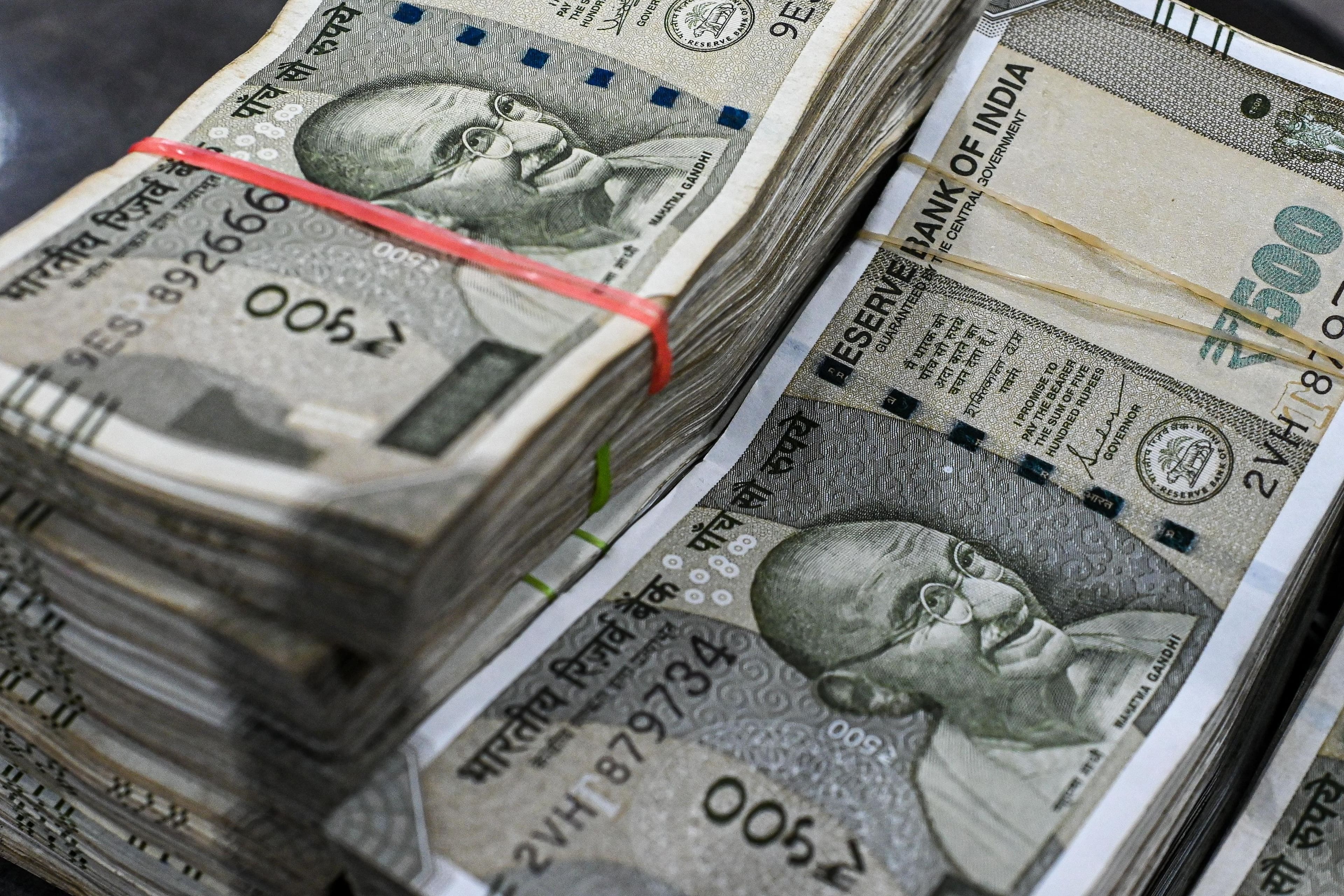


The Indian rupee’s recent fluctuations reflect more than just geopolitical tensions in West Asia and high crude oil costs. Several factors, including rising global borrowing costs, altered hedging strategies among importers and exporters, and ongoing capital outflows, have collectively weighed on the domestic currency.




While the rupee showed some resilience by gaining 0.93 percent in October so far, it remains down by 0.14 percent for the current financial year. This recovery was short-lived, as the currency ended an eight-day winning streak on Thursday after crude prices climbed due to escalating tensions in West Asia.
On Friday, the rupee continued to weaken, closing at 94.94 per US dollar, slightly lower than Thursday’s close of 94.83. Earlier in the month, the rupee had improved from a low of 96.73 on October 9—close to its record low of 96.96 reached in May—to an intraday peak of 94.33. This upswing was supported by dollar inflows linked to the Jio Platforms initial public offering (IPO) and active intervention by the Reserve Bank of India (RBI) in both spot and non-deliverable forward markets.
Despite these efforts, RBI’s foreign exchange reserves dropped by $5.01 billion to $721.02 billion in the week ending October 16. State-owned banks were also involved in purchasing dollars for oil companies on behalf of the central bank, reflecting coordinated attempts to stabilize the currency.
The RBI has implemented several strategies to ease pressure on the rupee. Since October 12, a special dollar window has been operational to supply daily dollar requirements to Indian Oil Corporation, Bharat Petroleum Corporation, and Hindustan Petroleum Corporation through designated banks. The central bank also tightened foreign exchange derivative exposure limits for banks and introduced concessional swap windows related to foreign currency non-resident bank deposits, overseas borrowings, and external commercial borrowings. Additionally, the RBI increased the repo rate by 25 basis points to 5.5 percent on October 7.
However, the rupee’s challenges are linked to broader global shifts. Expansionary fiscal policies in major economies, particularly the United States, along with a surge in artificial intelligence-driven investments, have intensified competition for capital, driving up global borrowing costs. Gaura Sen Gupta, chief economist at IDFC FIRST Bank, noted, "The pressure on the rupee is led by elevated global bond yields, surge in crude oil prices and lately focus on AI-related investments." She added that these factors are affecting emerging markets broadly, not just India.
Domestic hedging behavior has also influenced rupee dynamics. Importers, anticipating further depreciation, have increased their hedging of dollar payables, while exporters have been less inclined to hedge their dollar receipts. This shift boosts demand for dollars in the market. The RBI’s foreign exchange risk reserve (FERR) framework aims to mitigate pressures arising from such hedging activities.
Disruptions in the forward market have contributed to volatility. Abhishek Goenka, CEO of IFA Global, explained that dollar flows from the Jio Platforms IPO and related funding swaps widened the gap between spot and forward exchange rates. He said, "Investors sell dollars in cash to subscribe to the IPO and book a forward to hedge currency risk." These operations, along with RBI’s sell-buy swaps designed to mop up surplus rupee liquidity, have expanded the basis between spot and forward rates. Exporters' inability to cancel and rebook forward contracts has made these distortions worse.
Goenka observed that the basis improved on Thursday as spot prices rose and forward rates declined, but it remains dislocated with room for correction. He identified the 94.20 to 94.40 per dollar range as a strong technical support zone, which could attract spot buying interest, especially with Brent crude oil prices above $110 per barrel.
The rupee’s vulnerability is further compounded by India’s external account imbalances. A report from Axis Bank highlighted that the current account deficit (CAD) exceeds levels that can be comfortably financed, particularly given the tightening of global financial conditions. The report stated, "Even with new measures, CAD is well above now financeable levels." This situation has kept India’s basic balance of payments in deficit over several quarters.
Elevated forward premiums indicate a reversal of the covered interest parity, reflecting expectations of rupee depreciation and contributing to higher domestic interest rates. Capital outflows via overseas direct investment (ODI) have also intensified pressure on the currency. RBI data reveal that annualized ODI by the financial and business services sector has surged well above previous levels in the current financial year, while remittances under the Liberalised Remittance Scheme have remained steady.
The Axis Bank report suggests that policy responses may need to extend beyond managing the current account to address capital outflows effectively. It also points out that relying solely on higher interest rates to defend the rupee has not been successful in past episodes.
In the context of these complex domestic and international factors, the rupee’s path remains uncertain. The RBI’s interventions and policy adjustments aim to stabilize the currency, but ongoing pressures from global capital flows, commodity prices, and hedging behavior are likely to persist as significant influences.
What's Your Reaction?
 Like
0
 Dislike
0
 Love
0
 Funny
0
 Wow
0
 Sad
0
 Angry
0

















Comments (0)