


SBI Q2 Profit Rises 14% to ₹23,038 Crore on Stake Sale Gains




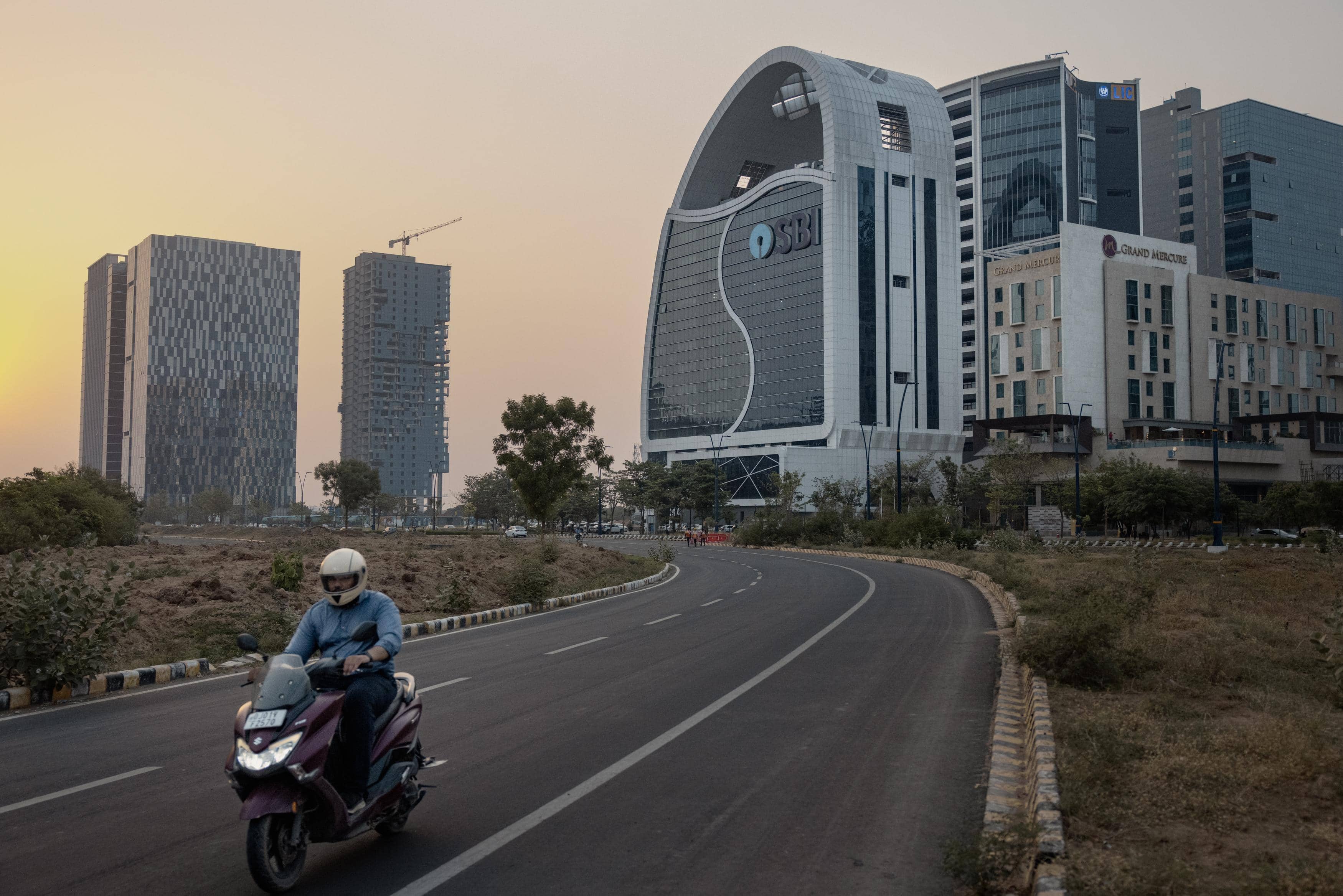
State Bank of India (SBI), the country’s largest lender, announced a 14 percent rise in net profit for the quarter ending September 30, 2026, reaching ₹23,038 crore compared to ₹20,160 crore in the same quarter last year. This growth was primarily driven by a one-time gain from selling its stake in SBI Fund Management.




During this period, SBI’s net interest income (NII) increased by 14.7 percent, climbing to ₹49,143 crore from ₹42,847 crore recorded a year earlier. The bank’s strong core earnings highlight resilient underlying business momentum despite some challenges in other income segments.
A major contributor to the profit surge was the bank’s sale of a 6.13 percent stake in SBI Fund Management, which produced a pre-tax gain of ₹7,288.5 crore in the first half of fiscal year 2027. This gain was recognized in the second quarter results. The proceeds from this transaction were notably higher, by 59 percent, than the ₹4,593 crore earned from the bank’s stake sale in Yes Bank during the corresponding quarter of the previous year.
However, SBI’s other income fell by 24 percent year-on-year to ₹11,777.5 crore. This decline was largely due to losses in the treasury operations, including mark-to-market revaluation and foreign exchange losses. Chairman CS Setty explained that treasury-related losses amounted to approximately ₹1,300 crore during the quarter, which was an improvement over the ₹2,900 crore losses reported in the second quarter of the previous year. These treasury losses were partially offset by the substantial gains from the SBI Fund Management stake sale.
Analyst Siddharth Rajpurohit from Systematix Group commented that despite the treasury setbacks, the bank’s core operating performance remains solid. He pointed out reductions in slippages and controlled credit costs as positive indicators. Additionally, the domestic net interest margin (NIM) improved by 11 basis points sequentially, supported by lower deposit costs.
On the liabilities front, SBI saw deposits increase 12.3 percent to ₹62.7 lakh crore, compared to ₹55.9 lakh crore a year prior. This growth included $10.9 billion mobilized through the bank’s Foreign Currency Non-Resident (Bank) or FCNR (B) deposit scheme. Chairman Setty noted that excluding FCNR (B) deposits, the deposit growth still stood at about 10.5 to 10.6 percent.
SBI’s advances or loans expanded by 17.8 percent, reaching ₹52 lakh crore from ₹44.2 lakh crore in the year-earlier quarter. Setty maintained the bank’s forecast for credit growth in the range of 14 to 15 percent for the full fiscal year 2027. He explained that this estimate aligns with expected nominal GDP growth of 12 to 12.5 percent, with SBI typically outperforming the economy by 3 to 4 percentage points.
The bank’s net interest margin slightly softened to 2.90 percent from 2.92 percent a year ago, but it showed a 4 basis point improvement compared to the previous quarter. Asset quality also continued to improve, with gross non-performing assets (GNPA) dropping to 1.39 percent of total advances as of September 30, 2026, down from 1.73 percent a year earlier. Net non-performing assets (NPA) improved as well, falling to 0.36 percent from 0.42 percent.
SBI’s quarterly results reflect a balance between strong core banking performance and volatility in treasury operations. The bank’s ability to grow deposits and loans steadily, while managing asset quality, positions it well in an environment where Indian banks face evolving economic conditions and regulatory expectations. The gains from strategic stake sales provide short-term boosts to profitability, but underlying business trends remain crucial for sustaining long-term growth.
With India’s banking sector undergoing significant transformation driven by digital innovation, expanding credit demand, and shifts in global economic conditions, SBI’s performance offers insights into how large public sector banks are navigating these challenges while supporting the country’s economic expansion.
Published on November 3, 2026
What's Your Reaction?
 Like
0
 Dislike
0
 Love
0
 Funny
0
 Wow
0
 Sad
0
 Angry
0














Comments (0)