


India to Launch National Electricity Data Sharing Framework Soon

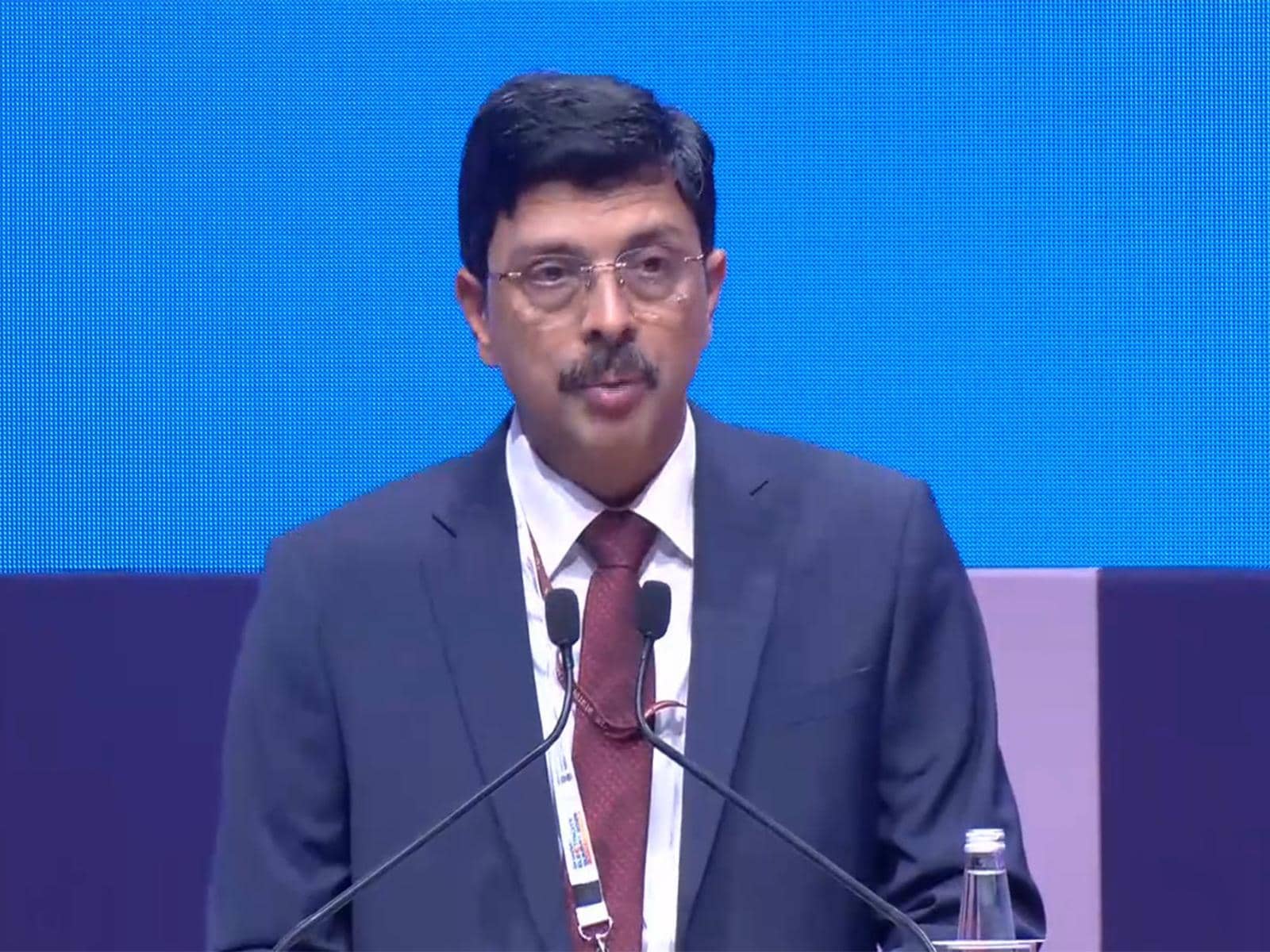


The Ministry of Power in India is set to introduce the National Electricity Data Sharing Framework this month, according to Power Secretary Pankaj Agarwal. The announcement came during an industry event focused on advancing artificial intelligence within the country's power sector.




This framework is designed to overhaul the existing fragmented and isolated data systems currently used across the power industry. By establishing a standardized digital platform, the framework aims to streamline data sharing and facilitate the implementation of future technologies. The initiative reflects a broader push to modernize India's power infrastructure through improved data integration.
Earlier this year, in July, the ministry released a draft of the data sharing norms. It proposes making power sector datasets machine-readable and accessible via secure application programming interfaces (APIs). These APIs will enable authorized users to directly incorporate data into software applications and analytics models, fostering more efficient data usage. However, the draft currently suggests that participation in the framework will be voluntary rather than mandatory.
At the event titled "Making the Indian Power Sector AI Enabled," organized by the Central Electricity Authority (CEA), Agarwal emphasized the importance of collaboration. He announced the formation of a national data governance committee including government officials and industry representatives to ensure coordinated progress. "This will comprise government officers and representatives from the industry so that we can move hand-in-hand together," he said.
Agarwal also highlighted the necessity of scaling up artificial intelligence applications beyond pilot programs. He urged the sector to focus on how AI can deliver tangible benefits for electricity consumers across India.
One challenge underscored during the event is the rapid growth in electricity demand from data centers. Agarwal pointed out that demand from this sector is expected to surge from 1.6 gigawatts today to 26 gigawatts within six years. This sharp increase will complicate grid management and intensify the need for real-time monitoring and operational control.
Power Minister Manohar Lal, in a video message, shared the government’s long-term vision. He stated that India aims to quadruple its installed power capacity by 2037. A significant part of this expansion involves increasing the share of non-fossil fuel energy sources from the current 55 percent to 84 percent. Lal also projected that per capita electricity consumption will triple to 4,380 units during this period. The government expects to add more than 70 gigawatts of capacity in the fiscal year 2026-27 alone.
The event also featured remarks from Jitin Prasada, Minister of State for Electronics and Information Technology, who spoke about the government's efforts to develop a dedicated policy for data centers. He noted that India offers fertile opportunities for hyperscale data centers, reflecting the growing digital economy.
CEA Chairman Ghanshyam Prasad discussed the need for substantial investments in nuclear power and pumped hydro storage projects (PSPs). He stated that India requires an investment of approximately Rs 15 lakh crore to add 91 gigawatts of nuclear capacity by 2047. Under the Nuclear Energy Mission, the government targets reaching 100 gigawatts of nuclear power by 2047, with around 22 gigawatts expected by 2031-32. Currently, India operates 8.78 gigawatts from 24 nuclear reactors, which account for about 3 percent of the total power mix.
Prasad also highlighted plans for pumped hydro storage capacity, aiming for 100 gigawatts by 2035-36. This would involve annual additions averaging 9 gigawatts, supported by an estimated investment between Rs 5 lakh crore and Rs 6 lakh crore. The identified potential for PSPs has grown significantly, from 94 gigawatts to over 325 gigawatts. At present, about 7 gigawatts of PSP capacity is operational, with 16 gigawatts under construction, 9 gigawatts in detailed project report stages, and 75 gigawatts undergoing surveys and investigations.
According to Prasad, pumped hydro storage offers 6 to 10 hours of energy storage with benefits including frequency regulation inertia and black start capabilities. These assets have the potential to serve the grid reliably for a century.
The CEA has also dedicated a team of 54 officers focused on artificial intelligence applications in the energy sector. Prasad noted that these officers receive ongoing training in AI tools, techniques, and practical applications to support the modernization of power management.
India’s power sector is navigating a period of transformation driven by increasing demand, renewable energy integration, and digital innovation. Efforts like the National Electricity Data Sharing Framework and increased AI adoption are part of a broader strategy to enhance grid reliability, efficiency, and sustainability. These developments hold significance not only for the industry but also for consumers who stand to benefit from improved power services in the years ahead.
What's Your Reaction?
 Like
0
 Dislike
0
 Love
0
 Funny
0
 Wow
0
 Sad
0
 Angry
0















Comments (0)