
MIAL Confirms Flight Shift Plans for Summer 2027 Despite Airline Pushback

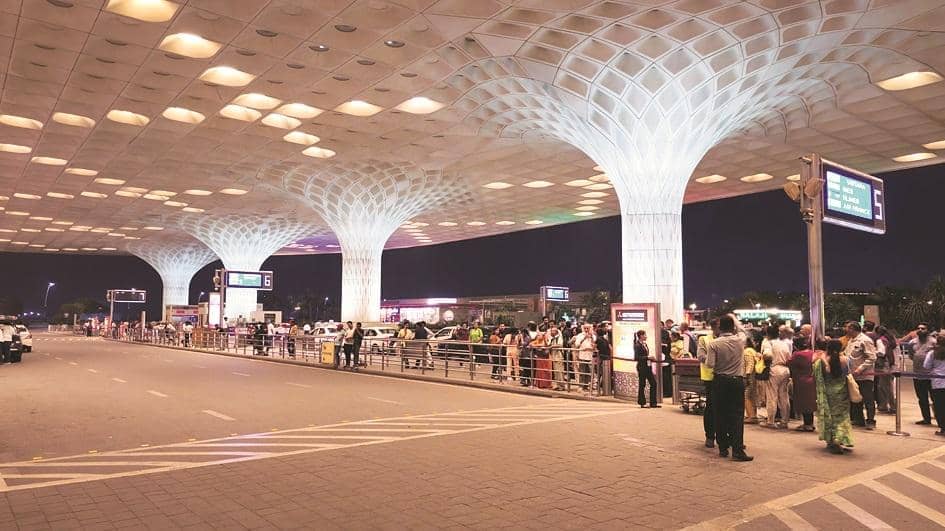
Mumbai International Airport Ltd (MIAL), controlled by the Adani Group, has reaffirmed that airlines will need to make decisions about relocating flights to Navi Mumbai airport starting with the summer 2027 schedule. This update comes amid resistance from airlines represented by the Airline Operators Committee (AOC), which has opposed any unilateral changes to flight operations at Mumbai airport.
MIAL’s announcement follows a letter sent to the AOC on Monday, reiterating that the planned redevelopment of Terminal 1 at Mumbai airport will result in a reduction of approximately 5 million passengers annually from summer 2027. This reduction arises because Terminal 1 will be shut down for reconstruction during this period. Both the Mumbai and Navi Mumbai airports are managed by the Adani Group, which adds complexity to the operational adjustments.
The AOC had previously objected to MIAL’s proposed reallocation of international flights without proper consultation. In their communication to MIAL, the airlines emphasized that they had not agreed to transfer international operations to Navi Mumbai nor accepted any reduction or cancellation of their current flight slots. Slots refer to designated times assigned to airlines for takeoff and landing, crucial for maintaining schedules and operations.
Referencing a meeting held on October 13 with airline representatives, MIAL clarified that the decision on whether to move flights to Navi Mumbai, pause activities at Mumbai airport temporarily, or explore other options rests solely with the individual carriers. The summer 2027 flight schedule, known in the aviation sector as S27, is the focal point for these changes. Traditionally, summer schedules run from the last Sunday of March through the last Saturday of October, with winter schedules covering the rest of the year.
In its message to the AOC members, MIAL stressed that the reduction in Mumbai airport’s capacity was unavoidable due to the redevelopment requirements. Airlines have the option to relocate some or all operations to Navi Mumbai airport, suspend flights at Mumbai airport during the Terminal 1 closure, or consider other venues. MIAL also noted that participation in planning discussions with its Airport Operations Control Centre (AOCC), which manages airport operations coordination, is voluntary for airlines.
The airport operator characterized the consultations as a collaborative effort to explore feasible solutions and not a unilateral decision-making process. MIAL reassured all stakeholders that once Terminal 1 is fully redeveloped and operational by 2030, all historical flight slots at Mumbai airport will be restored to their previous allocations.
The disagreement between MIAL and airlines began in August when the airport operator proposed shifting international flights to Navi Mumbai as part of the Terminal 1 redevelopment plan. The initial proposal suggested moving 265 out of 770 weekly international departures from Mumbai airport’s Terminal 2 to Navi Mumbai beginning with the winter 2026-27 schedule starting October 26.
Terminal 1’s redevelopment is driven by the need to update aging infrastructure and improve long-term capacity. However, airlines have questioned the rationale behind the proposed flight transfers. They have requested detailed data on terminal capacity, passenger volumes, and utilization rates. The AOC has insisted that no forced relocation or reduction of slots should occur without transparent data, thorough consultation, and adherence to regulatory protocols.
The Ministry of Civil Aviation stepped into the dispute earlier this month to mediate. Following a meeting on October 6 involving the ministry, MIAL, Navi Mumbai International Airport, and airline representatives, MIAL was instructed to develop a mutually agreeable transition plan rather than proceeding unilaterally with its initial proposal.
During the October 13 meeting, MIAL assured airlines that the winter 2026-27 schedule’s historical slot allocations at Mumbai airport would remain intact. Additionally, a joint working group was established to formulate a detailed plan for the Terminal 1 redevelopment process. A follow-up meeting between MIAL and the airlines is scheduled for October 28 to continue discussions and address outstanding concerns.
This situation highlights the challenges airports face in balancing infrastructure upgrades with ongoing operations. Mumbai airport serves as a critical hub for domestic and international travel in India, and managing capacity during redevelopment requires careful coordination. Navi Mumbai airport, also under the Adani Group’s management, has been developed to supplement Mumbai’s capacity and handle overflow traffic, but airlines remain cautious about shifting their operations before full clarity and consensus is achieved.
The outcome of these negotiations will have significant implications for passengers, airlines, and the region’s aviation infrastructure as India’s air travel demand continues to grow. Stakeholders will be watching closely as the October 28 meeting approaches, hoping for a resolution that minimizes disruption while enabling necessary modernization.
What's Your Reaction?
 Like
0
 Dislike
0
 Love
0
 Funny
0
 Wow
0
 Sad
0
 Angry
0










Comments (0)