


Indian Stock Market Sees Historic 8-Week Decline Amid Rising Bond Yields




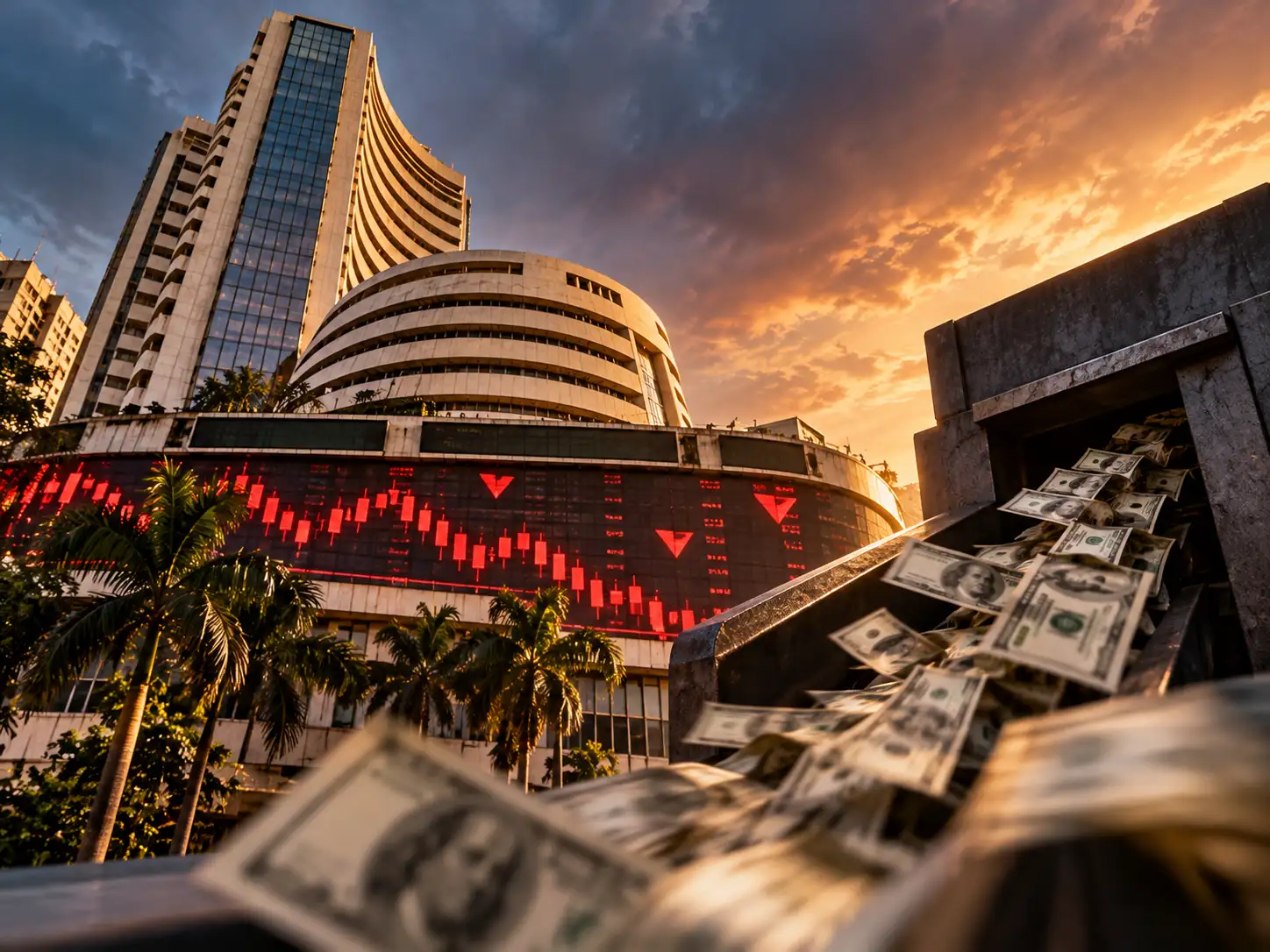
The Indian stock market has experienced an unprecedented stretch of losses, marking eight straight weeks of decline. This prolonged downturn surpasses previous streaks recorded during the 2020 Covid-19 crash and the 2008 global financial crisis. The key benchmark indices, Sensex and Nifty, have been under sustained pressure from several factors, including rising bond yields and geopolitical tensions impacting oil prices.




Over the last two months, the Sensex has dropped 6,590 points, while the Nifty has declined by 2,149 points. This selloff erased more than Rs 26 lakh crore from the total market capitalization on the Bombay Stock Exchange, pushing it below Rs 467 lakh crore. The prolonged slump has rattled investors and raised questions about the underlying forces driving the current market environment.
One significant contributor to market volatility has been the geopolitical conflict in the Middle East that erupted in late February 2026 between Iran and the US-Israel alliance. This conflict triggered a sharp rise in crude oil prices, with Brent crude climbing to above $120 per barrel during March and April. The surge in oil costs placed additional strain on equities, causing the Sensex to plunge by approximately 11 percent or around 9,340 points in March alone. Although the market recovered some ground in April, rallying nearly 7 percent and briefly crossing the 78,000 mark, it surrendered most of those gains in subsequent weeks.
By Thursday, Sensex fell to a 52-week low of 71,293 points, dipping below levels last seen when oil prices were at their peak. Interestingly, this decline occurred even as oil prices eased below $100 per barrel, indicating that other factors were also at play.
Bond yields have emerged as a critical concern for investors during this period. The benchmark 10-year US Treasury yield touched 5.31 percent on Thursday, reaching heights not seen since 2007. This represents an increase of over 87 basis points in the September quarter alone, marking the largest quarterly rise since 1994, according to data from the London Stock Exchange Group cited by Reuters. Similarly, the 30-year Treasury yield surpassed 5.65 percent, the highest level since 2002.
Higher bond yields generally attract investor interest toward debt securities, reducing the appeal of riskier equity investments. Since bond yields move inversely to bond prices, these rising yields reflect substantial selling pressure in the bond markets. Experts highlight that although elevated oil prices temporarily squeeze corporate margins, soaring bond yields pose a more fundamental threat to equity valuations by increasing the cost of capital and compressing price-to-earnings multiples.
Vaqarjaved Khan, Senior Fundamental Analyst at Angel One, pointed out that rising yields trigger persistent foreign capital outflows from emerging markets like India. Ajit Mishra, Senior Vice President of Research at Religare Broking, added that the market faces a combined burden of elevated bond yields, tight global liquidity, and geopolitical uncertainty. While a softening of crude prices and improving shipment data offer some relief, the higher cost of capital and the attractiveness of fixed-income assets remain key challenges for equity markets, especially for richly valued and high-duration stocks.
Foreign institutional investors (FIIs) have also intensified selling pressure on Dalal Street. Provisional data from the National Stock Exchange shows that FIIs net sold Indian equities worth Rs 10,148 crore on Wednesday alone, following a similar Rs 10,743 crore selloff on Tuesday. These outflows amount to approximately Rs 26,000 crore within just three days of trading, aggravating the downward momentum.
Mishra noted that the market is grappling with multiple headwinds including FII outflows, a stronger US dollar, currency depreciation, and concerns about the pace of global economic growth. Khan also emphasized that slowing earnings growth, reduced urban consumer spending, and tighter global liquidity conditions add to the cautious sentiment among investors.
Given the current volatility, market analysts advise investors to avoid aggressive market timing and instead adopt a selective and disciplined approach. Ajit Mishra recommends a measured strategy focused on quality fundamentals rather than attempting to catch a market bottom. Khan suggests prioritizing companies with strong balance sheets, visible earnings growth, and reasonable valuations. Gradual capital deployment into financially robust sectors such as private banks, capital goods, and businesses with pricing power and margin resilience is expected to offer better risk-adjusted returns amid uncertainty.
Sunny Agrawal, Deputy Vice President of Fundamental Research at SBI Securities, also advocates for a bottom-up, stock-specific methodology when considering new investments. This approach involves carefully analyzing individual company prospects rather than broad market trends to identify opportunities during turbulent periods.
The current downturn in the Indian stock market reflects a complex interplay of geopolitical issues, rising global bond yields, and shifting investor preferences. While the short-term outlook remains challenging, a focus on quality assets and prudent investment decisions may help navigate this environment effectively.
What's Your Reaction?
 Like
0
 Dislike
0
 Love
0
 Funny
0
 Wow
0
 Sad
0
 Angry
0

















Comments (0)