


7 Key Investing Lessons from Jim Leitner for Smarter Market Decisions

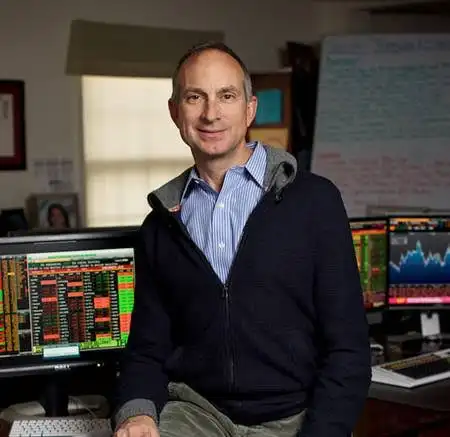


Investing successfully involves more than just selecting the right stocks or forecasting market shifts. The attitude investors adopt toward risk, losses, and uncertainty plays a crucial role in how they perform across various market cycles.




Jim Leitner, who leads Falcon Investment Management and formerly served on Yale University's Investment Committee, has shared valuable insights on developing a disciplined approach to investing. His ideas were highlighted in an interview with Steven Drobny featured in the book Inside the House of Money.
1. Commit to Lifelong Learning
Leitner stresses the importance of staying open to new information and understanding that even seasoned investors can be challenged by market complexities. Success should not breed complacency or the belief that one fully understands market dynamics. Instead, investors should continually question their assumptions, explore different markets, and welcome evidence that contradicts their current viewpoint.
2. Avoid Narrow Investment Focus
Rather than sticking to a single style, market, or geographic area, Leitner encourages a broad investment perspective. Opportunities arise in diverse countries and asset classes, and concentrating too heavily in one area might cause investors to miss promising developments elsewhere. A wide lens also helps in grasping how risks and opportunities evolve with changing market conditions.
3. Utilize Options for Risk Control
Options can serve as effective tools for managing portfolio risk by limiting potential losses while keeping exposure to investment ideas. However, they are complex and carry risks such as losing the entire premium paid. Their use should align with an investor’s goals, timeline, and understanding of how options work.
4. Maintain Humility After Success
Strong returns sometimes lead investors to think they have found a foolproof method for beating the market. Leitner advises caution against this mindset, noting that markets are constantly evolving and strategies that perform well in one environment might fail in another. Successful periods should be viewed as part of the ongoing investment journey rather than as guarantees of future certainty.
5. Scrutinize Market Narratives
Compelling stories about companies, sectors, or trends often attract significant investor interest. Leitner highlights the need to support such narratives with solid quantitative analysis, including valuation metrics and cash flow assessments. This approach helps distinguish investments justified by fundamentals from those driven mainly by hype or enthusiasm.
6. Exercise Care When Shorting
Leitner places emphasis on understanding the long-term risk premiums that financial assets carry. Short positions require a clear, well-reasoned thesis since markets typically reward risk-taking over time. Investors betting against an asset must grasp both the fundamental reasons and the potential risks of opposing prevailing market tendencies.
7. Embrace a Multi-Strategy Framework
Leitner advocates combining systematic strategies across different asset classes such as equities, bonds, currencies, commodities, and real estate. This diversification aims to capture various sources of risk-adjusted returns while spreading risk. Additionally, he suggests keeping capital ready for unique opportunities that arise infrequently, balancing ongoing portfolio exposure with occasional targeted investments.
The Bigger Picture
Leitner’s investment philosophy centers on discipline rather than prediction. Investors confront losses, shifting conditions, and surprises regardless of experience level. Applying a process that includes continuous education, diversification, quantitative scrutiny, risk management, and humility can help investors navigate uncertainty more effectively and sustainably.
Disclaimer: The principles discussed reflect Leitner’s views as shared in his interview with Steven Drobny and do not serve as personalized investment advice. Opinions expressed are those of the experts and do not represent those of The Economic Times.
What's Your Reaction?
 Like
0
 Dislike
0
 Love
0
 Funny
0
 Wow
0
 Sad
0
 Angry
0




















Comments (0)