


Indian IT Stocks Soar Amid Global AI Sell-Off, Posting Best Week Since 2008

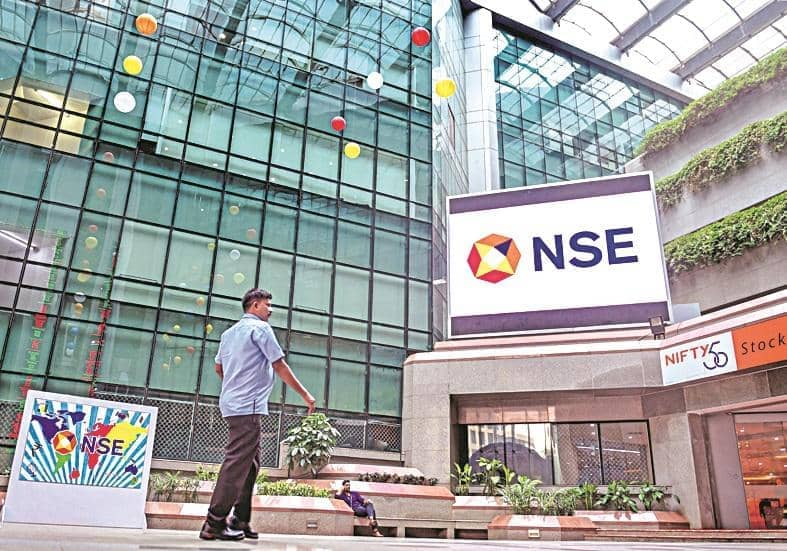


Indian information technology stocks experienced their most impressive weekly rally in nearly two decades as the broader global market faced a downturn in artificial intelligence-related shares. This surge aligns closely with a recent JP Morgan report that highlighted India as a natural hedge against volatility in AI investments due to its large, liquid market and strong domestic institutional support.




The Nifty IT index climbed 3.92 percent on Friday to close at 31,924.10, culminating in a weekly gain of 11.72 percent—the steepest since April 2008. This rally added a remarkable ₹2.75 trillion to the combined market capitalization of the 10 companies in the index, including ₹97,681 crore on the last trading day of the week alone.
In comparison, the broader Nifty 50 index rose 0.65 percent on Friday, finishing the week with a 2.78 percent gain at 23,146.15, while the Sensex increased 3.11 percent to end at 74,729.27. Both major benchmarks recorded their second consecutive weekly advances, the strongest since early April. IT shares were responsible for nearly 94 of the Nifty’s 149-point increase on Friday.
The JP Morgan report, released mid-September, noted that India’s market benefits from its foundational growth drivers. It holds approximately 12 percent weight in the MSCI Emerging Markets benchmark, offering a stable alternative to China’s 25 percent, which currently faces a slower growth environment. Other emerging markets like Southeast Asia, Latin America, and Eastern Europe are relatively small and less capable of accommodating significant investment flows.
The shift in investor sentiment began around Wednesday following U.S. inflation data that triggered a sell-off in AI-linked stocks. The Nasdaq Composite dropped 1.88 percent, and Nvidia’s shares declined nearly 5 percent between Tuesday and Thursday. This sell-off extended to Asian chip markets, with South Korea’s Kospi falling 7.57 percent and even triggering circuit breakers on memory-chip stocks. Japan’s Nikkei and Taiwan’s key indexes also saw declines, while the 10-year U.S. Treasury yield eased to 5.086 percent.
Amid this global turbulence, Indian IT companies demonstrated resilience. Tech Mahindra’s shares jumped 8.48 percent on Friday and surged 18.22 percent over the week following a 15.6 percent revenue increase and margin expansion of roughly 260 basis points, despite a slight miss on net profit expectations. Wipro also rose 5.95 percent on Friday and 13.43 percent across the week, buoyed by improved margins even as large deal wins dropped sharply.
Tata Consultancy Services (TCS) reported $9.6 billion in new contract wins and highlighted that AI-related revenue now constitutes over 10 percent of its total. The stock gained 14.33 percent over the week, adding ₹1.12 trillion in market value. Infosys climbed 13.46 percent ahead of its earnings announcement scheduled for late October, while HCL Technologies advanced 13.42 percent after narrowing its revenue growth forecast to between 1.6 and 3.1 percent.
Market analysts attribute the robust performance to strong quarterly results and optimistic management outlooks, which have bolstered confidence in the IT sector’s earnings prospects. Additionally, lower crude oil prices and a firmer rupee have enhanced investor sentiment. However, not all sectors shared this optimism. Fast-moving consumer goods companies faced pressure due to concerns over margin squeezes from high input costs, reflecting a market preference for sectors with clearer earnings visibility amid ongoing inflationary pressures.
Vinod Nair, head of research at Geojit Investments, observed that the divergence in sector performance underscores investors’ focus on earnings certainty. Somil Mehta from Mirae Asset Sharekhan noted the IT sector’s strong recovery was supported by solid quarterly results and attractive valuations following a prior correction. Yet, sustaining earnings growth remains a critical test for these companies moving forward.
Foreign portfolio investors turned net buyers on Friday, acquiring shares worth ₹1,166 crore—their first net purchase since late September—after a period of heavy selling totaling about ₹13,700 crore between October 9 and 15. Meanwhile, domestic institutional investors sold shares worth ₹3,661 crore, marking their first net sale since early August.
In contrast to the IT sector’s gains, pharmaceutical and healthcare stocks lagged behind. The Nifty Pharma index declined 0.69 percent during the week, and the Nifty Healthcare index dropped 1.08 percent. Notable underperformers included Max Healthcare Institute and Apollo Hospitals Enterprise. Consumer staples also faced challenges, with Nestle India falling 5.06 percent after its quarterly results, resulting in a ₹13,016 crore loss in market value. Engineering conglomerate Larsen & Toubro and airline InterGlobe Aviation also recorded declines, while Yes Bank’s shares dropped sharply by 14.63 percent outside the Nifty.
This recent trend highlights India’s evolving role in global investment portfolios, especially as markets reassess the impact of AI-related volatility. The IT sector’s strong performance reinforces India’s position as a key player in the global technology services industry, supported by sizable domestic institutional participation and an expanding footprint in emerging technologies.
What's Your Reaction?
 Like
0
 Dislike
0
 Love
0
 Funny
0
 Wow
0
 Sad
0
 Angry
0














Comments (0)