
India Releases 1.4 Million Tonnes Sugar Quota to Stabilize Prices Before Diwali

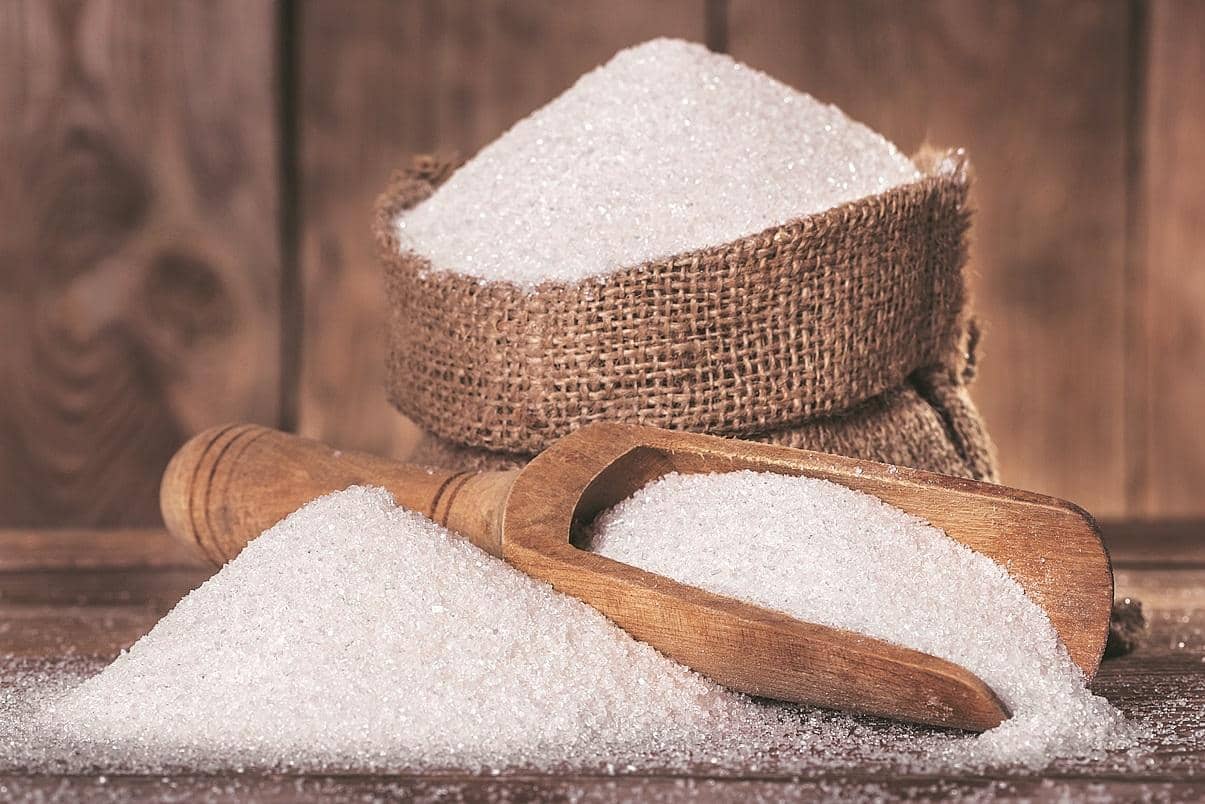
The Indian government has accelerated the release of a substantial sugar allocation to domestic mills in an effort to manage rising sugar prices ahead of the Diwali festival. On Tuesday, the Department of Food and Public Distribution (DFPD) announced a quota of 1.4 million tonnes for domestic sales covering the second half of October. This move comes two days earlier than planned, aiming to prevent further price escalation and ensure ample availability during the festive season.
The order specifies that this quota applies from October 13 through October 31. In addition to the domestic mills’ allocation, the government has also allotted 200,000 tonnes of sugar to importers to augment supply. This step responds to a recent surge in ex-mill sugar prices, which have climbed by nearly ₹1,000 per quintal over the last ten days.
Earlier, the government had set monthly sugar release targets of 2.65 million tonnes for September and 3 million tonnes for October. The current allocation forms part of these wider efforts to balance supply and demand in the market.
Regional allocations focus on major producers
Maharashtra, Uttar Pradesh, and Karnataka, the country’s largest sugar-producing states, received the bulk of the quota. Collectively, these three states have been granted 1.159 million tonnes, representing approximately 83 percent of the total 1.4 million tonnes earmarked for domestic mills.
Specifically, Maharashtra’s mills were allocated 476,000 tonnes, Uttar Pradesh 451,000 tonnes, and Karnataka 232,000 tonnes. Out of the 587 sugar mills covered by this allocation, 134 mills did not receive any quota, and 39 mills were allotted up to 100 tonnes each. This distribution reflects the government’s strategy to prioritize larger producers with more significant output capacity.
Alongside the domestic mills, two refiners, Shree Renuka Sugars and Shri Dutt India, were allocated 130,000 tonnes and 70,000 tonnes respectively for the latter half of October. These refiners have permission to sell imported sugar domestically, with a prior allocation of 300,000 tonnes between September 1 and October 15. However, they sold less than 60,000 tonnes during that period due to less favorable domestic prices compared to imported sugar costs.
Price trends and retail data
According to the Department of Consumer Affairs, the all-India average retail price of sugar stood at ₹56.67 per kilogram on October 13. Wholesale sugar prices averaged ₹5,254.91 per quintal on the same day, underscoring the recent upward pressure on sugar costs nationwide.
Stricter stockholding limits to curb hoarding
To reduce the risk of hoarding and further price spikes during the festival season, the government has tightened stock limits for sugar dealers. A recent gazette notification introduced these revised restrictions, which will take effect from October 15 through November 30, 2026.
Under the new rules, dealers may hold a maximum of 1,000 quintals of sugar with a mandatory stockholding period not exceeding 15 days. These restrictions exclude Kolkata and its metropolitan extensions, as well as the state of Assam. Earlier stockholding limits set in August allowed dealers to hold up to 4,000 quintals with a 30-day holding period, which was reduced to 2,000 quintals from mid-September.
Exports and import policy updates
In related developments, the Directorate General of Foreign Trade (DGFT) has permitted the export of 5,841 tonnes of sugar to the European Union under the tariff rate quota (TRQ) scheme for the 2026-27 period. This export allowance can be utilized between October 2026 and September 2027 under duty concession rules.
Additionally, the DGFT extended the minimum import price requirement for glufosinate and its salts, chemicals used in weed-control products, until April 12, 2027. The agency also revised export policies for prepared culture media—nutrient-rich substances used in laboratories for microbial growth—allowing shipment clearances and health certificates as needed by importing countries.
The government’s recent interventions reflect ongoing efforts to stabilize the sugar market during a period of heightened demand. Ensuring steady supplies and regulating dealer stocks are key measures to prevent price volatility during major festivals that traditionally drive increased consumption.
What's Your Reaction?
 Like
0
 Dislike
0
 Love
0
 Funny
0
 Wow
0
 Sad
0
 Angry
0












Comments (0)