


Key Factors Shaping Indian Stock Market Outlook for Coming Week




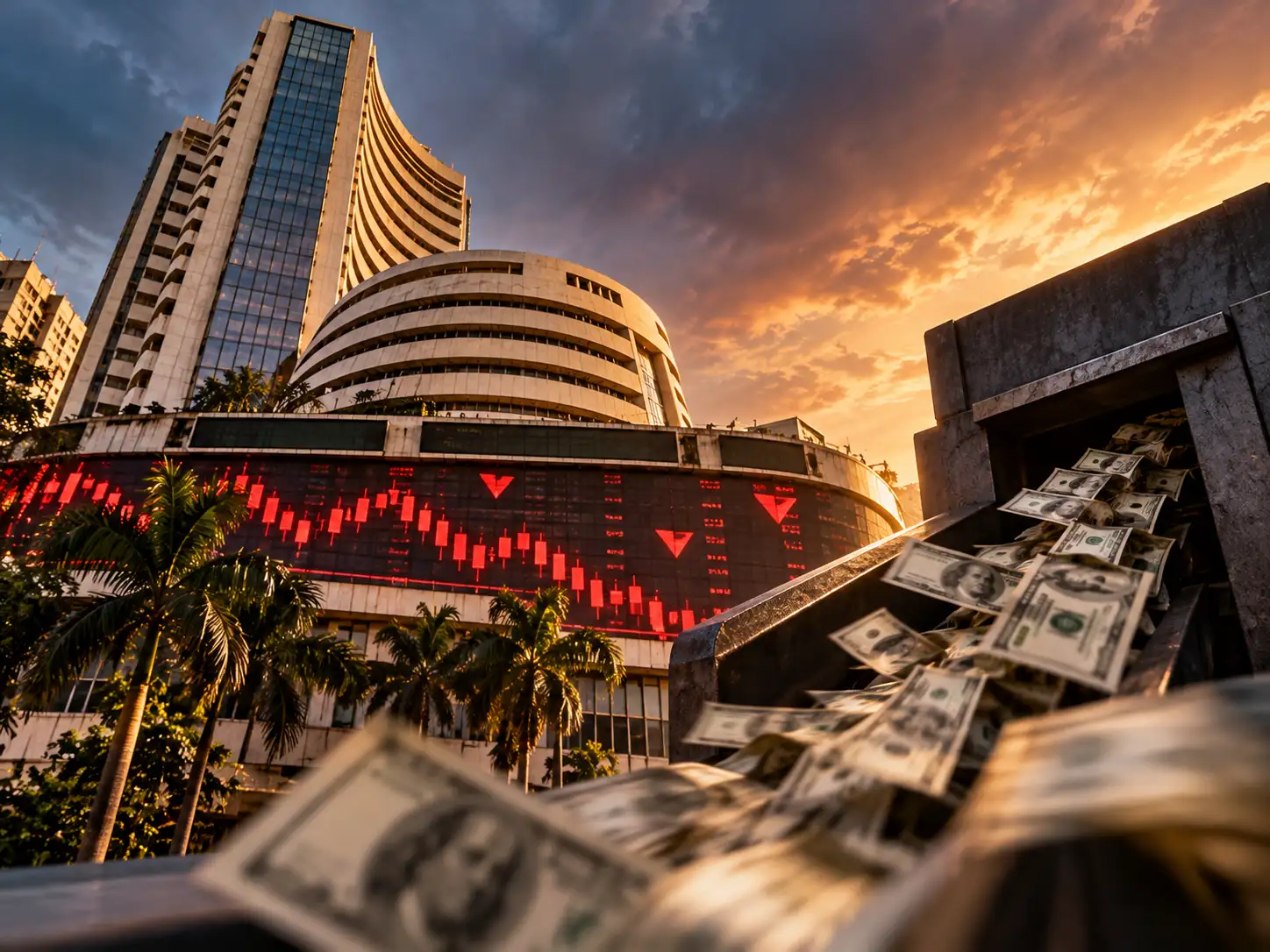
The Indian stock market experienced a challenging week, with the Nifty index ending in negative territory for the seventh straight week. This marks the first time in six years that the benchmark index has recorded such a prolonged losing streak. The decline was driven in part by soaring bond yields and a sharp selloff in insurance and financial stocks following reform proposals by the Insurance Regulatory and Development Authority of India (IRDAI).




On Thursday, the Sensex and Nifty both plunged nearly 2 percent, erasing a significant amount of investor wealth. Although the markets managed to recover some ground on Friday, persistent volatility in crude oil prices and elevated bond yields capped the rebound. The Indian stock market will remain closed on October 2, in observance of Mahatma Gandhi Jayanti, leading to a shortened trading week between September 28 and October 1. Several key factors are expected to influence market movements during this period.
Geopolitical Tensions in the Middle East
Heightened tensions between Iran and the United States have introduced an element of uncertainty that is likely to affect investor sentiment. US President Donald Trump rejected Iran’s proposal for a seven-day ceasefire and the reopening of the Strait of Hormuz, a critical oil shipping route. Trump stated firmly that he would not accept the agreement, citing Iran’s faltering position.
On the other side, Iranian President Masoud Pezeshkian emphasized Iran’s determination to stand resilient against US and Israeli pressure. His remarks underscored Iran’s commitment to its position, promising steadfast service to the Iranian people. This standoff has the potential to unsettle markets given the region’s significance in global energy supply.
Crude Oil Price Trends
Oil prices remained elevated, with Brent crude futures closing above $104 per barrel and WTI crude above $92 per barrel despite a slight 2 percent dip on Friday. The rejection of peace efforts by the US has left oil markets jittery, with investors closely monitoring price trends. JPMorgan analysts have expressed difficulty in forecasting oil prices due to the unpredictable trajectory of the conflict. They noted that many previously assumed economic limits have been breached and that there is no clear resolution in sight, adding to the uncertainty surrounding supply disruptions.
Impact of Global Bond Yields and US Economic Data
The movement of global bond yields and upcoming US economic data will be closely watched by investors, particularly as they relate to Federal Reserve policy decisions. The yield on 10-year US Treasury notes closed last week above 5.1 percent. Stronger-than-expected economic data from the US could keep Treasury yields and the dollar elevated, which may tighten financial conditions for emerging markets like India. This scenario could weigh on the rupee, foreign portfolio investment flows, and Indian equity valuations.
Conversely, softer data could ease concerns about rising interest rates, potentially lowering bond yields and triggering a relief rally in risk assets. Market participants will be assessing these developments carefully in the coming days.
Foreign Portfolio Investment Outflows
Foreign Portfolio Investors (FPIs) have shown a trend of selling Indian equities through stock exchanges while continuing to invest via the primary market. According to VK Vijayakumar, Chief Investment Strategist at Geojit Investments, this pattern emerged early in the month and has persisted. By August 25, equity outflows via exchanges had reached Rs 25,682 crore, while investments through the primary market stood at Rs 8,551 crore.
For the year so far, total FPI selling through exchanges has amounted to Rs 2,95,971 crore, with Rs 54,398 crore invested in the primary market. This selective approach reflects cautious sentiment among foreign investors amid global uncertainties.
Rupee Volatility and Currency Outlook
The Indian rupee traded in a volatile range between 95.57 and 95.97 against the US dollar last week, closing near 95.85. Jateen Trivedi, Vice President and Research Analyst at LKP Securities, pointed out that fluctuations in crude oil and gold prices, coupled with a stronger dollar, limited the rupee’s ability to gain ground.
Looking ahead, currency movements are expected to remain contained within a range of 95.50 to 96.50, influenced by ongoing volatility in global commodities and the dollar.
Market Sentiment and Technical Analysis
Market experts remain cautious about the near-term outlook. Vinod Nair, Head of Research at Geojit Investments, highlighted that elevated crude oil prices and high global bond yields continue to restrain risk appetite. Inflation concerns, foreign fund outflows, and pressure on emerging market currencies are also contributing factors. Nevertheless, selective buying interest following recent declines has helped the market maintain a positive bias, albeit within a narrow trading band.
The ability of key indices to hold above important psychological levels, such as the 23,000 mark for the Nifty, demonstrates underlying domestic resilience supported by robust liquidity. While external pressures persist, attractive valuations and steady domestic growth prospects are encouraging investors to accumulate selectively.
From a technical standpoint, Rupak De, Senior Technical Analyst at LKP Securities, noted that the Nifty index is forming lower highs and lower lows, remaining below critical moving averages. The weekly Relative Strength Index (RSI) has turned bearish, suggesting ongoing downward momentum. Immediate support for the Nifty is at 23,000, followed by 22,700, while resistance lies between 23,200 and 23,300. A sustained move above 23,300 could improve market conditions, but a decisive break below 23,000 may signal further declines.
In summary, a combination of geopolitical uncertainties, commodity price fluctuations, bond yield movements, foreign investment trends, and currency volatility are set to influence Indian markets as the new trading week begins. Investors will be watching these variables closely to gauge the direction of the markets amid a complex global environment.
What's Your Reaction?
 Like
0
 Dislike
0
 Love
0
 Funny
0
 Wow
0
 Sad
0
 Angry
0

















Comments (0)