


4.1 Billion-Year-Old Martian Meteorite Discovered in Sahara Desert

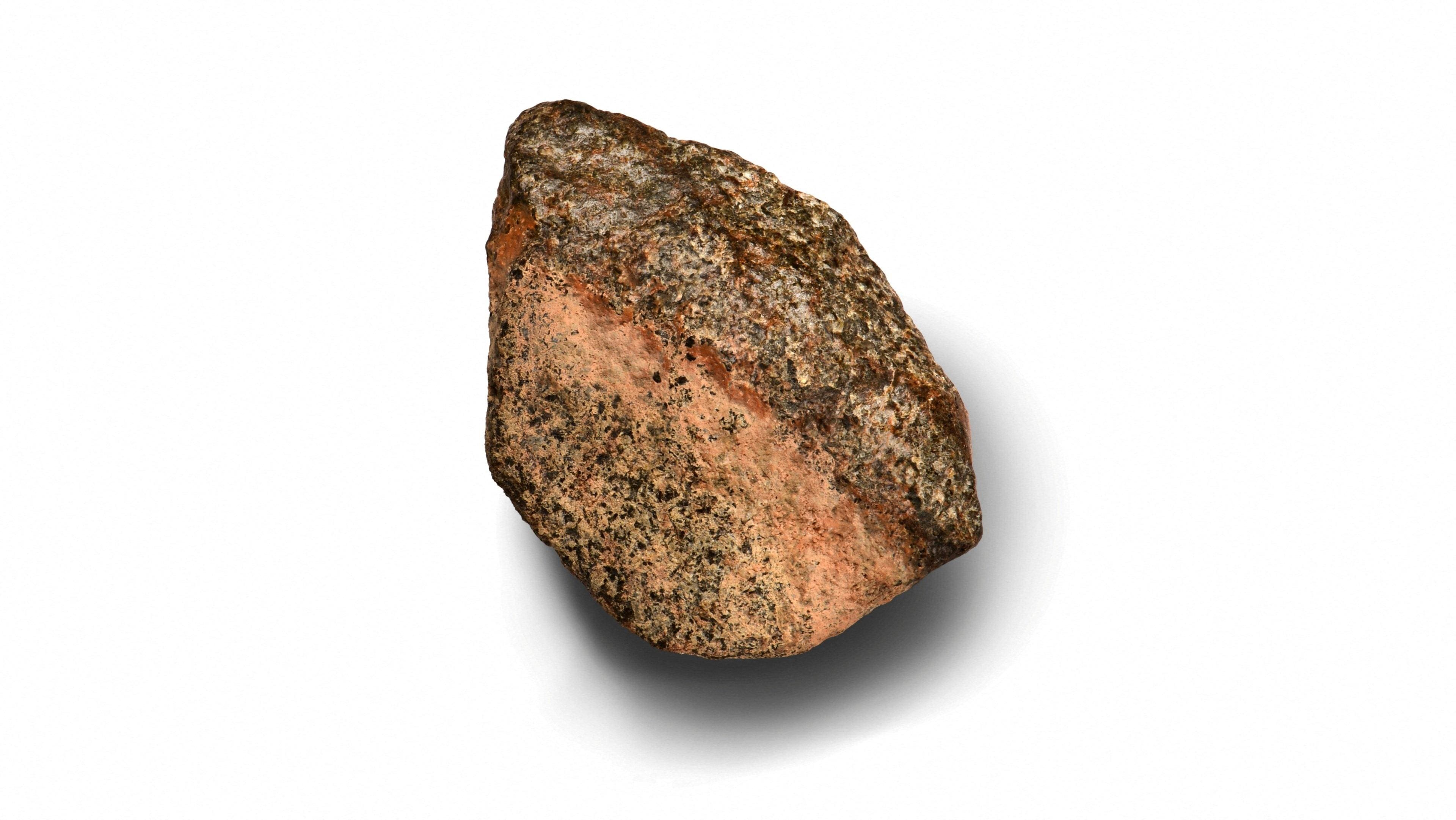


Reddish stones uncovered in the Sahara Desert four years ago have been identified as some of the oldest known space rocks, originating from Mars and dating back 4.1 billion years. These fragments, collectively named Teghaza 001 after a nearby ancient salt-mining site in Mali, provide scientists with a unique glimpse into the early composition and history of the Red Planet.




The discovery was detailed in a recent publication in the journal Science, where researchers explained that such ancient material is exceedingly rare. Yang Liu, a planetary scientist at NASA’s Jet Propulsion Laboratory and lead author of the study, emphasized the rarity of finding Martian fragments this old. Among the more than 400 Martian meteorites discovered to date, only two others—Allan Hills 84001 and Northwest Africa 7034, also known as "Black Beauty"—are comparable in age.
Teghaza 001 offers a natural time capsule from just a few hundred million years after Mars formed, preserving igneous minerals that represent both the planet’s mantle and crust. These minerals provide valuable clues about Mars’ early geological environment.
Arya Udry, a geoscience professor at the University of Nevada, Las Vegas, who was not involved in the research, remarked on the meteorite's significance, noting the uniqueness of its mineral composition compared to previously collected Martian samples. She highlighted the excitement that comes with discovering new rock types from Mars.
Previous studies by some of the same scientists revealed that Teghaza 001 contained signs of abundant water on Mars during its formation. This conclusion was drawn from the presence of water molecules trapped inside a mineral called apatite, which shares similarities with the mineral found in human teeth. However, the analysis also indicated that Mars had already lost a significant portion of its water by that time. Ultraviolet radiation from the sun broke down water molecules, allowing lighter hydrogen atoms to escape into space.
The meteorite’s journey began when an impact event on Mars ejected the rock into space. Eventually, it crossed Earth’s path, surviving atmospheric entry as a meteorite weighing nearly two pounds. Upon landing in the Sahara, it fractured into eight pieces.
Initially, Dr. Liu did not anticipate the meteorite’s exceptional nature. It had been classified as a shergottite, the most common type of Martian meteorite, which typically dates to much younger periods. However, upon closer examination, she discovered numerous zircons—crystals rarely found in shergottites—prompting further investigation.
Using uranium isotope dating techniques, the research team established that the zircons were approximately 4.1 billion years old. This age was confirmed through two additional dating methods, solidifying the meteorite’s status as one of the oldest Martian samples.
Once the ancient age was confirmed, the focus shifted to analyzing the meteorite’s water content. Lee Saper, a planetary scientist at NASA Ames Research Center and co-author of the papers, explained that the water in the apatite originated from two sources: water contained within magma rising from Mars’ mantle, and water that infiltrated from the surface and atmosphere.
Interestingly, the mantle portion of Teghaza 001 exhibited elemental compositions distinct from other Martian meteorites, suggesting it represents a more primordial sample unaffected by later geological processes. Surface-derived water molecules showed elevated levels of deuterium, a heavier isotope of hydrogen less prone to escape into space, indicating significant water loss on Mars had already occurred.
The ratio of deuterium to normal hydrogen in Teghaza 001 closely matches that found in Allan Hills 84001, reinforcing previous understandings of Mars’ water history. Dr. Saper noted that while this does not radically change the current view of early Mars, having two data points instead of one strengthens scientific confidence.
The exact timing of when the rock was ejected from Mars or when it arrived in the Sahara remains unknown. However, by comparing the meteorite’s mineralogy with orbital data from robotic missions, scientists have identified 13 potential origin sites on Mars.
The researchers are eager for further examination by the scientific community. Dr. Saper mentioned that their study covered only a fraction of the meteorite’s story, hinting at more complex insights awaiting discovery.
This find adds to a growing body of knowledge about Mars’ formative years and its evolving environment. Understanding the early conditions on Mars helps scientists evaluate the planet’s potential for past habitability and informs ongoing exploration missions.
What's Your Reaction?
 Like
0
 Dislike
0
 Love
0
 Funny
0
 Wow
0
 Sad
0
 Angry
0

















Comments (0)