


Odisha Advances Semiconductor Industry with $4B Investment in Five Projects

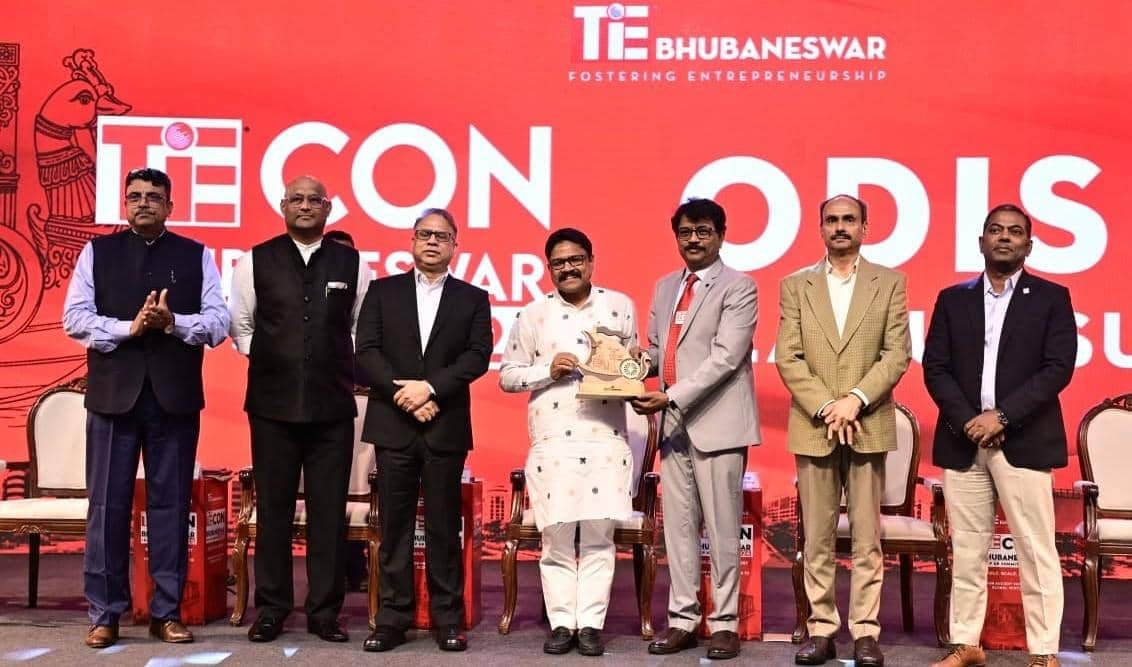


Odisha is making a decisive push into the semiconductor industry with the announcement of five major projects valued at more than $4 billion. These initiatives mark a strategic shift for the state, historically known for its mining, metals, and mineral-based economy, as it seeks to establish a significant presence in global chip manufacturing and advanced electronics production.




The projects, which cover semiconductor fabrication and cutting-edge 3D chip packaging technologies, have been fast-tracked and are expected to reshape Odisha’s industrial profile. At the TiECon Bhubaneswar 2026 event held on Friday, Vishal Kumar Dev, the Additional Chief Secretary of the Electronics and Information Technology Department, revealed that Odisha will be home to two of the twelve projects sanctioned under the India Semiconductor Mission.
One of these is India’s first compound semiconductor fabrication facility, while the other is the country’s inaugural advanced 3D chip packaging unit. Remarkably, groundbreaking for these projects took place within six to eight months after receiving approval. Dev highlighted Odisha’s transition from a traditional mine-based economy toward a knowledge-driven, or 'mind-based,' economy, emphasizing the state's focus on future-ready infrastructure including semiconductors, artificial intelligence (AI) data centers, and global capability centers.
He further explained that advanced chip packaging is the next frontier in semiconductor development. Odisha is positioning itself ahead of other regions by adopting glass-core technology for packaging and collaborating with global industry leaders such as Intel and 3D Glass Solutions. These alliances aim to elevate Odisha’s role in the global semiconductor value chain.
Dev also underscored the growing importance of data and computing power, stating that while data is currently regarded as the new oil, computing will become the new oil in the near future. Odisha is proactively preparing for this shift by pioneering India’s first AI policy and launching the Odisha AI Mission. The state is also developing a sovereign AI hub, with the goal of ensuring AI technology is created and utilized locally.
In his keynote, Mukesh Mahaling, the Minister for Electronics and IT, outlined the state’s competitive advantages that make it an attractive destination for investment. These include abundant natural resources, surplus power availability, ample land and water, and progressive industrial policies. Mahaling described the state’s vision as moving from 'mines to microchips,' leveraging Odisha’s mineral wealth to foster high-value manufacturing sectors such as semiconductor fabrication and data center operations.
He emphasized that strengthening digital connectivity, infrastructure, and fostering partnerships between industry and research bodies will be vital to Odisha’s transformation into a technology-driven economy. The new semiconductor projects are not standalone investments but part of a larger plan to build a comprehensive electronics manufacturing ecosystem. This approach is expected to stimulate ancillary industries, component suppliers, specialized engineering services, and research institutions, alongside creating a skilled workforce.
Hemant Sharma, Additional Chief Secretary of the Industries Department, pointed out the crucial role entrepreneurship will play in shifting Odisha from an agrarian economy to a diversified industrial hub. He stated that maintaining an annual economic growth rate of 7-8 percent could double the state’s economy in about seven years, while growth closer to 9 percent might achieve the same in five years.
Anil Kumar Singh, president of JSW BPSL, highlighted the importance of scale in manufacturing, efficient logistics, and global partnerships for technology in order to boost Odisha’s export capabilities. Meanwhile, Ayaskanta Mohanty, president of TiE Bhubaneswar, stressed that policy support must be complemented by strong infrastructure, adherence to quality standards, and cost competitiveness to enable Indian firms to succeed internationally.
The TiECon event also saw the launch of the TiE Bhubaneswar Academy and TiE Bhubaneswar HNI Connect. These initiatives aim to enhance entrepreneurship development, mentorship, and business networking opportunities within the region. Key industry figures such as Malik Ahamadeen, CEO of MAS India; Murali Bukkapatnam, chairman and CEO of Volksy Technologies and EHAM; and Sanu Ratha, vice president of TiE Bhubaneswar, contributed to the discussions on Odisha’s evolving industrial landscape.
Odisha’s semiconductor drive represents a broader trend in India’s efforts to build a self-reliant electronics manufacturing sector. With government backing and private sector engagement, the state is positioning itself at the forefront of technology and innovation in the country.
What's Your Reaction?
 Like
0
 Dislike
0
 Love
0
 Funny
0
 Wow
0
 Sad
0
 Angry
0














Comments (0)