


Industry seeks manufacturing finance, MSME growth push in Budget 2027-28

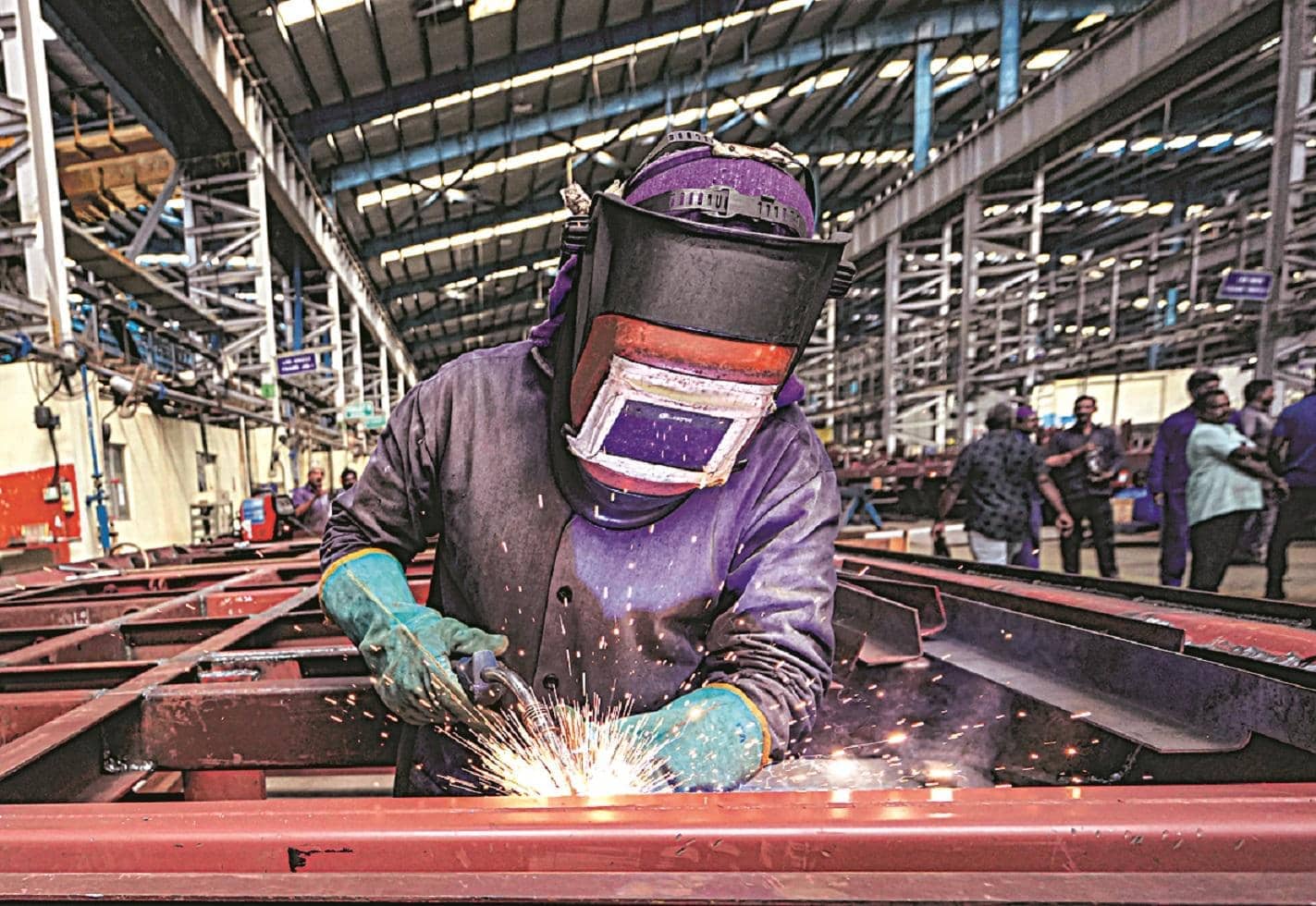


Industry bodies have urged the government to step up support for domestic manufacturing, ease access to finance for micro, small and medium enterprises (MSMEs), and introduce targeted incentives for research and development (R&D), exports and emerging technologies in the Union Budget 2027-28.




In their pre-Budget submissions and discussions with Finance Minister Nirmala Sitharaman on Tuesday, the Federation of Indian Chambers of Commerce and Industry (FICCI), Associated Chambers of Commerce and Industry of India (ASSOCHAM), the Federation of Indian Micro and Small & Medium Enterprises (FISME) and the Confederation of Indian Industry (CII) outlined a series of measures to strengthen India’s manufacturing ecosystem and help domestic businesses scale up.
FICCI called for a dedicated development finance framework for manufacturing, arguing that India would need more than ₹100 trillion in incremental credit over the next decade to raise manufacturing’s share in gross domestic product (GDP) to 25 per cent. It said the cost of borrowing in India was 400-500 basis points higher than in countries such as China and South Korea, making long-term financing expensive for capital-intensive projects.
It proposed a dedicated development finance institution (DFI) to provide long-tenor, competitively priced finance to manufacturing enterprises, particularly mid-sized companies, and support investments in batteries, semiconductors, green hydrogen, defence and advanced materials.
The industry body also called for a Strategic Manufacturing Capacity Development Programme to build domestic capabilities in products with high import dependence. Its assessment identified 10 foundation sectors accounting for nearly 36 per cent of India’s non-petroleum imports and 36 priority products and segments requiring domestic capacity creation or expansion.
Also Read
These include basic chemicals such as styrene, methanol and acetic acid, as well as plastics and synthetic rubber products such as polyvinyl chloride (PVC), polypropylene and high-density polyethylene (HDPE).
FICCI also sought a dedicated production-linked incentive (PLI) scheme for advanced chemistry cell (ACC) battery components, with a proposed outlay of ₹12,000 crore, to support domestic manufacturing of cathode and anode active materials, electrolytes, separators and battery foils. Domestic manufacturers currently face a 35-50 per cent cost disadvantage compared with imports from China, it said.
On exports, FICCI called for a minimum three-year policy horizon for the Remission of Duties and Taxes on Exported Products (RoDTEP) scheme, citing uncertainty over its continuation, remission rates and product coverage. It also proposed a Standards Testing and Certification Support Programme to upgrade domestic testing laboratories and reduce delays and repeated testing for exporters.
ASSOCHAM, meanwhile, sought a dedicated PLI scheme for robotics, automation equipment, sensors and precision components to promote advanced manufacturing and technological self-reliance. It also called for strengthening existing PLI schemes in sectors such as specialty steel, textiles, white goods, ACC batteries and solar photovoltaic modules through simplified compliance, timely incentive disbursals and better implementation.
The chamber also recommended restoring weighted tax deductions for R&D expenditure, noting that India’s spending on research and development remains below 1 per cent of GDP. It said enhanced tax incentives could encourage private-sector investment, indigenous technology development and collaboration between industry and academia.
Another key area flagged by ASSOCHAM was the need to make India’s Ayurveda and AYUSH manufacturing sector more competitive internationally. It proposed a government-industry clinical research programme, with grants and matching funding, to scientifically validate traditional formulations and ingredients in line with international evidence standards.
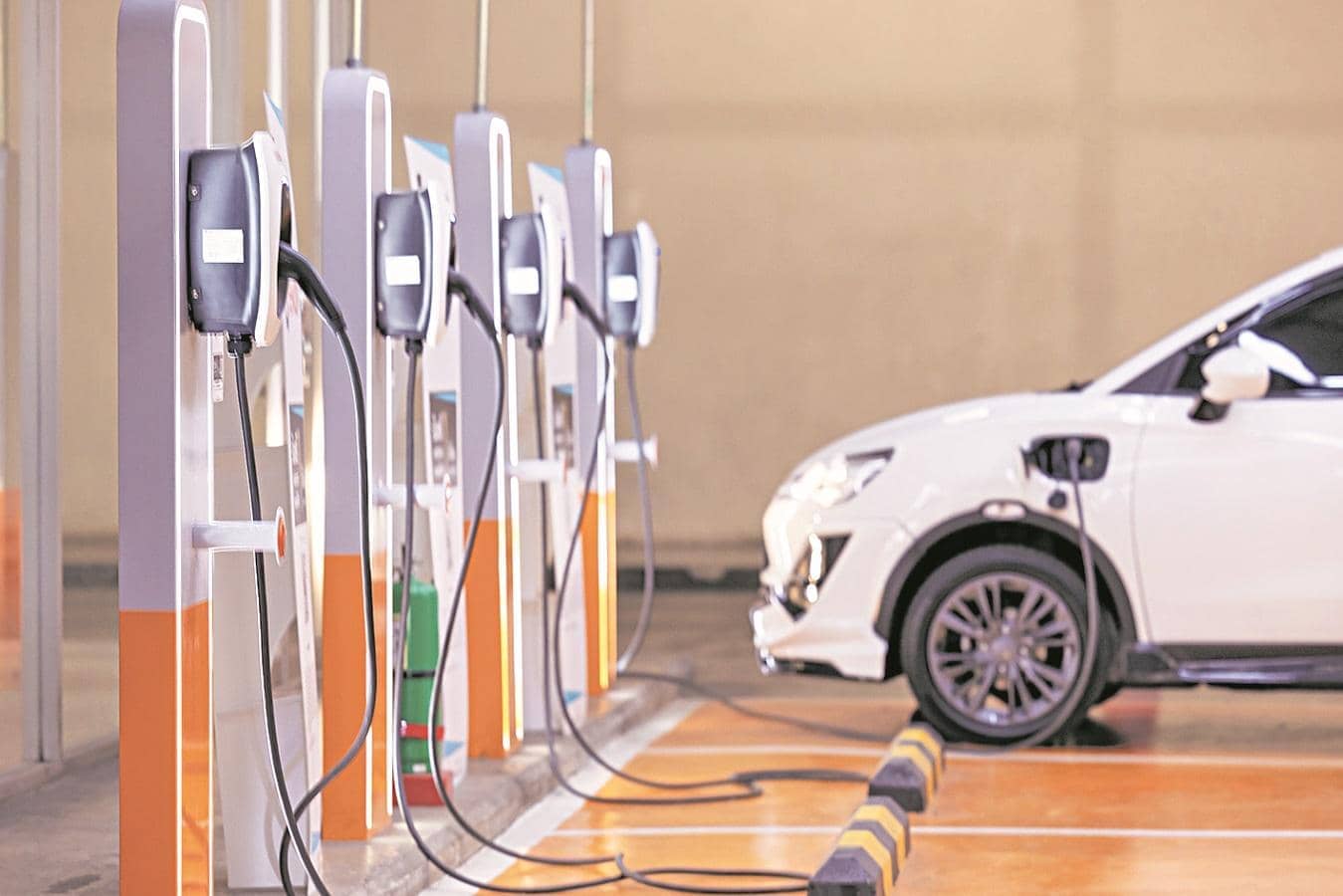
On energy security, ASSOCHAM called for measures to accelerate the adoption of electric vehicles, particularly in freight transportation, which accounts for 22-25 per cent of the country’s oil consumption. It proposed a 3 per cent interest subvention for MSME fleet owners, vehicle financing with batteries excluded from the registration and financing arrangement, and longer loan tenures of seven to eight years to match battery warranties.
CII President R Mukundan said the industry body had recommended targeted, time-bound tax measures in the Budget to incentivise additional economic activity. These include accelerated depreciation on new plant and machinery, higher weighted deductions for incremental R&D spending, and a limited-period corporate tax benefit for companies creating additional net employment, verified through Employees’ Provident Fund Organisation (EPFO) records.
He said India’s next phase of manufacturing growth should focus on technological depth and domestic capabilities, particularly in areas where the country remains heavily dependent on imports. A capability-linked support programme for critical components, machine tools, dies and moulds, with special attention to MSME modernisation, would help Indian industry integrate more deeply into global value chains, he said.
On tax administration, Mukundan called for binding timelines to dispose of nearly five lakh pending first appeals, a Board of Tax Certainty to provide time-bound rulings on complex transactions, and faster release of legitimate refunds. He said these measures would further reduce the cost of doing business.
CII also recommended a fiscal deficit target of around 4 per cent of GDP in 2027-28, alongside continued debt reduction, and said public capital expenditure should remain a priority, with central government capex maintained at no less than 3 per cent of GDP.
On employment, Mukundan said expanding workforce participation was central to sustaining domestic demand. Alongside enhanced tax deductions for additional women employees, practical support such as worker accommodation, women’s hostels and common crèche facilities in industrial parks could help increase women’s participation in the workforce. He added that industry also had a responsibility to ensure productivity gains translated into better wages.
FISME, in its submission, proposed launching a National Enterprise Graduation Mission to help informal businesses enter the formal economy and enable existing MSMEs to expand into larger enterprises.
The mission would have two tracks — informal to formal and formal to scale — with a focus on easing regulatory, financial, spatial and taxation-related constraints that discourage businesses from expanding.
FISME said India’s enterprise policy needed to move beyond encouraging registrations and credit disbursements towards creating pathways for businesses to graduate from micro to small, small to medium and medium to globally competitive enterprises.
Among its proposals was a five-year Enterprise Graduation Compliance Window, under which regulatory obligations would increase progressively based on an enterprise’s risk, employment, turnover and capacity. It also suggested a three-year transition period for businesses crossing MSME classification thresholds, allowing them to adjust to new compliance requirements without an abrupt withdrawal of benefits.
To improve access to credit, FISME proposed a Credit Guarantee Fund Trust for Micro and Small Enterprises (CGTMSE) Enterprise Guarantee Passport that would allow MSMEs to submit their business and financial information through a common digital platform and obtain an indicative guarantee-eligibility certificate. Banks, non-banking financial companies and other eligible lenders could then compete to finance the enterprise.
It also called for a National MSME Expansion Space Programme to develop ready-built, leasable factory premises, particularly in existing industrial clusters, with common infrastructure and essential clearances. This, it said, would help growing businesses expand without having to invest heavily in land acquisition and construction.
On the tax front, FISME proposed an Enterprise Graduation Account that would allow qualifying MSMEs to defer capital gains tax on the sale of specified productive assets, provided the proceeds were reinvested in factory premises, machinery, automation, technology or the acquisition of another productive MSME within 24-36 months.
It also sought a mechanism to address the double taxation of profits distributed by closely held entrepreneurial companies and proposed a one-time additional guarantee allocation to clear eligible MSME applications pending under the Emergency Credit Line Guarantee Scheme (ECLGS) 5.0.
FISME also called for a series of labour and regulatory reforms to encourage MSMEs to formalise and expand their workforce. It proposed making employees’ provident fund contributions voluntary while retaining mandatory employer contributions, and aligning the applicability thresholds for the Employees’ Provident Fund (EPF) and Employees’ State Insurance (ESI) at 20 workers. It estimated that such flexibilities could bring 1-2 crore employees into formal employment within a year. The industry body also suggested an opt-in, Udyam-linked Enterprise Pass to provide businesses with access to financial services, social security, skilling, government procurement and grievance redressal. It further called for recognising specified low-risk economic activities from residential premises and preventing disproportionate commercial property tax burdens on small home-based enterprises.
Meanwhile, FICCI proposed a National Talent Return and Industrial Capability Programme to attract experienced Indian professionals working overseas into priority sectors such as semiconductors, artificial intelligence, biotechnology and precision engineering. It suggested a two-year pilot under the Department for Promotion of Industry and Internal Trade (DPIIT), with cost-sharing grants for recruitment and relocation and support for technology-intensive entrepreneurship. ASSOCHAM, on its part, called for reducing the cost of doing business through rationalisation of customs duties, removal of inverted duty structures, affordable credit and lower logistics expenses. It also sought integrated digital approvals, time-bound clearances and reasonable transition periods for regulatory changes, along with targeted incentives for machinery modernisation, technology upgradation, industrial clusters and export promotion.
What's Your Reaction?
 Like
0
 Dislike
0
 Love
0
 Funny
0
 Wow
0
 Sad
0
 Angry
0














Comments (0)