


Protect Your Bank Locker Contents and Avoid Financial Losses

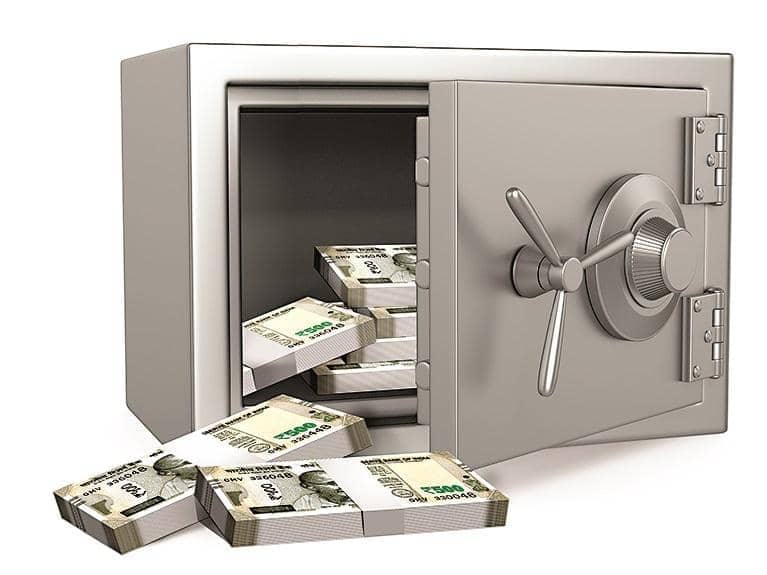


Recent developments involving the Delhi State Consumer Disputes Redressal Commission emphasize the importance of documenting locker contents and following correct surrender protocols to prevent financial losses. In the case of Monica Marwah versus Union Bank of India, the commission found the bank deficient for failing to prove that Marwah and her late father-in-law had voluntarily surrendered their joint locker. As a result, the bank was ordered to compensate ₹47 lakh for missing jewellery with 6 percent annual interest, ₹3 lakh for mental distress, and ₹50,000 for litigation expenses.




Bank lockers are widely used for storing valuables such as jewellery and important documents. However, banks typically do not keep detailed records of what customers store inside. Experts advise customers to maintain a detailed inventory, including photographs, and to update these records whenever items are added or removed. Regular visits to the bank to inspect the locker, ideally twice a year, can help detect discrepancies early. Any inconsistencies should be reported immediately in writing.
Adhil Shetty, CEO of BankBazaar, suggests that customers keep purchase invoices when possible. For inherited jewellery, where bills are often unavailable, alternative documents such as valuation certificates, inheritance papers, or family declarations can establish the item's value and origin. These supporting documents should be stored outside the locker to ensure they remain accessible.
It is also important for locker users to monitor SMS and email alerts from their bank. Unrecognized access should be promptly questioned with the bank to prevent unauthorized entry.
When it comes to surrendering a locker, customers should empty its contents in the presence of a bank official and settle any outstanding rent. Returning the locker keys and obtaining a written acknowledgment from the bank confirming the locker has been vacated are critical steps. This document should be signed by both parties and carefully preserved.
Confirming that rent deductions have ceased by reviewing subsequent bank statements helps avoid future disputes. Shetty stresses the importance of these formalities to protect customers’ interests.
Given that banks’ liability for lost or damaged locker contents is limited, individuals storing high-value items may want to secure insurance coverage. Mohindra S Indolia, Executive Vice-President of IFFCO-TOKIO General Insurance, recommends policies that cover risks like burglary, fire, and accidental damage. Before purchasing, customers should closely review coverage limits, exclusions, and claim conditions. Insurance documents and valuation reports, especially for sums insured exceeding ₹40 lakh or single items worth over ₹10 lakh, should be kept outside the locker.
Joint locker holders should be aware of their operating mandate. This defines whether one party can access the locker independently or if both must be present. In case of a holder’s death, access rules depend on this mandate and nomination details. Shankey Agrawal, partner at BMR Legal, explains that under an 'either or survivor' arrangement, the surviving holder usually gains access after fulfilling formalities. Otherwise, the nominee might also need to be involved.
If a bank claims a locker was surrendered but the customer disputes this, it is advisable to request documentation such as surrender requests, access logs, key return registers, and closure acknowledgments. In the Monica Marwah case, the bank’s inability to present such evidence, coupled with ongoing rent deductions, undermined its defense.
Legal precedents clarify bank responsibilities. The Supreme Court ruling in Amitabha Dasgupta versus United Bank of India held banks accountable for negligence in locker management. According to Reserve Bank of India guidelines effective from January 2022, banks’ liability for theft, burglary, fire, or employee fraud is capped at 100 times the annual locker rent. For example, if the rent is ₹5,000 per year, the maximum compensation is ₹5 lakh. Nonetheless, additional remedies may apply under consumer protection laws when service deficiency is proven.
If valuables go missing, customers should file a written complaint with the branch manager and obtain an acknowledgment. If unresolved, the grievance should be escalated to the bank’s grievance officer and principal nodal officer. Without satisfactory resolution within 30 days, the matter can be taken to the RBI Ombudsman or consumer forums. Siddartha Karnani, partner at King Stubb & Kasiva Advocates, recommends maintaining thorough records throughout this process.
Overall, safeguarding valuables in bank lockers requires proactive documentation, clear communication with the bank, understanding insurance options, and awareness of legal protections. These steps can help customers prevent losses and seek appropriate compensation if issues arise.
What's Your Reaction?
 Like
0
 Dislike
0
 Love
0
 Funny
0
 Wow
0
 Sad
0
 Angry
0
















Comments (0)