


Why India's black mass export ban matters for its EV battery ambitions

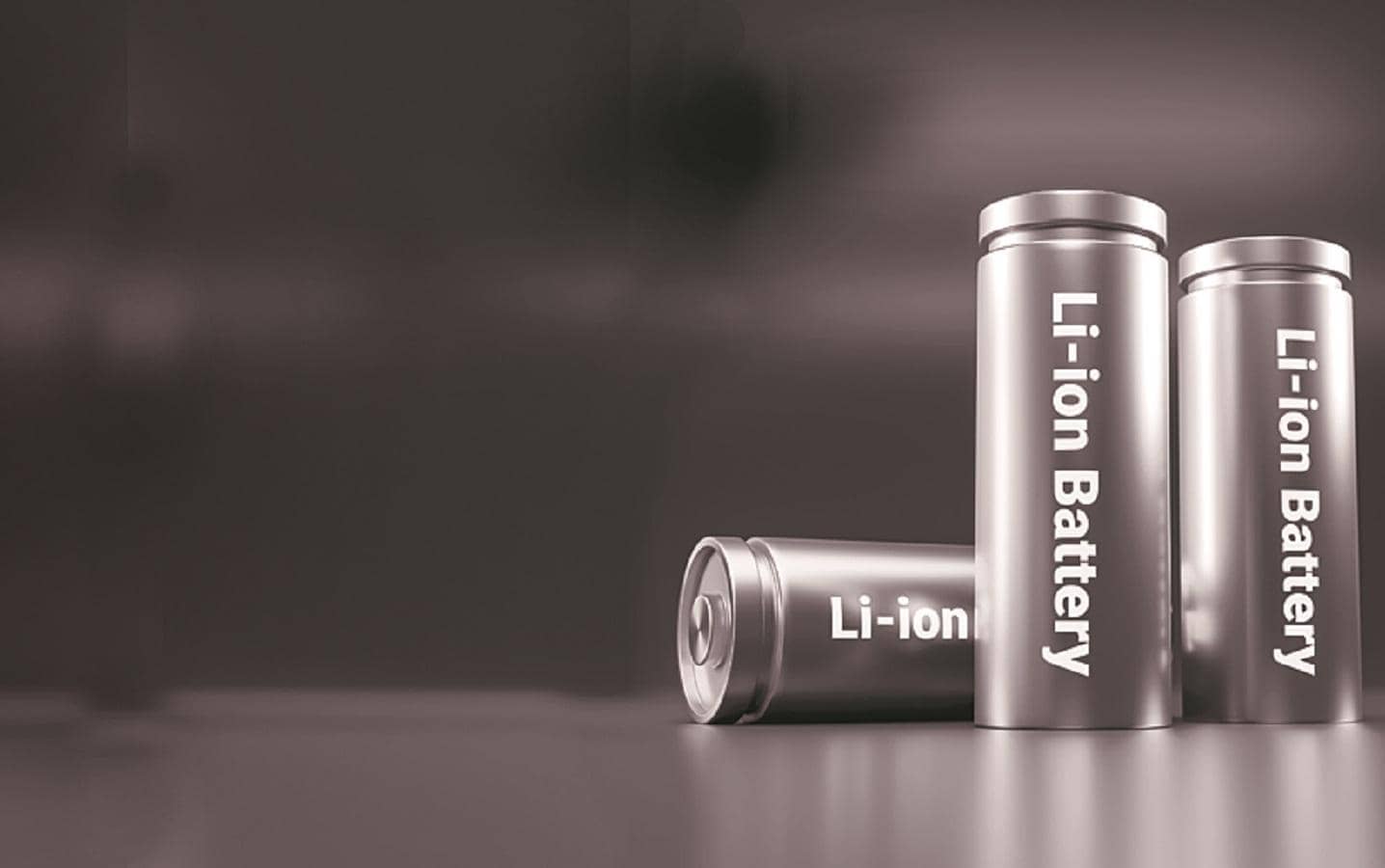


Earlier this week, the Centre banned the export of waste and scrap from primary cells, primary batteries and electric accumulators, including black mass recovered from lithium-ion batteries. The restriction has come into force with immediate effect as the government looks to expand domestic battery recycling and strengthen the supply of critical minerals.




The Directorate General of Foreign Trade (DGFT), under the Ministry of Commerce, revised the export policy for the material covered under ITC (HS) Code 85491400, changing its status from 'Free' to 'Prohibited'. The restriction will remain in place until further orders.
The decision is expected to improve the availability of raw materials for domestic recyclers, allowing them to recover valuable minerals and supply them to sectors such as electric vehicles (EVs), battery manufacturing and energy storage.
Why black mass matters for India's EV industry
Black mass is a powder-like material produced by shredding used lithium-ion batteries and battery manufacturing waste. It contains recoverable quantities of critical minerals such as lithium, cobalt, nickel and manganese, which are used in battery manufacturing.
These minerals are important for India's EV industry as they form part of the battery supply chain. Recovering them from discarded batteries can provide an additional source of raw material for battery makers and reduce the need to depend on imports.
Also Read
India remains substantially dependent on imports for several critical minerals. According to NITI Aayog's September 2026 Trade Watch report, the country is 100 per cent import-dependent for lithium, nickel and cobalt.
What is India's domestic battery recycling capacity
India's battery recycling industry has expanded, but its capacity to process used lithium-ion batteries and recover critical minerals remains limited.
A Ministry of Environment, Forest and Climate Change document, based on discussions held in January 2025, said 16 units in India were processing lithium-ion batteries. Of these, 12 units registered on the Central Pollution Control Board's (CPCB) extended producer responsibility (EPR) portal were also processing black mass to recover metal compounds. Their combined input capacity was 75,500 tonnes a year.
The government has also acknowledged that domestic recycling capacity is not being fully utilised because of inadequate availability of feedstock, or the waste material required for processing.
This leaves recycling facilities with more processing capacity than the available supply of battery waste can support.
What it means for domestic recyclers
The export prohibition is expected to improve the availability of black mass for domestic recycling and refining companies.
In its statement, the Department of Commerce said some Indian recyclers had been importing black mass to meet their requirements even as domestically generated material was being sent overseas.
In a post on LinkedIn, Global Trade Research Initiative (GTRI) founder Ajay Srivastava said India had more capacity to process black mass than it generated, leaving refiners short of raw material. He said recovering more critical minerals within the country could reduce battery makers' reliance on imports.
Srivastava also pointed to the need for effective enforcement. He said exporters could potentially avoid scrutiny by declaring black mass as cobalt powder, nickel intermediates or other industrial products.
Government push to boost domestic recycling
The export ban is part of the government's wider efforts to strengthen India's critical mineral supply chain.
In September 2025, the Union Cabinet approved a ₹1,500-crore incentive scheme under the National Critical Mineral Mission (NCMM) to promote the recovery of critical minerals from secondary sources. These include lithium-ion battery scrap, electronic waste and industrial scrap.
The scheme is expected to support the development of at least 270 kilo tonnes of annual recycling capacity, produce around 40 kilo tonnes of critical minerals annually, attract investments of about ₹8,000 crore and create nearly 70,000 direct and indirect jobs.
In April 2026, the Ministry of Mines said 58 companies had been found eligible to participate in the scheme. These companies had proposed a combined capacity of around 850 kilo tonnes and investments of approximately ₹5,000 crore. These are pledged figures and do not represent operational or commissioned capacity, the ministry said.
The Battery Waste Management Rules, 2022, also provide a regulatory framework for the sector. Under the rules, battery producers, including importers, must meet annual extended producer responsibility (EPR) targets for the collection and recycling or refurbishment of waste batteries.
The rules also require producers to use minimum quantities of domestically recycled materials in new batteries from FY28 onwards, according to the Ministry of Environment, Forest and Climate Change.
Together, these measures aim to build a domestic ecosystem for collecting battery waste, recovering critical minerals and supplying them back to manufacturers.
What challenges remain
Despite the expected benefits of the export restriction, India's battery recycling industry continues to face operational and technological hurdles.
Prassann Daphal, chief executive officer (CEO) at e-waste and lithium-ion battery recycler Recyclekaro, told Business Standard that one of the biggest concerns was the collection of used batteries. A large share of battery waste still moves through the informal sector, making it difficult for organised recyclers to secure a steady supply.
He said the industry also faced challenges in recovering battery-grade materials and making the process commercially viable.
"The second is technology and capital. Pulling battery-grade lithium, nickel and cobalt out of black mass through hydrometallurgy is complex and capital-intensive, and it has to run at scale to pay off. The economics also keep shifting. As the market moves towards LFP chemistries, which contain little nickel or cobalt, the value per tonne of feedstock falls," Daphal said.
Another concern, he said, is the limited number of domestic manufacturers of precursor cathode active materials (pCAM) and cathode active materials (CAM). These materials are used in battery production, and the lack of domestic manufacturing limits the market for recovered metals.
"Recycling, refining and cell manufacturing need to grow together, backed by consistent EPR enforcement and clear standards for grading black mass," Daphal said.
Nitin Gupta, co-founder and chief executive officer (CEO) at critical mineral and recycling firm Attero, told Business Standard that the need to develop domestic critical mineral processing capabilities should be viewed as a strategic priority rather than simply a question of industry challenges.
He said China controls a significant share -- 70 to 99 per cent -- of the global critical mineral supply chain and has used its position in trade negotiations. "China has increasingly used its control over critical minerals as a tool of economic warfare over the past couple of years. It has threatened to ban exports of these minerals to India, the US and Europe," he added.
Gupta said countries were now investing in developing their own processing capabilities to reduce such risks. He cited spending by the US and Europe, along with India's National Critical Mineral Mission (NCMM).
The mission provides capital expenditure support for setting up refining facilities to process materials recovered from electronic waste, lithium-ion batteries and other sources of critical minerals such as nickel, cobalt and lithium, he said.
"So, I don't think this is about the challenges. It is something that needs to be done," he said.
What the ban means for India's EV ambitions
The export restriction could also support India's efforts to develop a domestic battery manufacturing ecosystem, particularly by making more recovered materials available to cell manufacturers.
Daphal said retaining battery scrap within the country could help strengthen the link between recycling and battery production. "Recovered lithium, nickel and cobalt can then go back into Indian cell manufacturing, which reduces how much the EV industry depends on imported minerals and on supply from China," he said.
He added that the move was also relevant to the recycled-content requirements under India's Battery Waste Management Rules. From FY28 onwards, battery producers will have to use minimum quantities of domestically recycled materials in new batteries. However, the restriction could have some near-term implications.
"In the short term, recyclers that only produce black mass may see lower prices, since they lose access to export buyers."
Daphal said the short-term adjustment could be necessary to encourage investment in domestic processing capabilities. He added that the extent of the benefits would depend on how effectively Customs authorities enforced the export restriction.
Gupta also said the move could help address an earlier gap in India's battery manufacturing plans. He cited the Advanced Chemistry Cell (ACC) Battery Storage scheme, under which the government had sought to develop 50 gigawatt-hours of domestic battery cell manufacturing capacity. The scheme, he said, did not achieve its intended outcome because of the lack of domestically available materials.
"Now, this ban on black mass exports will help develop India's domestic refining capabilities, which, in turn, will benefit the EV industry," he said.
What's Your Reaction?
 Like
0
 Dislike
0
 Love
0
 Funny
0
 Wow
0
 Sad
0
 Angry
0













Comments (0)