


Salil Tripathi’s New Book Explores Bangladesh’s Complex History and Future

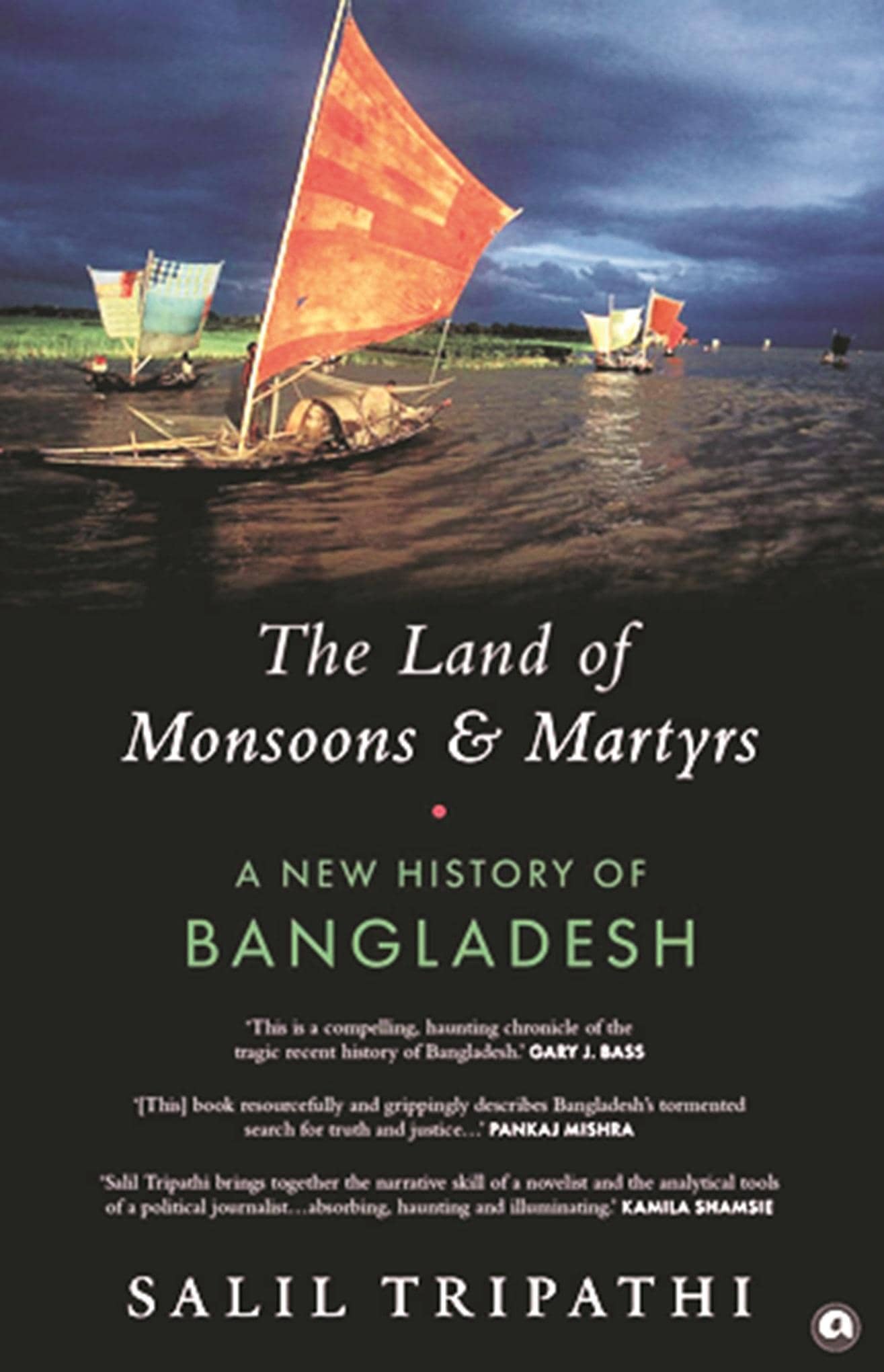


Salil Tripathi has returned with a follow-up to his 2014 book on Bangladesh, offering an extensive look at the nation’s journey from its turbulent past to its political and social state projected through 2026. His new work, The Land of Monsoons and Martyrs: A New History of Bangladesh, published by Aleph Book Company, spans 206 pages and is priced at ₹1,299. It picks up where his first volume, The Colonel Who Would Not Repent: The Bangladesh War and Its Unquiet Legacy, left off, tracing the aftermath of Sheikh Mujibur Rahman’s assassination up to his daughter Sheikh Hasina’s premiership starting in 2009.




While some sections may revisit familiar ground for readers of the earlier book, this volume weaves together a broad range of historical and political threads to explain how Bangladesh has evolved into the nation it is today. Tripathi provides a detailed exploration of the country’s struggle to reconcile with its violent history, highlighting the ongoing search for closure amid the scars left by war and political upheaval.
The book touches on the complex relationship between Bangladesh and its neighbors, though it does not deeply dive into the internal political debates within Pakistan that led to Bangladesh’s independence. References to figures like General Zia hint at Pakistan’s shifting political landscape during that period. Tripathi also addresses India’s role in Bangladesh’s birth, including an account of a key cabinet meeting where General SHFJ Manekshaw assured Prime Minister Indira Gandhi of military support as long as he controlled the timing and strategy of the war. This perspective aligns with the common Indian view that political motives and idealism, rather than calculated strategy, drove the war declaration and the creation of Bangladesh—a point that has drawn criticism from younger Bangladeshis.
Central to the narrative is the story of Lieutenant Colonel Farooq Rahman, a junior Bangladesh Army officer who played a pivotal role in the 1975 coup that resulted in the assassination of Sheikh Mujibur Rahman and most of his family. Tripathi recounts his 1986 interview with Farooq, in which the officer openly admitted to orchestrating the killings, stating, "We killed him... he had to go." This brutal event, along with subsequent disappearances, violence, and collaboration with Pakistani forces, profoundly influenced Bangladesh’s political trajectory.
Tripathi examines the contradictions within Bangladesh’s leadership after independence, noting how the new government inflicted upon its people some of the same abuses it had suffered. He explores an intolerant streak in Sheikh Mujibur Rahman’s character, a trait mirrored by Sheikh Hasina during her time as Prime Minister. The book argues that Hasina’s political downfall was shaped by personal grief and loss, supported by an authoritarian state apparatus she used to suppress opposition including political adversaries, judges, journalists, and intellectuals. Efforts to pursue justice for war crimes and honor martyrs often overshadowed the aspirations of a younger generation focused on economic opportunity, education, and healthcare.
Tripathi also reflects on the tenure of Mohammad Yunus, who briefly served as interim Prime Minister after a youth uprising. Yunus struggled to address the country’s pressing challenges and ultimately bypassed constitutional processes. The relationship between Bangladesh and India is portrayed as conflicted: while the Indian Bharatiya Janata Party publicly criticized alleged infiltration from Bangladesh, it simultaneously supported Sheikh Hasina’s administration. This duality contributed to a shift in Bangladeshi nationalism and deepened alienation from India.
An emerging concern highlighted in the book is the increasing Islamization of Bangladeshi society. Tripathi, who has visited Bangladesh extensively, observes that the nation’s identity, historically grounded in Bengali language and culture, is gradually being replaced by a stronger religious identity. This shift is occurring despite Bangladesh’s pride in being culturally distinct from Pakistan. The influence of India’s internal political climate, marked by vocal majoritarianism, is seen as exacerbating regional tensions.
Despite having two female Prime Ministers, Bangladesh remains deeply patriarchal. Tripathi discusses how political power has been limited in advancing women’s rights, emphasizing that issues related to gender often remain confined to women in positions of influence.
Tripathi’s thorough research and background as a human rights advocate and journalist allow him to present a nuanced and compassionate portrait of Bangladesh’s history and ongoing struggles. His straightforward recounting of war atrocities, including rape and violence, underscores the profound challenges the country faces in achieving healing and justice. He identifies a culture of impunity as a significant obstacle but also warns against an unending pursuit of retribution.
The book leaves readers with the impression that Bangladesh stands at a critical crossroads, balancing its painful past with an uncertain future. Tripathi’s work is a valuable resource for anyone interested in the history, politics, and development of modern nations.
What's Your Reaction?
 Like
0
 Dislike
0
 Love
0
 Funny
0
 Wow
0
 Sad
0
 Angry
0


















Comments (0)