


SoftBank Reduces Lenskart Stake, Goldman Sachs Leads Buyers

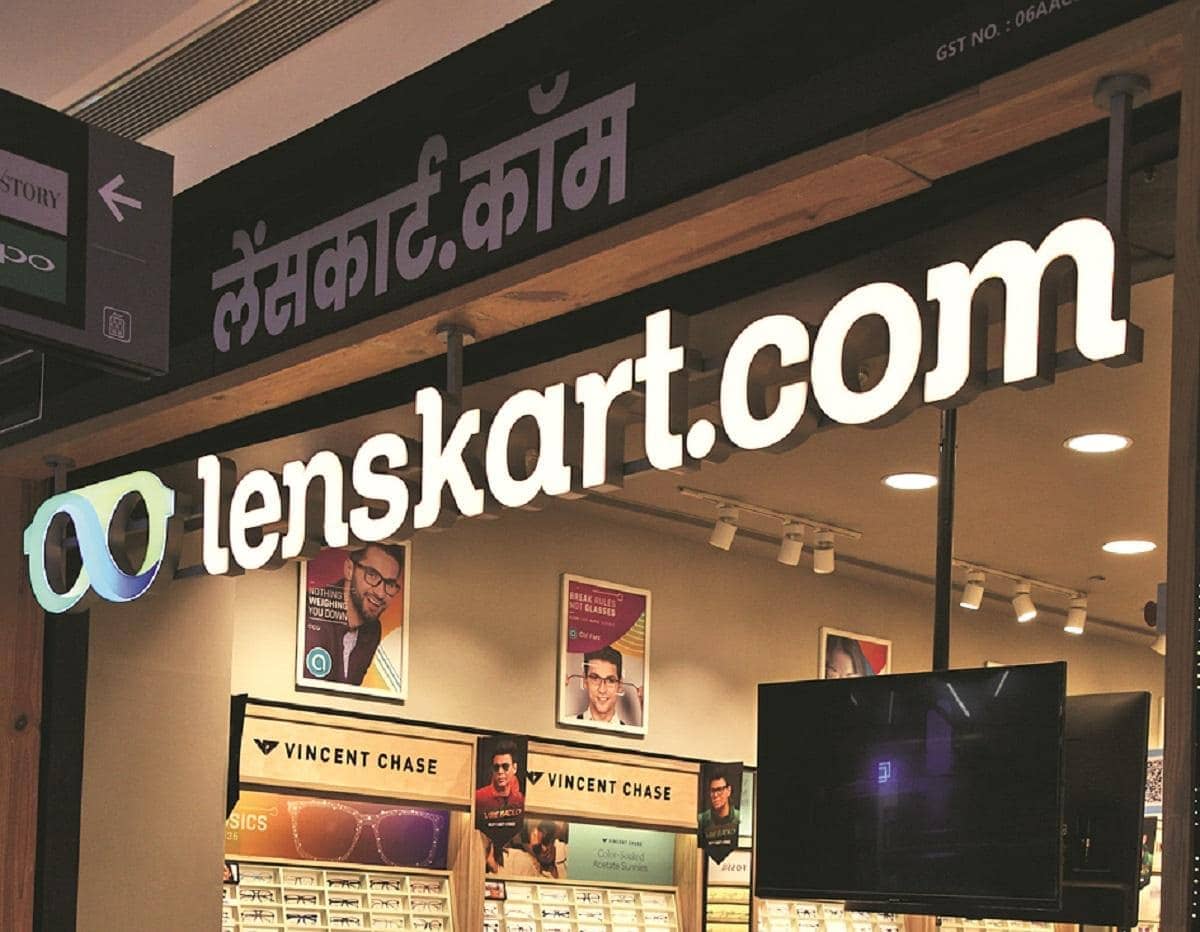


Japanese investment firm SoftBank has recently lowered its holding in Indian eyewear retailer Lenskart Solutions by offloading 1.56 percent of its shares. The transaction, valued at ₹1,896 crore, occurred through open market block deals as reported by Bombay Stock Exchange (BSE) data.




SoftBank executed this stake reduction through its affiliate SVF II Lightbulb (Cayman) Ltd, selling approximately 2.72 crore shares in ten separate tranches on Friday. The shares were sold at an average price of ₹697.15 each, culminating in a total deal value of ₹1,896.24 crore. This sale reduced SoftBank's ownership in Gurugram-based Lenskart from 7.27 percent to 5.71 percent.
The shares were equally acquired by a combination of domestic and international institutional investors. Among the buyers, US financial giant Goldman Sachs stood out as the biggest purchaser, securing 91.84 lakh shares worth more than ₹640 crore. Domestic investment entities such as Kotak Mahindra Mutual Fund, UTI Mutual Fund, and HDFC Life Insurance Company also participated by purchasing Lenskart shares.
Foreign investors involved in this transaction included prominent names like Societe Generale, BNP Paribas, William Blair Investment Management, the Public School Teachers' Pension & Retirement Fund of Chicago, Texas Municipal Retirement System, and Florida Retirement System, among others. These buyers collectively matched the volume of shares sold by SoftBank at the same average price.
Following this block deal, shares of Lenskart Solutions showed a modest 1 percent increase, closing at ₹724.70 on the BSE. This recent stake sale adds to a series of divestments by existing investors in the rapidly growing eyewear company.
Earlier in the year, Abu Dhabi Investment Authority reduced its stake by 2.01 percent in September, offloading shares valued at ₹2,390 crore. SoftBank itself had previously trimmed a 3.25 percent stake in June for ₹2,873 crore. These moves reflect a pattern of gradual exits by early investors as Lenskart continues to expand its market presence.
In a separate but related development on the National Stock Exchange (NSE), Nirma Ltd, a promoter of Alivus Life Sciences (formerly Glenmark Life Sciences), sold 28.46 lakh equity shares representing a 2.32 percent stake. This transaction was valued at ₹390 crore, with shares sold at an average price of ₹1,370 each.
Purchasers of Alivus Life Sciences shares included several domestic institutional investors such as Helios Mutual Fund, founded by investor Samir Arora, Bandhan Mutual Fund, Param Capital, Subhkam Ventures I Pvt Ltd, and Sanshi Fund-I. Norway's Government Pension Fund Global was the sole foreign institutional buyer in this deal. Following the transaction, Alivus Life Sciences shares declined nearly 2 percent to close at ₹1,471.90 on the NSE.
The recent stake sales by major investors in both Lenskart and Alivus Life Sciences highlight ongoing portfolio adjustments in India's growing consumer and pharmaceutical sectors. Institutional investors continue to actively manage their positions as these companies evolve and adapt to market conditions.
Lenskart, founded in 2010, has emerged as a leading eyewear brand in India, combining offline and online retail strategies. Its growth has attracted significant foreign and domestic investment, reflecting broader trends in Indian consumer retail, where digital penetration and changing lifestyles drive demand. The eyewear market in India is expected to expand steadily, fueled by rising health awareness and fashion trends.
Investor activity such as SoftBank’s stake reduction provides insight into how major stakeholders recalibrate their investments in response to company valuations and market opportunities. Meanwhile, new and existing institutional buyers demonstrate confidence by acquiring shares at substantial volumes, supporting liquidity and market depth.
These transactions underscore the dynamic nature of equity markets in India, where strategic share sales and acquisitions form part of regular investment cycles amid evolving economic conditions and sector-specific developments.
What's Your Reaction?
 Like
0
 Dislike
0
 Love
0
 Funny
0
 Wow
0
 Sad
0
 Angry
0















Comments (0)