


NRIs Can Complete Investment KYC Remotely Starting December 3

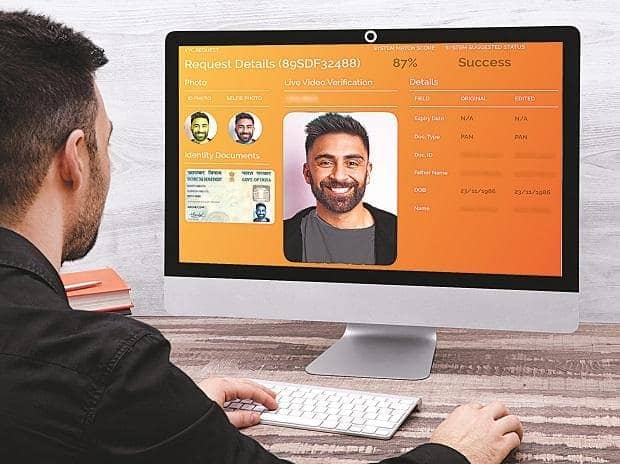


Starting December 3, non-resident Indians (NRIs) will be able to complete their investment-related know-your-customer (KYC) verification without having to be physically present in India. This marks a significant shift from previous requirements that forced NRIs to either visit India or rely on cumbersome paper-based processes to open investment accounts.




The Securities and Exchange Board of India (Sebi) issued a circular on November 4 that permits individual non-residents, including NRIs, Overseas Citizens of India (OCIs), and foreign nationals residing in Financial Action Task Force (FATF)-compliant countries, to finish KYC verification remotely. This change is aimed at simplifying the onboarding process for overseas investors, although those living in countries not meeting FATF standards will still follow the older procedures.
Previously, under Sebi's KYC Master Circular of October 2023, digital KYC was only allowed if the investor was physically present in India at the time of verification. As a result, NRIs had to either wait for their next trip to India or resort to mailing physical documentation to brokers in India, a process that was both time-consuming and expensive.
NRIs who wanted to open investment accounts had two options. The digital route required physical presence in India, while the offline method involved printing forms, collecting various documents such as the PAN card, passport or OCI card, proof of overseas address, and a cancelled cheque, all of which needed to be notarized or certified by authorized entities like Indian embassies or consulates. These documents then had to be couriered to Indian brokers.
Somnath Mukherjee, vice-president of corporate development at Zerodha, explained that e-signing from outside India was prohibited even for those with Aadhaar-linked mobile numbers or digital signatures, adding to the process's complexity. Zerodha’s founder, Nithin Kamath, noted in August that completing KYC this way could take anywhere from two weeks to several months.
This arduous process discouraged many potential investors. "The biggest hurdle was arranging all the physical paperwork, getting it notarized correctly, signing everything properly, and couriering it to India," Mukherjee said. Many NRIs postponed opening accounts, often treating investment accounts as secondary to bank accounts and delaying the process until they were in India for personal visits.
Alok Dubey, CEO of PrimeWealth, which assists families abroad with investment planning, noted that these delays disrupted financial strategies. Some NRIs and OCIs would abandon or delay onboarding, stating they would complete the process during their next visit, leaving investment plans incomplete despite the willingness to invest.
From December 3, the new framework will allow investors to submit forms, upload scanned documents, and sign electronically from anywhere. Brokers will then conduct live video-based identity verification with several security measures in place. These include random actions during the video call to confirm the interaction is live, geotagging and timestamps with GPS data embedded into the recording, location verification to block VPNs and proxy use, face-liveness checks to prevent impersonation, facial matching against submitted documents, and supervised verification by a broker official with concurrent audits.
Despite the move to digital, the process will not be entirely paperless. Investors are required to provide a "wet signature"—a handwritten signature in ink—during the video call to match against the digital signature submitted earlier. Document attestation by physical means remains an option if originals cannot be verified digitally. After verification, brokers must upload the KYC record to a KYC registration agency (KRA) within three working days.
The new circular also addresses duplicated KYC checks by allowing KRAs to mark verified identity details as "validated." Brokers can then rely on prior KYC done by other regulated entities, although the responsibility for onboarding remains with the broker opening the account. Dubey commented that the actual time saved will depend on how consistently this system is adopted.
However, some challenges remain. Opening Non-Resident External (NRE) or Non-Resident Ordinary (NRO) bank accounts is still not fully digital and can slow down the overall investment account opening process. Approval under the Portfolio Investment Scheme (PIS), required in some cases, is a separate process managed by banks and unaffected by the Sebi circular.
Additionally, investors based in countries like the United States and Canada may face restrictions from some Indian fund houses due to specific tax and reporting regulations. These limitations mean that while KYC may become easier, some hurdles in accessing Indian financial products will persist.
The updated KYC process removes one of the largest barriers for overseas Indians wanting to invest in Indian markets. Whether this leads to increased investment flows will depend on how smoothly brokers and banks implement these changes starting December 3. Kamath described NRIs as committed long-term investors and expects the new rules to encourage more participation from the diaspora.
Zerodha, which manages over 80,000 NRI accounts, plans to launch the new digital onboarding process on the same date. For NRIs and other overseas investors, the immediate benefit is a streamlined account opening experience. The bigger test will be whether this digital verification can effectively convert interest into completed accounts, eliminating the paperwork and delays that previously discouraged many applicants.
What's Your Reaction?
 Like
0
 Dislike
0
 Love
0
 Funny
0
 Wow
0
 Sad
0
 Angry
0














Comments (0)