


Centre sharply raises non-urea fertiliser subsidy for rabi amid price surge

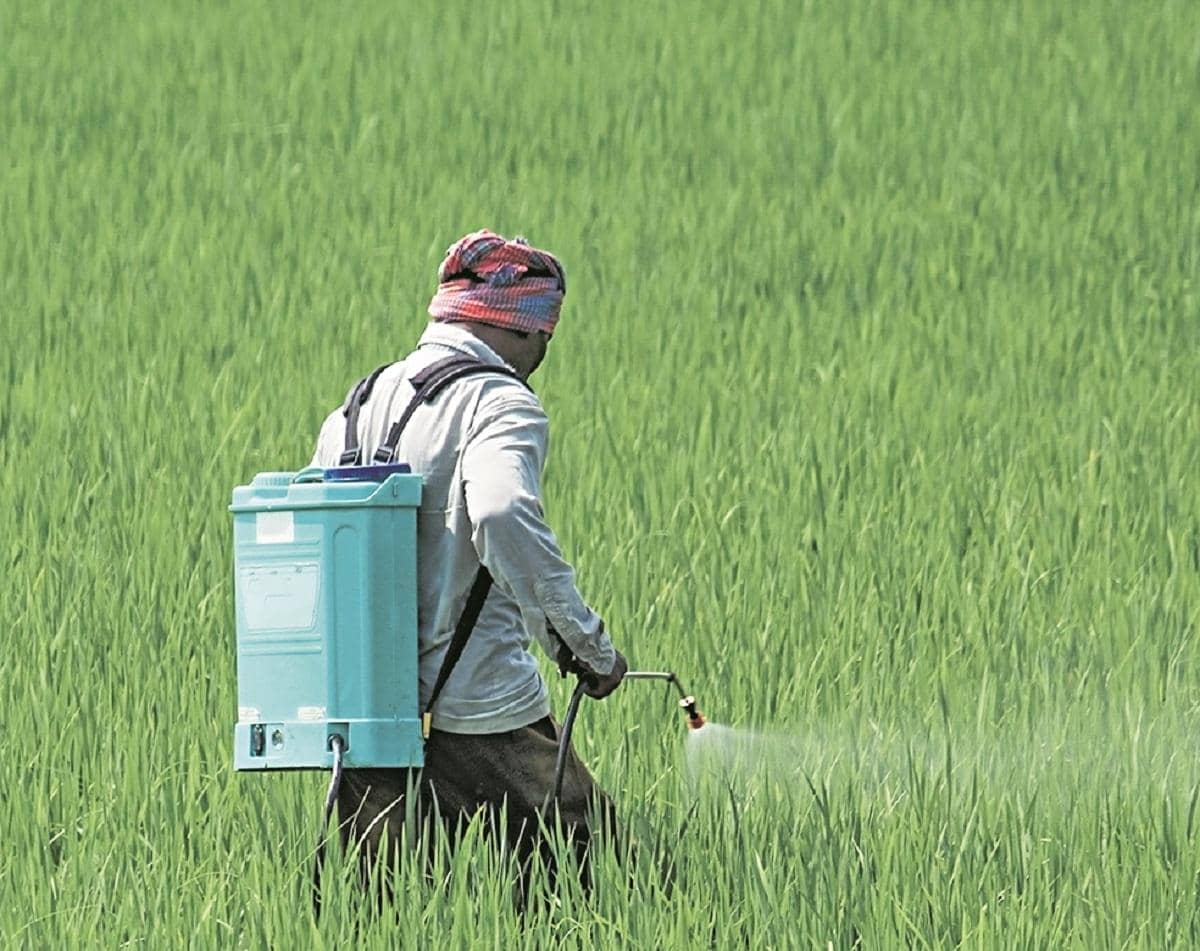


With non-urea fertiliser prices continuing to remain high despite some easing of tensions in West Asia, the central government on Wednesday announced a sharp increase in per-kilogram subsidies under the nutrient-based subsidy (NBS) regime compared with both kharif this year and rabi last year, totalling around ₹62,370.02 crore, with sulphur getting the maximum hike of over 220 per cent.




The rabi 2026-27 subsidy, along with the ₹41,534 crore of subsidy support announced for kharif 2026-27, will take the total subsidy allocated for non-urea fertilisers alone in 2026-27 to around ₹1.03 trillion, a whopping 92.41 per cent more than the Budget Estimate of ₹54,000 crore.
Experts and industry players said that the non-urea subsidy, when added to the urea subsidy estimated at ₹1.16 trillion for FY27, would push up the overall fertiliser subsidy for FY27 to over ₹3 trillion.
The spike will come despite a 59 per cent moderation in global urea prices between May 2026 and September 2026, widespread attempts to check the diversion of fertilisers for non-agricultural purposes and the impact of El Niño on agriculture this year.
The government also notified a special package for sulphur to shield the industry from the massive price spike of over 213 per cent between September 2025 and September 2026.
Also Read
"The Modi government has provided a shield to farmers from geopolitical turmoil," Information and Broadcasting Minister Ashwini Vaishnaw told reporters after announcing the decision of the Union Cabinet.
The per-kilogram subsidy on nitrogen has been raised by almost 119 per cent from rabi 2025-26 to ₹94.21 per kg, while that on phosphorus has gone up by almost 38 per cent to ₹66.11 per kg.
The maximum increase has been in the case of sulphur, whose per-kg subsidy has risen from ₹2.87 per kg in rabi 2025-26 to almost ₹10.42 per kg in rabi 2026-27, a massive jump of over 263 per cent. Compared with kharif 2026-27, this was an increase of around 230 per cent. The per-kg increase was a modest 10 per cent between rabi 2025-26 and kharif 2026-27.
Sulphur Package & Inclusion of TSP in NBS
The government also notified the special package for sulphur for domestic manufacturers, under which they will get 20 per cent of the actual procurement cost, subject to a floor price of $800 per tonne, while sulphuric acid manufacturers will get 20 per cent of the actual procurement cost, subject to a floor price of $266.67 per tonne.
In addition, the government has extended the special provisions applicable for diammonium phosphate (DAP) to imported triple super phosphate (TSP), domestic TSP and imported monoammonium phosphate (MAP). It will also continue the freight subsidy on single super phosphate (SSP) for rabi 2026-27 to promote SSP as an affordable substitute for DAP, the government said.
Industry says high subsidy will help moderate complex prices
The industry, meanwhile, welcomed the sharp increase in non-urea fertiliser subsidies and the package for sulphur, saying these would help moderate the retail prices of complex fertilisers such as NP and NPKS, which have risen by around 40-50 per cent, and also improve their production.
Data shows that local production of complex fertilisers had dropped by almost 43.4 per cent in September 2026 to 0.59 million tonnes against a target of 1.06 million tonnes, as low subsidies in kharif discouraged companies from producing them.
“NBS rates are generally based on a six-month average of international prices, but the previous revision had not adequately captured the sharp increase in input costs. In the absence of adequate subsidy support, fertiliser companies had been forced to increase the prices of complex fertilisers, particularly NP and NPK grades,” S Sankarasubramanian, chairman, Fertiliser Association of India (FAI), told Business Standard.
He said NP and NPKS fertilisers are important for balanced nutrient application as they contain multiple nutrients. The industry had also been compelled to cut production because manufacturing had become economically unviable amid rising input costs.
Sulphur prices had increased sharply, adding to the industry's difficulties.
“The latest revision would enable the industry to pass on some price corrections in NP and NPK fertilisers and help make these products more affordable for farmers, while also encouraging them to move towards balanced nutrient application rather than overusing DAP,” Sankarasubramanian said.
Traditionally, the consumption pattern in India had been relatively balanced, with NP and NPK fertilisers accounting for around 60 per cent and DAP for approximately 40 per cent.
However, over the last two seasons, heavy government support for DAP had encouraged farmers to shift towards greater consumption of the phosphatic fertiliser. With the revised subsidy rates making NPK fertilisers more affordable, the consumption pattern was expected to become more balanced, the FAI chairman said.
What's Your Reaction?
 Like
0
 Dislike
0
 Love
0
 Funny
0
 Wow
0
 Sad
0
 Angry
0
















Comments (0)