


India's Defence Sector Urged to Innovate with Build-First Approach




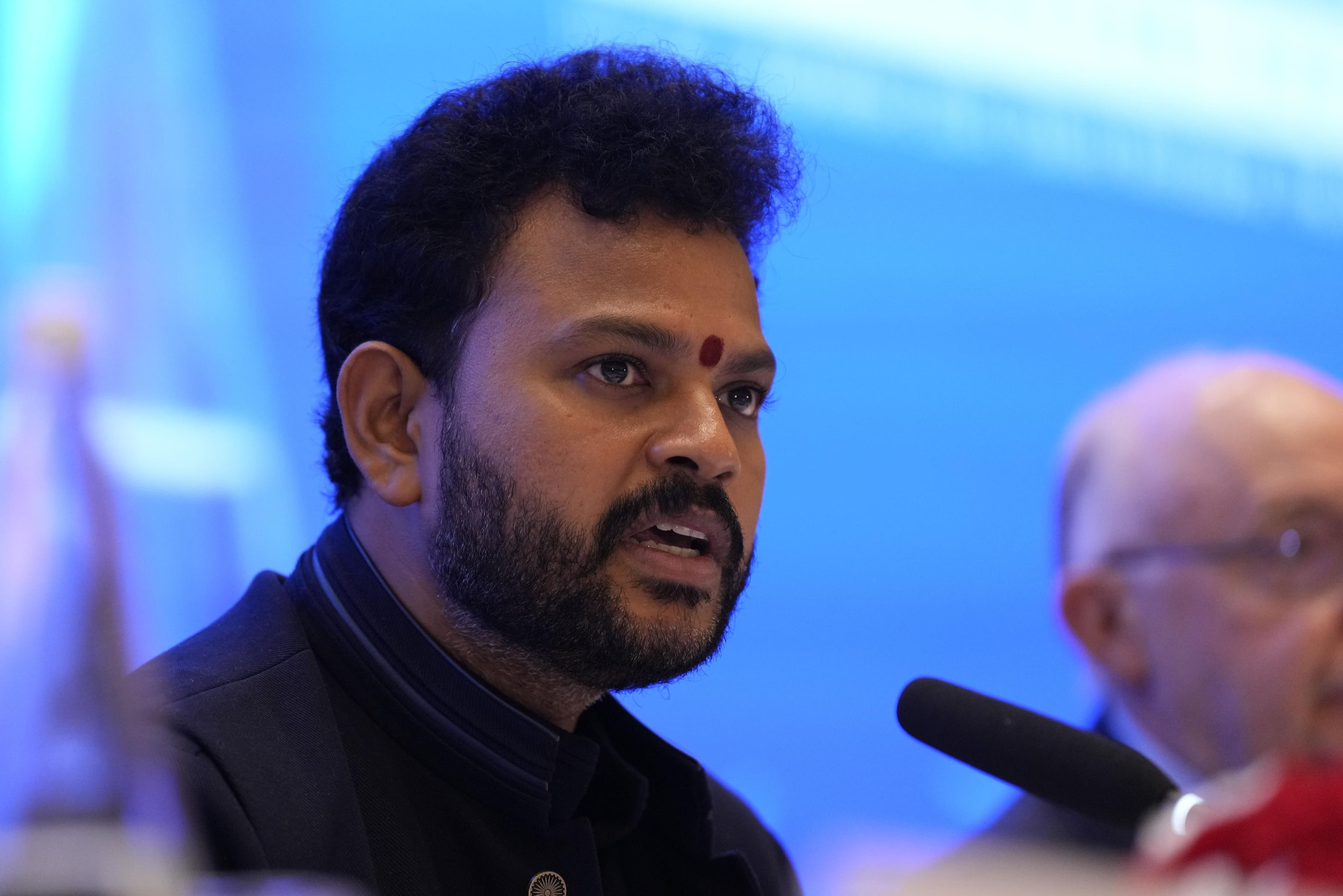
In a significant address to defence manufacturers in New Delhi last October, Chief of Defence Staff (CDS) General N S Raja Subramani issued a call for India’s defence industry to take a proactive role in innovation. He challenged companies to develop groundbreaking products that the armed forces would be compelled to purchase, rather than waiting for government orders. "Create the demand first," he urged, highlighting a shift away from traditional procurement models.




The remarks came during a fireside chat with Baba Kalyani, chairman and managing director of Bharat Forge, who framed the discussion around innovation and capacity building. Kalyani contrasted the approaches of global defence sectors, noting that while the United States prioritizes innovation, Europe focuses on enhancing manufacturing capacity. He positioned India as somewhere in the middle of these trends.
Kalyani pointed to Anduril, a US defence-technology company, as an example of a firm that successfully adopts a "build first, then offer" strategy. Founded in 2017 in Costa Mesa, California, Anduril develops advanced drones, AI software, and augmented-reality systems, often funding product development through venture capital before securing military contracts. This model contrasts with the conventional defence procurement system, where detailed military requirements traditionally precede product development.
General Subramani echoed this example, explaining how Anduril entered the US defence market despite the dominance of major contractors like Boeing and Lockheed Martin. The company first developed a superior software platform, Lattice, capable of integrating with existing border sensor systems, which helped it gain traction. He emphasized the need for Indian defence forces and industry to collaborate closely, moving away from a supplier-vendor mindset toward a partnership approach.
He also highlighted the importance of clear, long-term demand signals from the armed forces, suggesting a five to seven-year roadmap aligned with the Technology Perspective Capability Roadmap. This would provide industry with the certainty needed to invest in research and development (R&D) and scale production effectively.
The evolving nature of warfare adds urgency to this approach. The ongoing conflict in Ukraine has accelerated drone technology through multiple rapid development phases, transforming these systems from simple reconnaissance tools into complex AI-coordinated weapons. This rapid change raises questions about how militaries can effectively communicate needs to industry in a timely manner.
Retired Air Marshal Narmdeshwar Tiwari, former vice-chief of the Indian Air Staff, pointed out the challenges within India’s defence R&D ecosystem. He noted that large companies often view R&D as a cost rather than an investment, and the risk-reward balance is unfavorable. Currently, most defence R&D in India is either government-driven or conducted by startups, limiting broader private sector engagement.
The existing procurement process in India focuses on fairness, using requests for information and lowest-bidder selection to prevent favoritism. However, this can hinder small innovative companies, as the military cannot easily purchase on a nomination basis outside defence public sector undertakings.
US companies like Anduril and Palantir have criticized the traditional defence procurement system for stifling innovation. Palantir’s Chief Technology Officer Shyam Sankar described the US defence market as a "monopsony," where the single buyer enforces rigid specifications that limit market flexibility. Anduril contrasts the technological sophistication of consumer products, such as Tesla’s AI and popular apps’ computer vision, with the comparatively limited capabilities of military systems.
In response, US Department of Defense directives in recent years have prioritized commercial off-the-shelf products, reserving new development for cases where no existing solutions meet requirements. High-profile initiatives like Project Meridian, led by Anduril’s Palmer Luckey and SpaceX’s Elon Musk, aim to explore future battlefield technologies.
Despite these changes, large defence contractors remain influential. For example, Boeing secured a $20 billion contract for the US Air Force’s next-generation fighter in 2025. The US strategy balances advanced, high-cost systems with more affordable and readily available solutions.
India’s defence sector faces questions about replicating the US model, given differences in ecosystem maturity. Anduril’s success depends on a network of civilian tech giants and frontier AI developers, including companies like Google and Meta, which contribute significant AI capacity and extended reality platforms. India’s private defence industry and startups admire Anduril’s rapid growth and government contracts but must consider whether similar infrastructure and partnerships can be developed domestically.
As the Chief of Defence Staff emphasized, moving beyond a transactional relationship to a collaborative partnership between the armed forces and industry is crucial. Clear long-term planning, embracing innovative business models, and fostering a culture of investment in R&D could help India’s defence sector meet evolving military needs and global technological standards.
What's Your Reaction?
 Like
0
 Dislike
0
 Love
0
 Funny
0
 Wow
0
 Sad
0
 Angry
0

















Comments (0)