


NSE stock price rallies 5% on huge volume; zooms 35% from October low



NSE's stock price movement
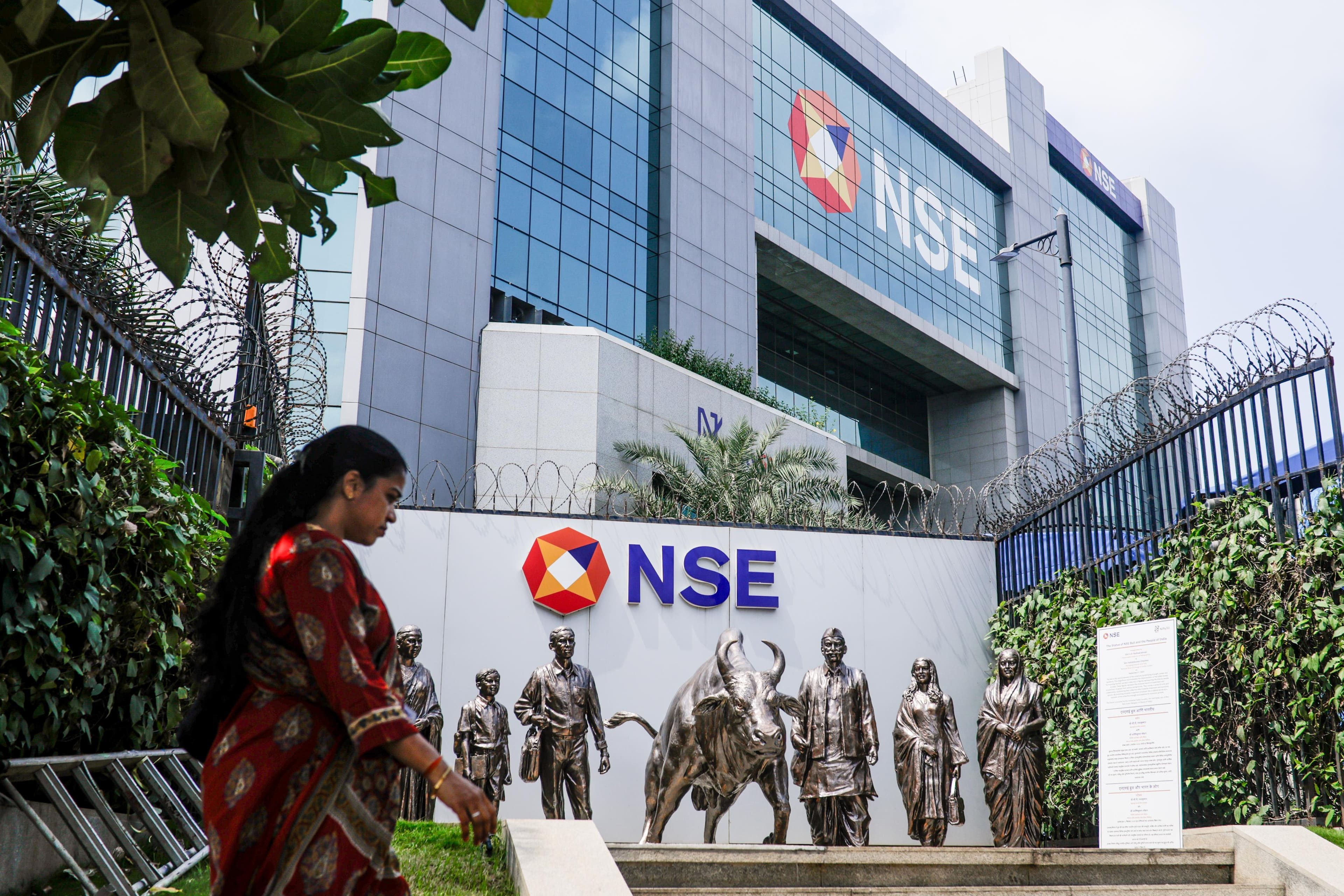
Share price of the National Stock Exchange of India (NSE) hit a new high of ₹2,207, soaring 5 per cent on the BSE in Thursday’s intraday deals amid heavy volume.




Since November 3, 2026, in the past 13 trading days, the stock price of the exchange and data platform company has ended higher on 11 days, surging 22 per cent during the period. It bounced back 33 per cent from a low of ₹1,640.05 touched on October 23, 2026. Currently, NSE quotes 24 per cent higher compared to its issue price of ₹1,785. The company made its stock market debut on September 24, 2026.
At 02:15 PM, with a market capitalisation of ₹5.41, NSE quoted 4.2 per cent higher at ₹2,184.70 on the BSE. The average trading volume at the counter jumped 1.7 times with 8.71 million shares changing hands, compared to an average 5.4 million shares traded in the past two weeks on the BSE, the exchange data shows.
Meanwhile, BSE’s market capitalisation stood at ₹1.53 trillion, NSE data shows. In the past week, the stock price of BSE declined 4 per cent, against a 0.58 per cent rise in the Nifty 50.
What’s driving NSE’s stock price?
NSE is the largest stock exchange in terms of turnover in the cash and derivative segment. NSE operates an integrated capital-market infrastructure platform spanning trading, clearing, settlement, listing, market data and index licensing. Its offerings encompass cash equities, derivatives, debt and mutual fund platforms, alongside international operations through NSE International Exchange at GIFT City.
Also Read
According to analysts at ICICI Securities, NSE remains a play on the long-term growth potential of India’s capital market. Dominant franchise, leadership, and sustained profitability driven by continued focus on technology and product innovation aid the company's fundamental resilience.
For Q2FY27, NSE's consolidated total income increased by 9 per cent year-on-year (YoY) to ₹4,554 crore as compared to ₹4,160 crore in Q2FY26. Revenue from operations which constitutes 89 per cent of total income, increased 11 per cent YoY to ₹4,067 crore in Q2FY27. Profit before tax from continuing operations increased 13 per cent YoY to ₹3,425 crore in Q2 FY27.
“For Q2FY27, YoY growth in revenue from operations was driven by transaction charges, listing revenues, our data related segments namely data centre – rack charges, data feed and terminal services, index licensing & data subscription fees, clearing & settlement related revenues and operating investment income,” NSE’s management said in its Q2 earnings conference call.
“Overall, given our market position, balance-sheet strength, technology capabilities and vertically integrated structure, we believe NSE remains well positioned to participate in the next phase of India's capital-market development,” the management said.
Meanwhile, SEBI is reportedly considering a 5-10 per cent free-float cap on margin-funded purchases. Only 4 per cent of the MTF (Margin Trading Facility) book is in stocks above the 10 per cent threshold, rising to 23 per cent at 5 per cent. Historical evidence indicates that caps could cause margin funds to shift from less-liquid to more-liquid stocks, analysts at Jefferies said.
The MTF book drives pledge income for depositories. For NSE/BSE, MTF book growth drives cash turnover (7-11 per cent of revenues). Given thsi analysts at Jefferies expect MTF exposure to shift from less-liquid to more-liquid stocks, the impact on exchanges and depositories may also be limited. The brokerage firm has a ‘Buy’ rating on NSE with base case target price of ₹2,125 and in upside scenario of ₹2,300 per share.
Motilal Oswal Financial Services (MOFSL) also initiated coverage on NSE with a ‘Buy’ rating and target price of ₹2,300 per share.
NSE is India's largest exchange by turnover in the cash market (average daily turnover or ADTO of ₹1.1 trillion) and in equity derivatives (futures ADTO of ₹1.6 trillion and options premium ADTO of ₹57,700 crore in FY26). Its active client base of 46 million in September 2026 represents only 3 per cent of India's population. The number of investors aged <30 years rose from 22.6 per cent of NSE's individual investor base in FY19 to 38.4 per cent in FY26. As this cohort matures over the years, trading activities and ticket sizes of trades will only increase, the brokerage firm said.
Further, India's market cap-to-GDP ratio stands at 131 per cent (FY25) vs. the US at 216 per cent and Japan at 157 per cent (CY24). Matching the US ratio would imply 1.65x the current listed market cap. Demat accounts reached 24.1 crore by September 2026, which is 17 per cent of the population, reflecting structural headroom for growth. India’s 3 per cent active-participation rate is low even against other emerging markets, so as financial literacy, digital onboarding and distribution improve, participation could rise structurally over the years, MOFSL said. Disclaimer: Views and outlook in this report belong to the brokerages and analysts cited. They do not reflect the views of Business Standard. Readers are advised to exercise discretion.
What's Your Reaction?
 Like
0
 Dislike
0
 Love
0
 Funny
0
 Wow
0
 Sad
0
 Angry
0














Comments (0)