


Asset allocation, rebalancing key to wealth creation over 3-5 yrs: Dezerv

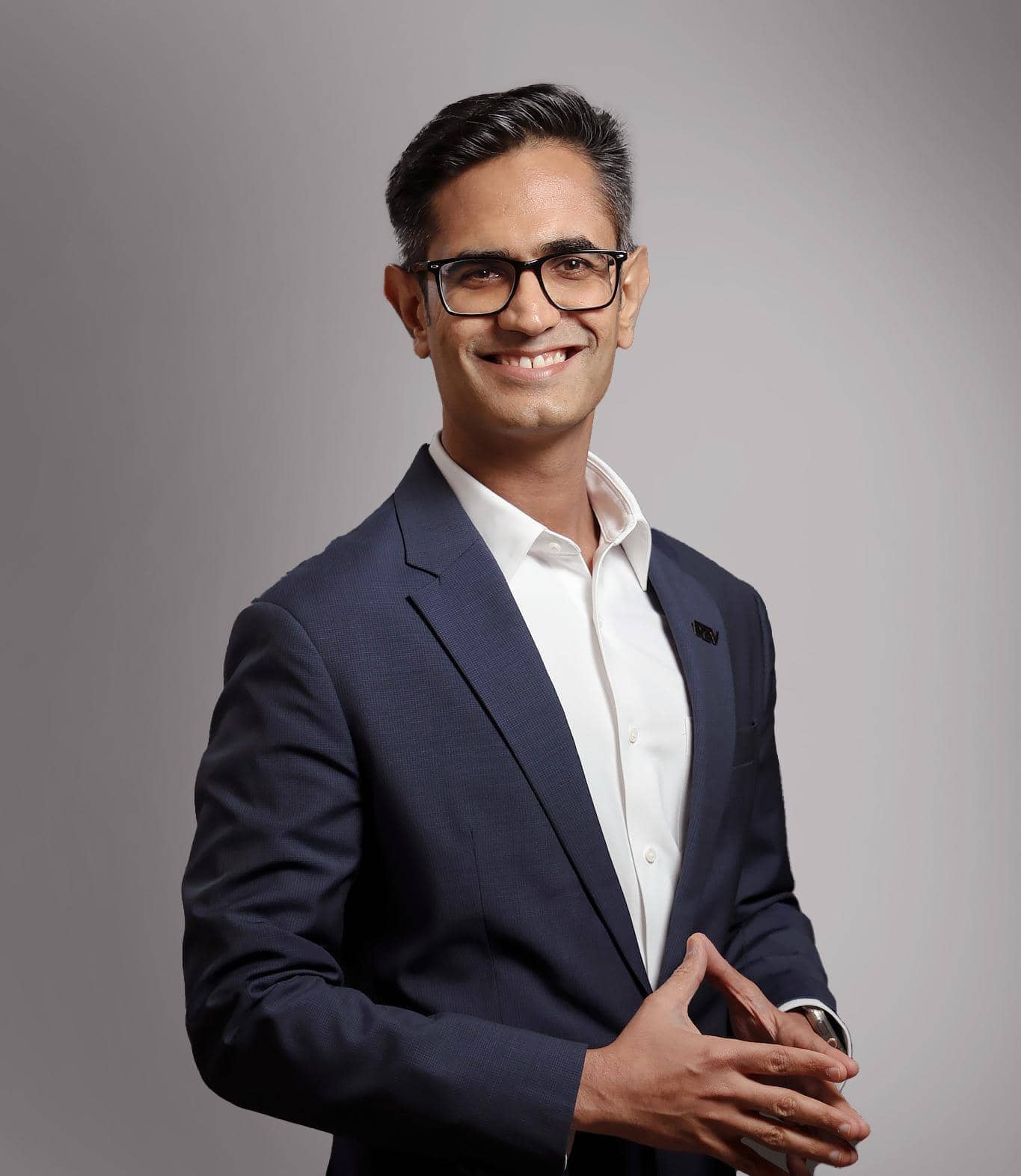


With a large number of wealth products available to investors, deciding where to invest, how much, and when to change course is now the harder problem, says Sandeep Jethwani, Co-founder, Dezerv, in an email interaction with Saloni Goel. He adds that personalisation will be the next big battleground for wealth management companies going forward. Edited excerpts:




With rising life expectancy, healthcare costs, and inflation, how should investors approach retirement corpus planning? Is there any one figure or number that helps your clients plan better?
Start with your own number, not the country’s. Most investors plan with national averages, or with a figure that felt comfortable a few years ago, and both understate what they will need. In 2006, ₹1 crore sounded like a safe retirement corpus. Twenty years on, the same lifestyle needs closer to ₹6 crore.
Your number depends on four inputs: what you spend today, how fast that spending grows, when you stop earning, and how long you live after that. Household spending in India has compounded at over 9 per cent a year for five decades, and an affluent family’s costs, led by private healthcare at 12-14 per cent, rise faster still. On longevity, plan to 90, not to the national average.
Put those inputs together, and you arrive at your number.
Also Read
What are the biggest mistakes Indian investors make when estimating their retirement needs?
The most common mistake is never estimating at all. Most investors have a sense that they are saving enough without having worked out what enough means for their household.
The second is using the wrong inputs. People plan with 5-6 per cent inflation because that is the headline figure, while their own spending grows much faster. They also assume expenses will fall after retirement. In practice, travel and healthcare replace what EMIs and the office commute used to cost. And they plan to the average lifespan, when national averages say very little about how long a healthy urban professional is likely to live.
The third is assuming the earning years will last as long as they did for the previous generation. AI adoption in India is among the highest globally, and careers in several sectors could compress by five to ten years. That means fewer years to save and more years to fund.
Each of these mistakes makes the number look smaller than it is, and the gap usually shows up when it is too late to close.
Investors today have access to a growing range of wealth products. What are the factors that determine whether an investor should opt for a customised wealth solution over a mutual fund portfolio?
Good outcomes depend on three things: advice, decision, and execution.
A mutual fund gives you professional management within the fund. It does not decide how much of your wealth belongs in that fund, when to rebalance your portfolio, or what to change when your life changes. Those calls still rest with you.
Four factors usually tip the balance towards a customised solution. The first is the complexity of the wealth itself. Once a family holds equity, bonds, real estate, ESOPs, a business stake and loans across several platforms, nobody owns the aggregate view, and that is where most portfolios drift. The second is time and temperament. Many of our clients are money-rich and time-poor; they can make sound decisions but struggle to execute them consistently through a full market cycle. The third is tax, because a customised portfolio can coordinate gains, losses and rebalancing across the whole book rather than one product at a time. The fourth is life stage. A liquidity event, a transition into retirement, or a large liability changes the right allocation, and someone needs to be accountable for acting on it.
One caution. A wider product shelf is not, by itself, a reason to own more products or to customise.
What are the biggest structural changes you expect in India’s wealth management industry over the next five years?
Three shifts stand out.
The first is a move from selling individual products to managing outcomes. The next five years will be organised around who takes responsibility for a family’s portfolio as a whole. This matters most for India’s first-generation wealth creators: doctors, lawyers, senior professionals, founders and employees monetising ESOPs. The proposed new mutual fund-only PMS (PRIM) at ₹25 lakh brings this within reach of a much wider base of investors. I expect most serious wealth managers to offer portfolio management solutions of their own.
The second is transparency as the default. The new wealth creator is also younger (the average Dezerv client is 38) and far more willing to ask what they pay and what they receive for it. Every model in the industry will need a clear answer.
The third is digital by default. India has roughly one crore households with financial assets above ₹1 crore, and only around 10,000 relationship managers to serve them. Hiring alone cannot fix that arithmetic. Digital also changes how trust is built. Clients today would rather have a structured 30-minute call than a two-hour meeting, and once the digital experience is good, most HNIs no longer need to meet in person.
What are the three biggest changes Indian investors should make to their portfolios over the next three to five years?
First, move from collecting products to owning an allocation. More funds and products rarely add diversification. They usually add overlap. Consolidate, and let an asset allocation tied to your goals drive what you hold.
Second, rebuild the middle of the portfolio. Many Indian investors hold equity on one side and fixed deposits on the other, with little in between. Debt funds, high-quality bonds, SIFs, InvITs, REITs and gold in measured proportions can improve both income and resilience.
Third, stop investing through the rear-view mirror. Money tends to arrive after the move has happened.
Over the next three to five years, asset allocation & disciplined rebalancing will matter more than any single call.
How do you assess the growth of platform-based wealth management companies? Will the next battleground be product distribution, portfolio management, or personalised advice?
Platforms like Groww and Zerodha have done the Indian investor a great service. They solved access. Anyone with a phone can now buy a stock or a mutual fund in minutes at very low cost, and that has brought crores of first-time investors into the market.
Solving access exposed the next bottleneck, whichis choice. India has more mutual fund schemes than genuinely investable stocks, thousands of bonds, and a growing range of AIFs, REITs and InvITs. Deciding where to invest, how much, and when to change course is now the harder problem.
I do not think distribution is the next battleground, because distribution is fast becoming a utility with tech. Advice on its own will not settle it either. The battleground is personalised portfolio management: advice, decision and execution held by one accountable party, with the portfolio built around an individual’s goals, liabilities and existing holdings.
Technology makes this possible at scale for the first time. Personalisation used to be reserved for the very wealthy because it was expensive to deliver. Data and AI change that cost structure. The market is large enough for several models to succeed.
Disclaimer: Views and outlook in this report belong to the brokerages and analysts cited. They do not reflect the views of Business Standard. Readers are advised to exercise discretion.
What's Your Reaction?
 Like
0
 Dislike
0
 Love
0
 Funny
0
 Wow
0
 Sad
0
 Angry
0













Comments (0)